
Chapter 2 – The Devout
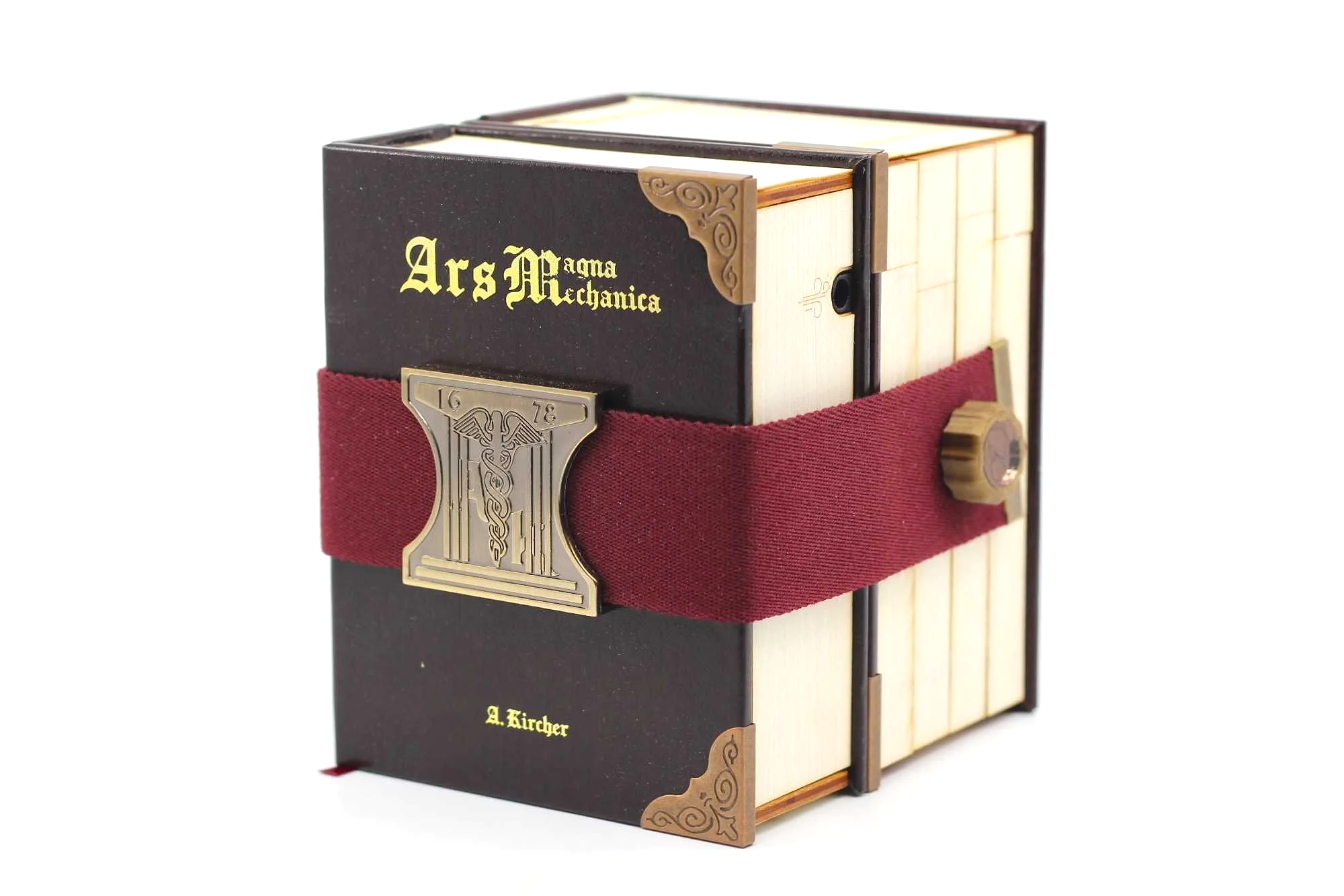
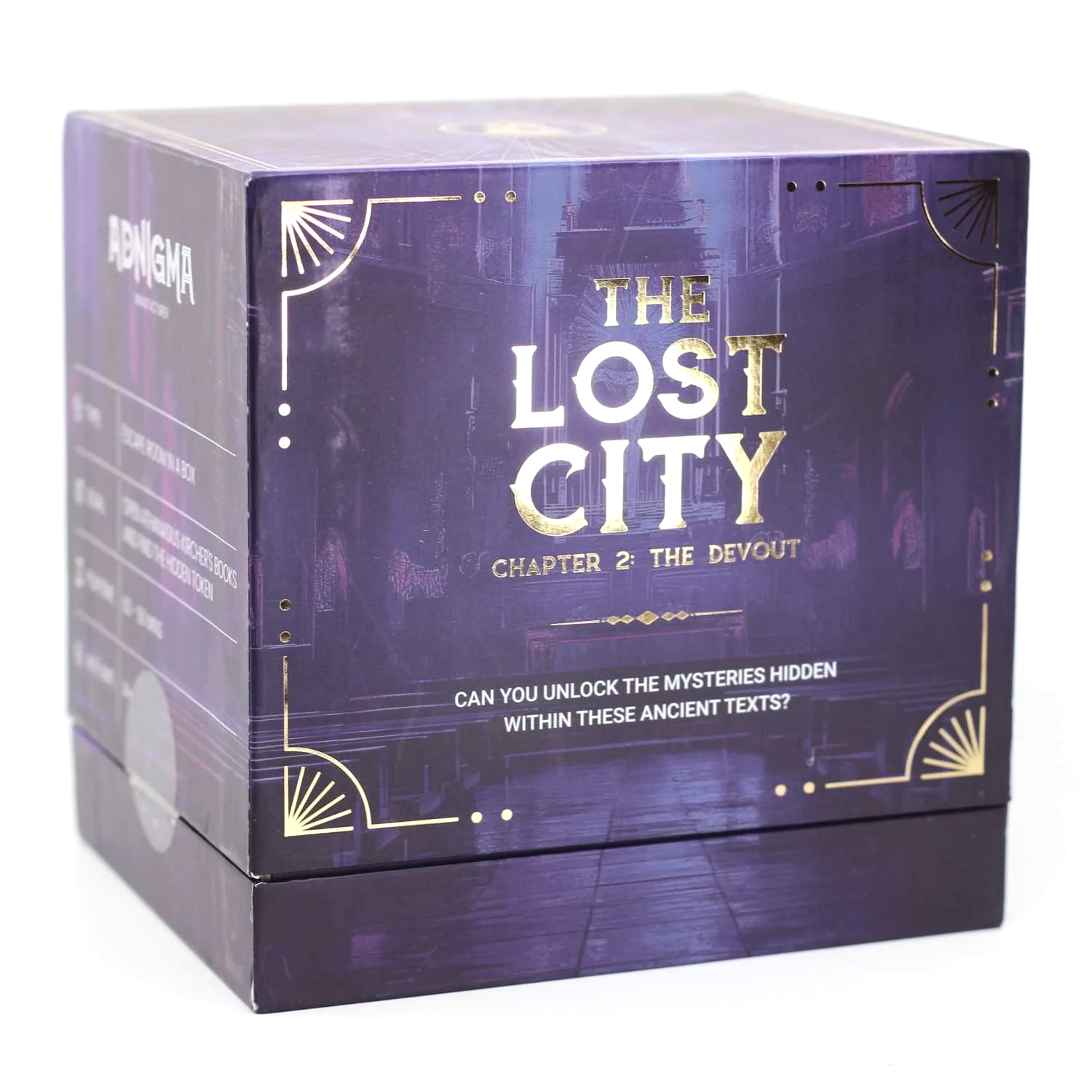
Lost City: The Devout by ADnigma
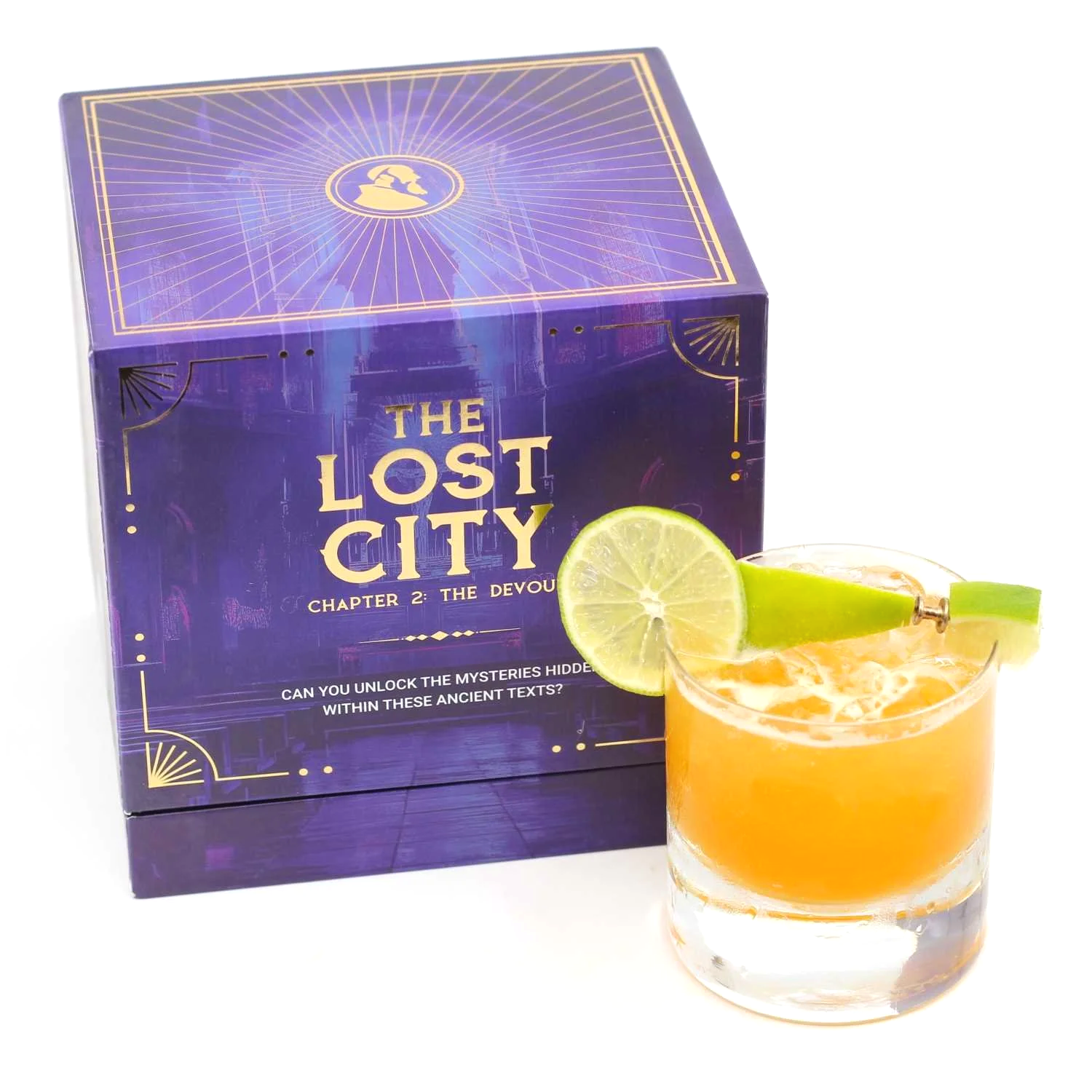
The team at ADnigma are up to their usual tricks again, this time in an entirely new and different way. They are adept at altering perceptions and boundaries of what to expect from the escape room in a box adventure puzzle genre. The search for the Lost City requires assistance from three great geniuses across time, history and culture, who have each discovered and then hidden pieces which lead the way to the fabled city. In the first chapter, The Thief, you find a safe left by the great gentleman thief Arsene Lupin. Set in the early twentieth century and the world of Lupin, are you clever enough to enter his vault? The second installment, the Devout, travels further back in time, to the seventeenth century, when the German Jesuit Renaissance scholar and polymath Athanasius Kircher was a prolific academic thought leader of his era, like Leonardo DaVinci. He was known as the “Master of a Hundred Arts”, and his personal wunderkammer (cabinet of curiosities) became what is thought to be the first museum in history. He wrote about the physics principles of a modern day miracle, the “magic lantern”, in one of his most famous books, the Ars Magna Lucis et Umbrae (The Great Art of Light and Shadow), 1645. Painted or paper images on glass could be viewed large on a blank surface by these earliest projectors.
get lost in history
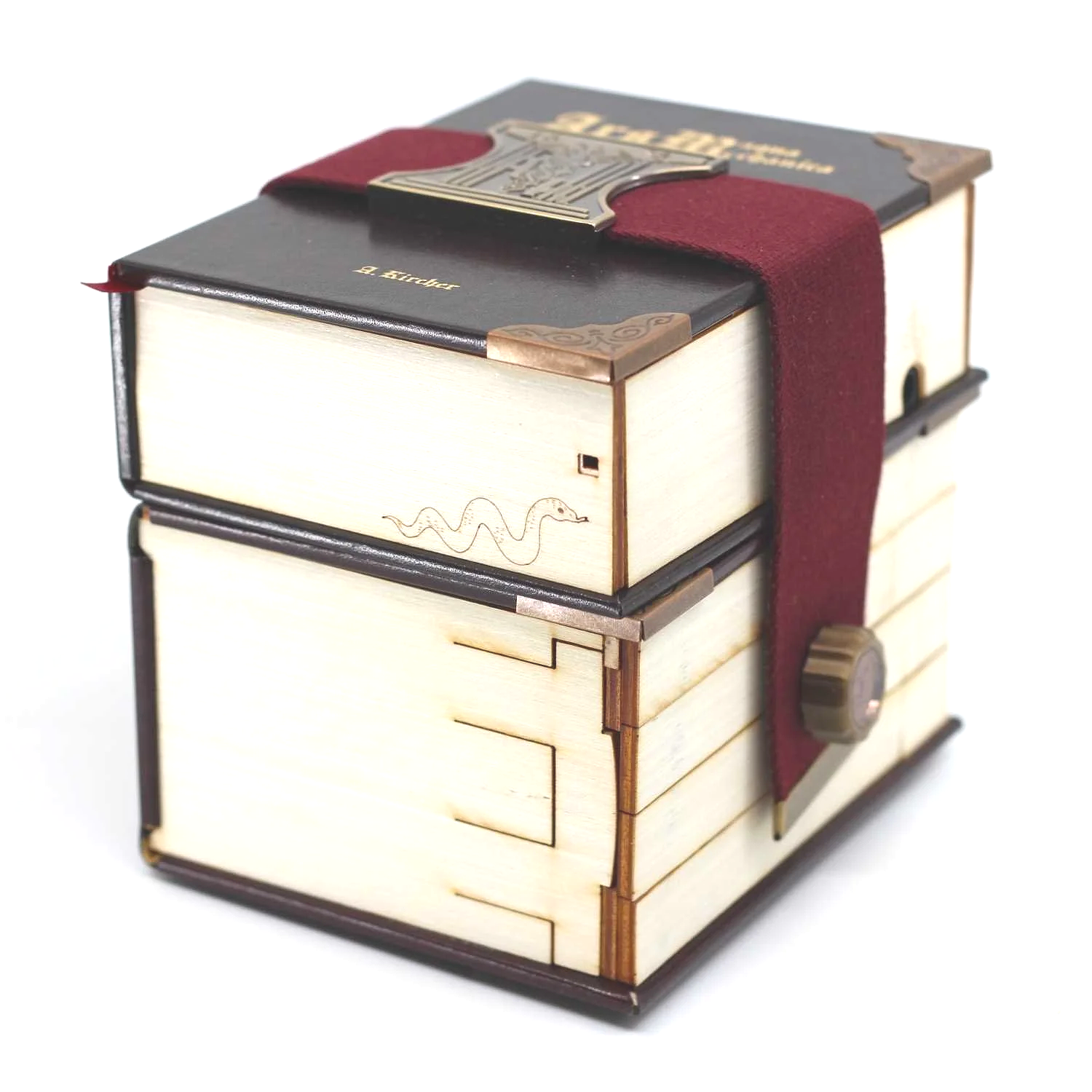
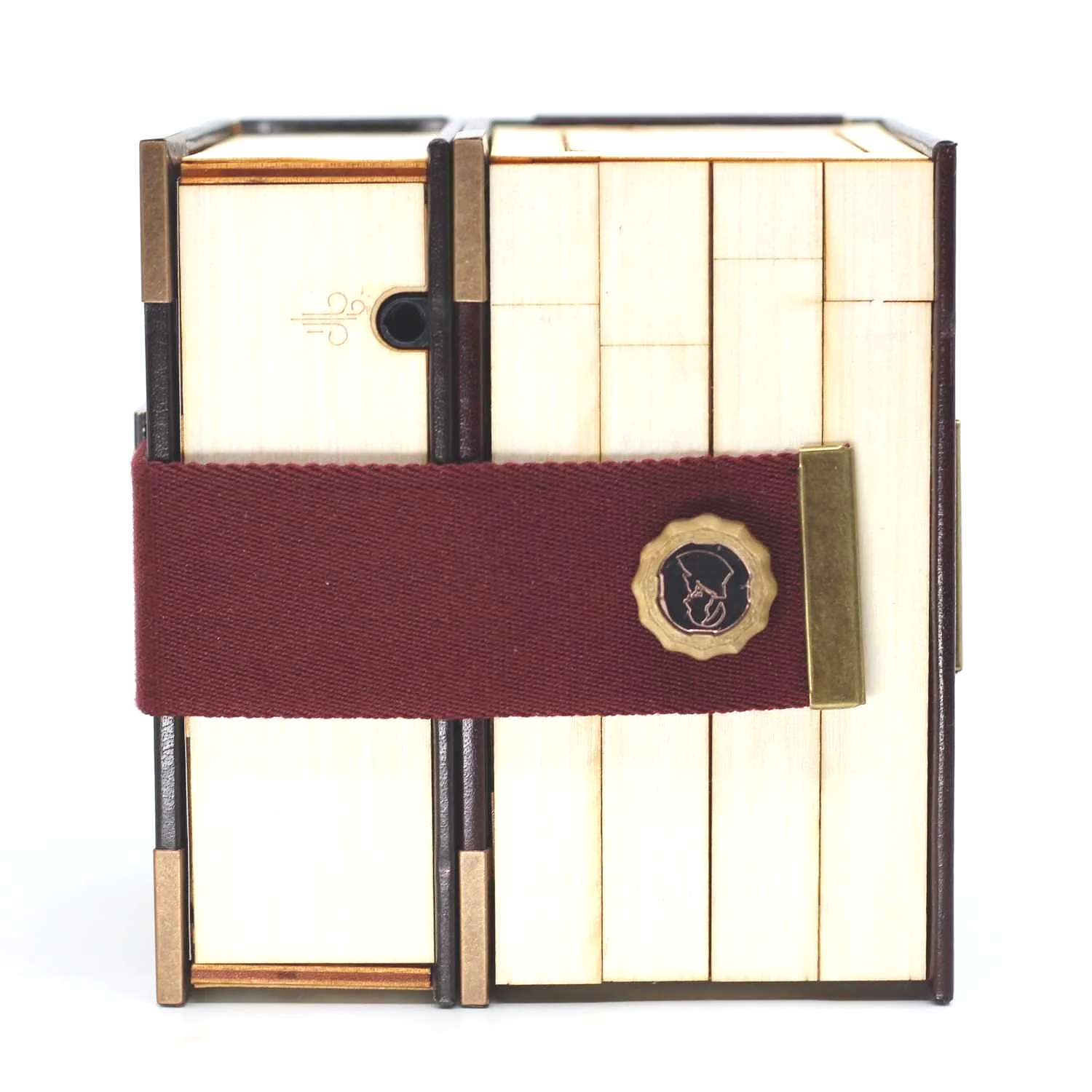
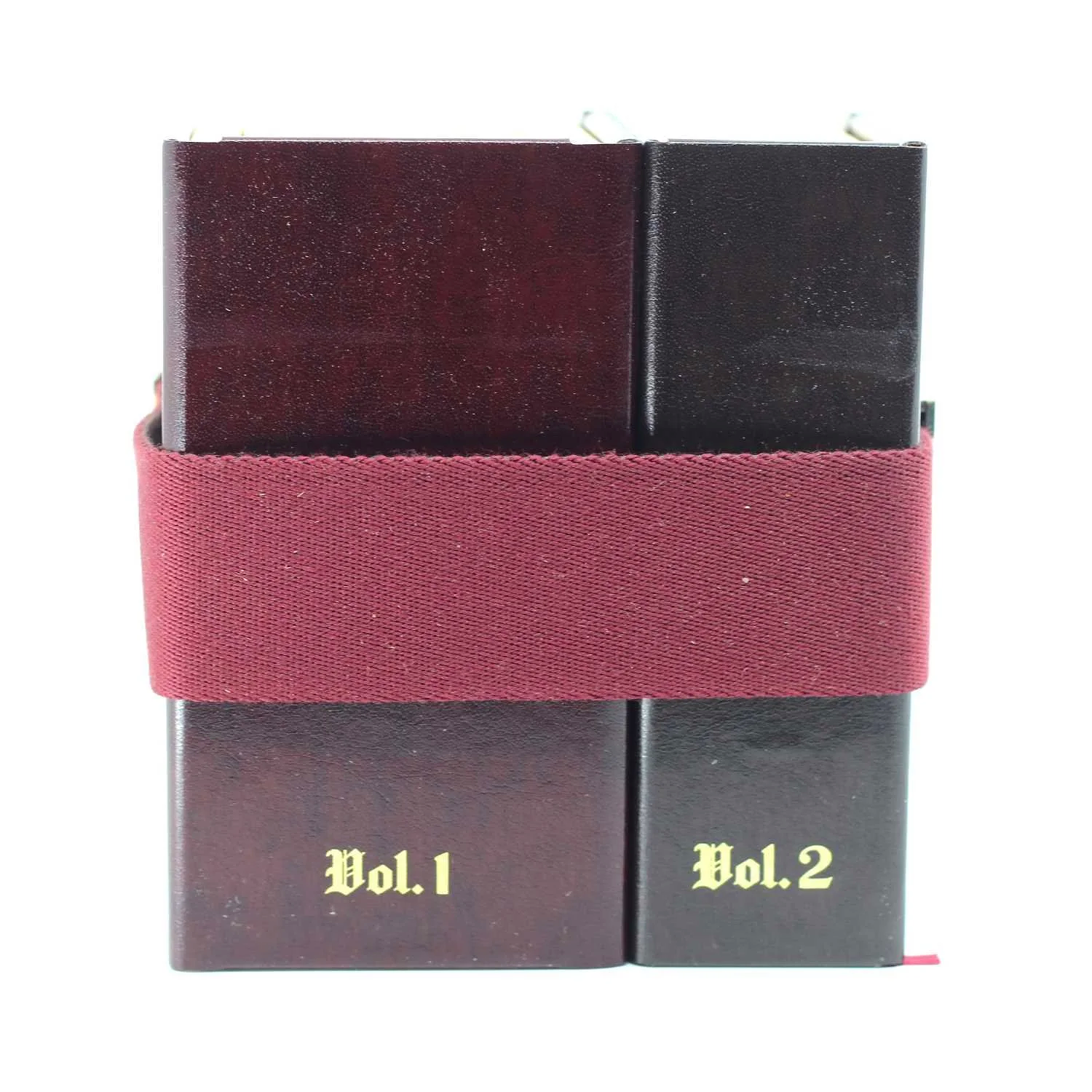
In his great library were secreted away a pair of precious tomes, locked together with a belt. Perhaps another piece of the Lost City puzzle lies hidden safe inside? The pair of volumes are highly interactive in this sequential discovery adventure which combines escape room style elements of novel codes to decipher with secret compartments, dexterity, mirrors, keys and a highly novel hidden clue mechanism. The books come to life in mixed media that blends laser cut wood with 3D printed materials, acrylic, brass, cloth, leather, metal, paper and maybe something more.
a man of letters, languages, science and wonder
Arnauld, half (or, if you include baby Lucy and dog Ina, one fourth) of the Luxembourger ADnigma team (and the “A” in their name) recently told me the story of these books. “The Devout is the second chapter in our three-part puzzle box series, The Lost City. Although the actual Puzzle Boxes are designed one after each after, the overall story and characters were defined before our first Kickstarter campaign. The characters were specifically chosen and studied to give us ideas on the design and hints of the individual puzzle boxes. As a scholar and known to be the last person who “knew it all”, books seemed to be the perfect design and inspiration for the Devout. It simply came to us that he would have hidden his secret in a specially crafted puzzle box, disguised as two bound books.
Athanasius Kircher is a fascinating character and not very mainstream. Compared to our competitors, we are trying to find new and innovative design, thus our inspirations must lead this concept. Kircher, as such, was the perfect character for us. He lived in a brilliant period, where religion and science were closely intertwined, he studied a very broad array of fields, in brief, a perfect pool of inspiration. As a bonus, he even did research on lost cities, which made him fit perfectly into our series.”

at the Collegio Romano
The title of the second installment hints at the time and place where these books were discovered. “We tried to find a catchy name, but also a name that hints towards an era/ atmosphere. Although, his name wasn’t the most internationally friendly to pronounce, we wanted to stay consistent with the first chapter by naming the characters according to their personal trait.” As for production, keep in mind that Arnaud and Daniela (the second in their two person team (and the “D”)) make all of these puzzles in their small house. “I think we mentioned the same for the first chapter, but we do struggle with the scale up. Producing 50 or 500 puzzle boxes does not increase the difficulty proportionally, but exponentially. We still produce at home, and of course this time we had two boxes to produce in a large batch, so it quickly invaded our house again. More excitingly, this time around we had our first baby on the way, so Daniela had a bit of fatigue to fight with and Arnaud preparing the nursery. Of course, once Lucy was born, the challenge also grew exponentially, but luckily Lucy is an angel and proved to be very patient with her parents. Next time, it will change, Arnaud promises! We are currently looking to properly scale up in another location!”
Rome’s tomes
Like all seasoned escape room designers, they gathered feedback and continued to add improvements right up to production. “Between the reviewer copies and the Kickstarter product, we made some minor adjustments. Nothing that changes the game dynamics, but we made some mechanical improvements and changed some hints inline with our beta testers feedback. We manage to successfully implement all the crazy ideas we had for that box.” Indeed there are some crazy ideas hidden inside these pages, innovative mechanisms and secrets that may surprise or delight you. And there are many more in store, too.
I left my heart in Santuario della Mentorella
“There are always ideas that came to mind but for many reasons, they are not part of the current product. We hope we can design enough future “puzzle boxes” to implement them all! All the assembly is done by Daniela and me, with help from time to time by our parents. We also produce most of the parts in house (all the laser cut elements for example). There are a few parts we purchase from various suppliers.” The Devout is presented as a set of books and the team went all out, within reason and practicality, to add enticing details. “It was quite fun to learn about leather binding this time around, that was one of the big new processes. We spent quite a bit of time learning how books are bound with leather and tried to apply these techniques to the puzzle box. We also varied the different manufacturing processes. As mentioned, we worked with leather, but also soft materials (the fabric strap) and hot foil stamping. To get efficient processes, we had to extensively research how these materials work (how to cut them, process them, …). Soft materials are always something we wanted to work with. It is very interesting on an engineering point of view. The strap was an easy entry, but who knows what the future holds!”
illuminating the shadows …
Speaking of the future, “the news of growing our family made this journey that little bit more special. We will always remember Chapter 2 as being Lucy’s Chapter – let’s hope she will want to know it all as well, just like Kircher :-)”. Eventually it will be on to Chapter 3, and who knows what life has in store for this team! At least they are certain of the final installment to come. “The first step is the design of the last box of the series and, as we stated in that last Kickstarter, the creation of that final enigma for those who have all three boxes. This very last riddle will reveal the location of the lost city! We are aiming to pull out all the stops for our 3rd Kickstarter, like stretch goals, let’s see if we can live up to the challenge. We are also working on a new puzzle box concept. We can’t reveal anything yet, as we would like to beta test it first. Our puzzles aren’t just about unlocking a box — they’re about stepping into a story. Every mechanism, material, and clue is tied to the world we’ve created, so when you play, you’re not just solving puzzles, you’re uncovering a mystery. We designed them to be tactile, surprising, and replayable in spirit — something you can share with friends, display proudly, and remember long after you’ve found the final secret. They are not just puzzle boxes to us, we are hoping to grow a community of like-minded Adventurers.”

Sun and Shadows by Victor Bergeron
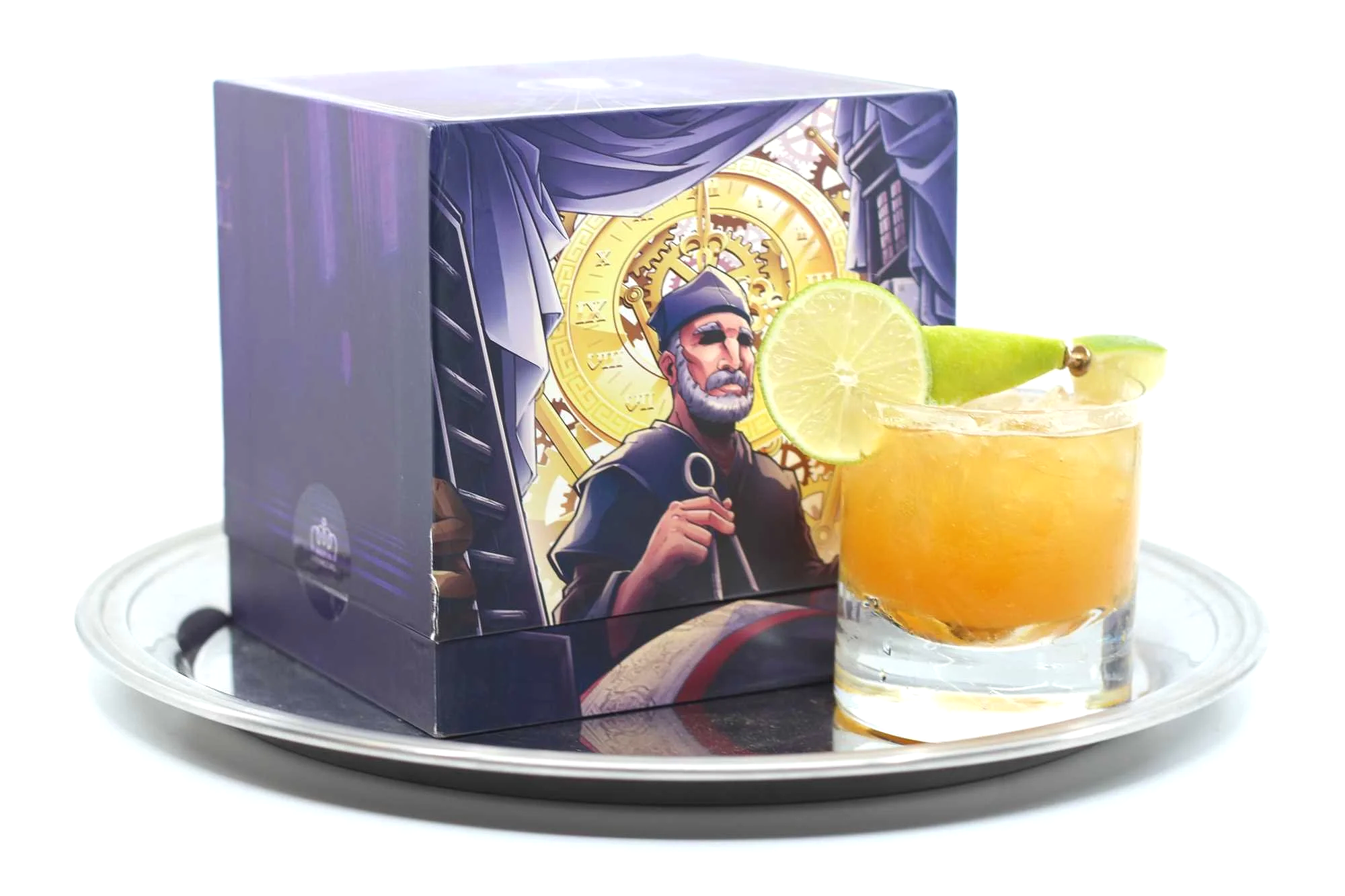
Athanasius Kircher’s many seminal works included the Ars Magna Lucis et Umbrae ("The Great Art of Light and Shadow"), 1645. The Ars Magna was the first European publication describing the illumination and projection of images, a magical interplay of light and shadow. I’m toasting the storied scholar, and the modern mystery adventure he inspired, with a cocktail reminiscent of the light and the dark. It was created by another luminary, whose influence is limited to the great art of cocktail creators and historians. Victor Bergeron was an entrepreneur who opened his first bar in Oakland, California in 1934. With an eye to the times and trends, he noted an opportunity and tapped into the emerging fascination with “Polynesia”, appropriating that iconography for his bar and turning it into “Trader Vic’s”, one of the first and most famous tiki bars.

shining a light on this one
In Bergeron’s cocktail, the “shadow” is represented by a selection of dark rums and the “sun” shines through with bright, sweet pineapple. There are no side notes for the drink where it first appears in his Trader Vic’s Bartender’s Guide, 1972, so we will never know if these references are what lent the name or whether it has some other poetic reference, but it seems rather moot as you lose yourself in the light and shadow of this potently delicious tropical drink. Cheers!
get lost in these shadows …
Sun and Shadow by Victor Bergeron
2 ½ oz dark rum
¾ oz 151 rum
½ oz apricot brandy
2 oz pineapple
½ oz lime
Shake ingredients with ice and strain into an ice filled tiki mug. No official garnish.
explore more:
Get Lost: