
Cocktails
This cocktail should immediately be poured down the sink before it is too late.
- Harry Craddock


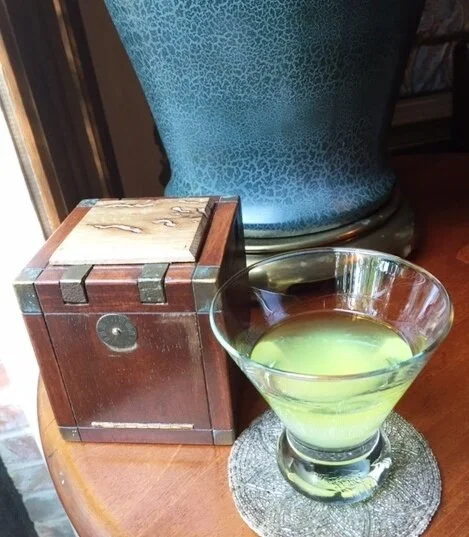


The Northshore
Thomas Cummings has been making puzzle boxes for his family and friends in his Georgia workshop for years. Some recipients of his handiwork have apparently deserved particularly devious designs, and Thomas seems to relish the opportunity to inflict his puzzle passion on the willing.

Billionaire
How? does one describe the results of a seasoned puzzler teaming up with an expert craftsman to produce a new puzzle box? Exactly. The How? Box is a collaborative effort hatched in the deviously puzzling mind of Englishman Peter Hajek.


Clover Club
This perfectly Patrick’s Day worthy puzzle box is one of Japanese master craftsman Tatsuo Miyamoto’s most famous works. His “A Chance Encounter” is truly elegant.

Hanky Panky
You’ll have to excuse me for a moment. It’s rather urgent, and there’s really nothing I can do about it at this point. It’s just a fact of life, after all. I know there are plenty of you out there who will understand. Someone who I know for sure will understand is Tracy Wood Clemons, who created the “A Man’s Got To Go!” box.

The Cuba Libre
We are going back to Cuba again here on B+B. In July, 2015, the United States and Cuba resumed diplomatic relations after over 50 years of silence. Perhaps this year we will see the long standing embargoes lifted. Time will tell, as they say, but rather than wait, let’s get puzzling.
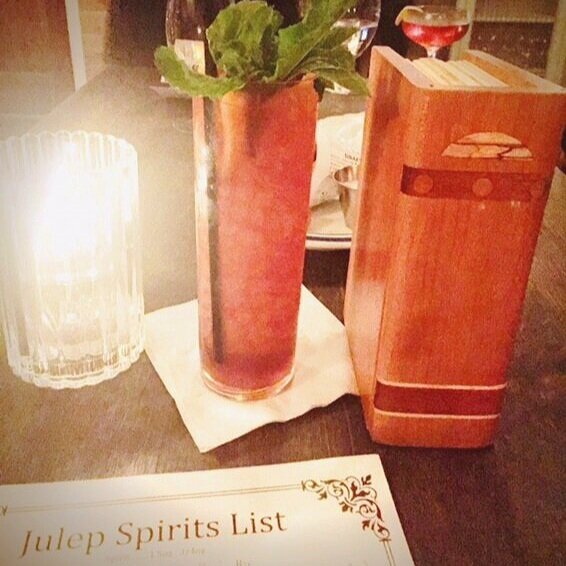
The Ruse
This week we are featuring a beautiful wooden book created by up and coming woodworker Jesse Born from Rome, New York. His “Book” puzzle is an elegantly crafted delight to hold and explore. Made from maple, cherry and pine woods, it has additional accents of mahogany and spalted maple.

Love Box No 5
Kamei created a number of “Love Box” puzzles shaped like little hearts. No. 5 is a cute little piece in dark wood, with a bright yellow wood ribbon, and a red cloth lined secret compartment.

The Gatewood
Way back in the “days of old”, according to the story, the city’s valuables were held in safes which were duly guarded by designated “Keepers”. The Keepers were personally responsible for the security of these safes, and holding onto the key that opened them.