
OldSchool Puzzle Box
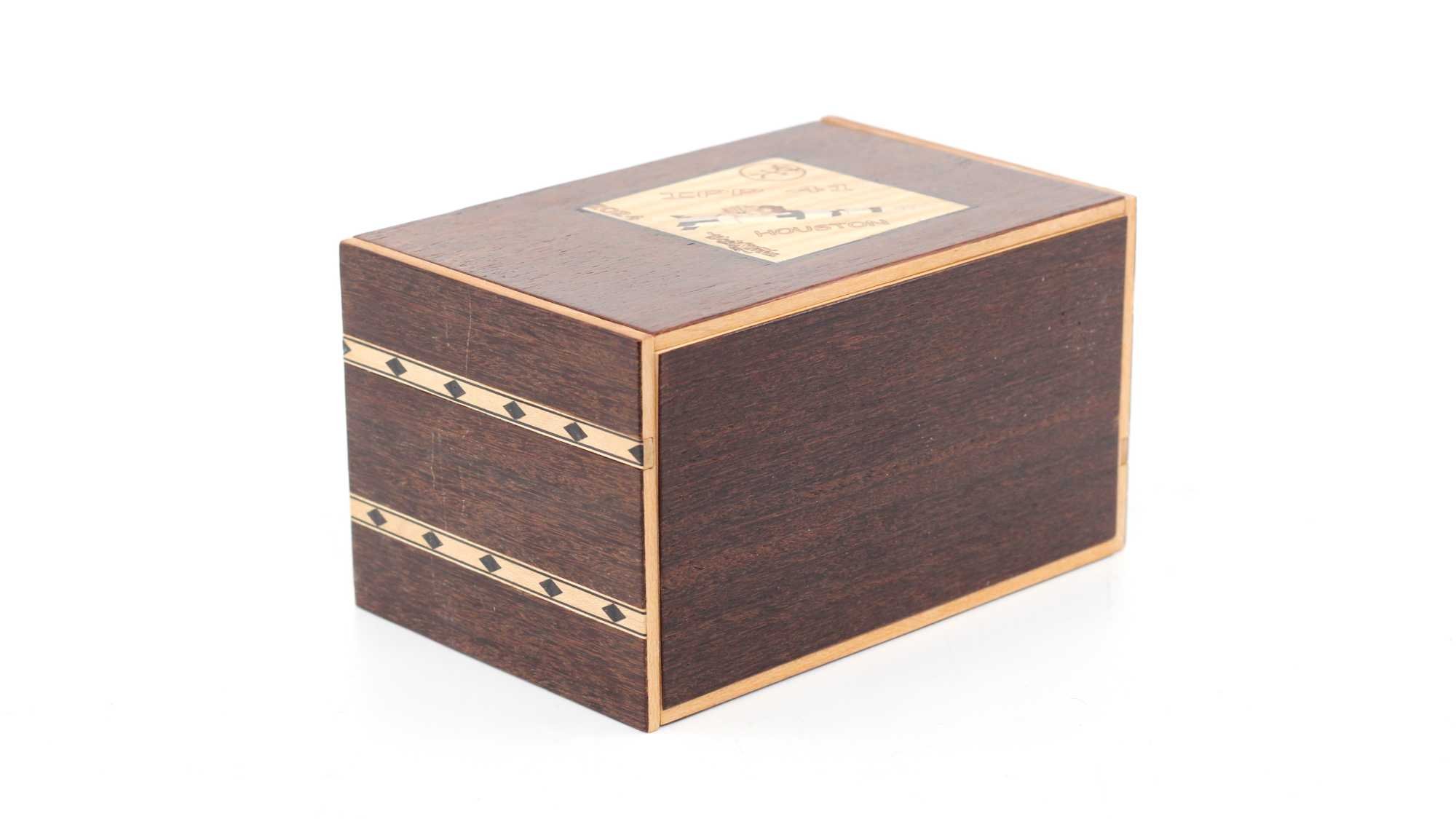
Old School Puzzle Box by Robert Yarger
Robert Yarger is kicking it old school in one of his incredibly special Stickman puzzle boxes, but don’t let the name fool you. This is still a Stickman box. The origin story of the “OldSchool” Puzzle Box starts back in the summer of 2023, when the hosts of the upcoming International Puzzle Party, which was to be held in Houston the next summer, were developing additional ideas for the event. A puzzle box making workshop led by Robert would generate a lot of excitement, and likely be a sold out ticket. Indeed, our initial proposal to Rob of 25-30 participants quickly ballooned to about 70, the maximum he could reasonably allow for such a hands-on and complicated experience. As for accepting the offer, Rob was way ahead of us.
can you achieve lid lift off?
He already had a formula for what type of box would work well in a workshop. “Its basic composure is one where someone can produce a Japanese style puzzle box of most any complexity, direction of steps for solution. Basically, every Japanese puzzlebox out there has the same basic interlocking panel structure, and all that differs is where you decide to place your glue joints, which of the panels move, and where you decide to place sliding panel stop blocks. The center panel holds it all together, so most any other panel can slide.”
will you rule the school?
Rob’s idea was to provide a box making kit with basic functionality, which could be configured in many different ways to include additional hidden steps and complexity, depending on the interest of the maker. He came up with a few different versions for participants to make using the set of kit parts provided. He dubbed the project the “OldSchool” box, as a tribute to traditional Japanese style puzzle boxes, although Rob’s boxes are quite a bit more complex inside. The name also seemed fitting for an apprenticeship type workshop, given the long history of such arrangements in Japan. For example, Japanese master Yoshio Okiyama was a third generation secret-box maker who was taught by his father, Yoshitaro Okiyama, who in turn was taught by his father, Tatsunosuke Okiyama, one of the 3 original founders of this art form dating back to sometime after 1870.
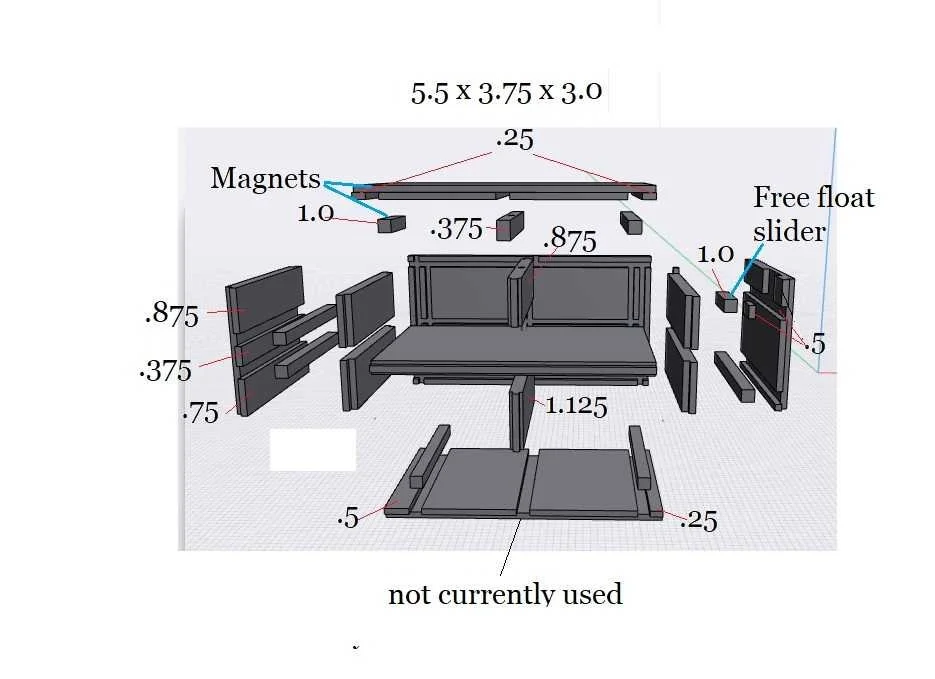
kit component schematic - courtesy of Robert Yarger
Rob provided some recollections about the project. “These puzzles were provided as workshop assembly kits for IPP Houston, and designed to demonstrate the potential of this classical genera of puzzlebox, and how they served as a platform from which all puzzleboxes today evolved.
Kits consisted of individual panels, (and roughly 20 parts), that could be assembled in various ways to produce unique discovery paths and sequential steps. Entirely different puzzles could be produced from the same assembly parts, based upon which panels were glued, those left unglued to slide, and where internal stop blocks were place.
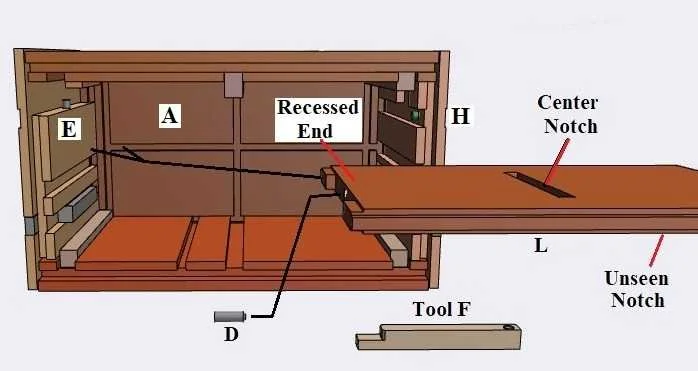
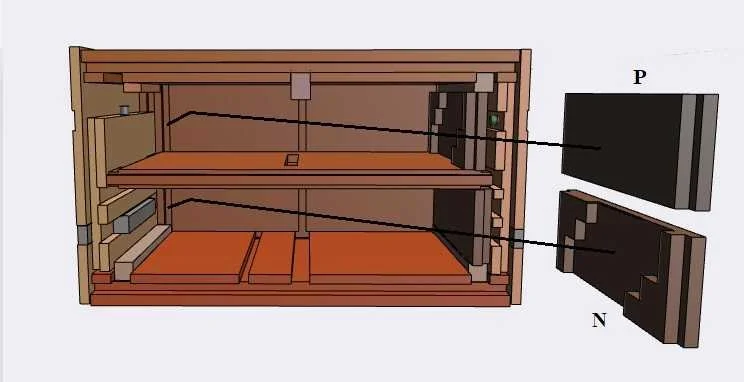
Two different assembly options were offered during the workshop - courtesy of Robert Yarger
Due to time restraints, only two of these versions, (the “Summer Bloom” and “Autumn Moon” versions), were covered in the assembly workshop. The press-together nature of interlocking pieces also allowed both the 15-step and 18-step solutions to be experienced, by those choosing to assemble at home, or without using glue.”
Rob provided detailed step-by-step instructions for the two different workshop versions, which produced two different solutions and complexities. Unsurprisingly, most participants chose the harder version. There are at least two other versions that can be made as well, and a novel feature of the box is that it can either be glued together as a final assembly, or left without glue. The parts fit together so well that the box remains stable and solvable, and can be disassembled to make a different version. The workshop was a successful blur, with most attendees able to make a complete box in about two hours, thanks to the expertise of the workshop leader and his assistants. Many well known legends of this artform were on hand, to lend their two!
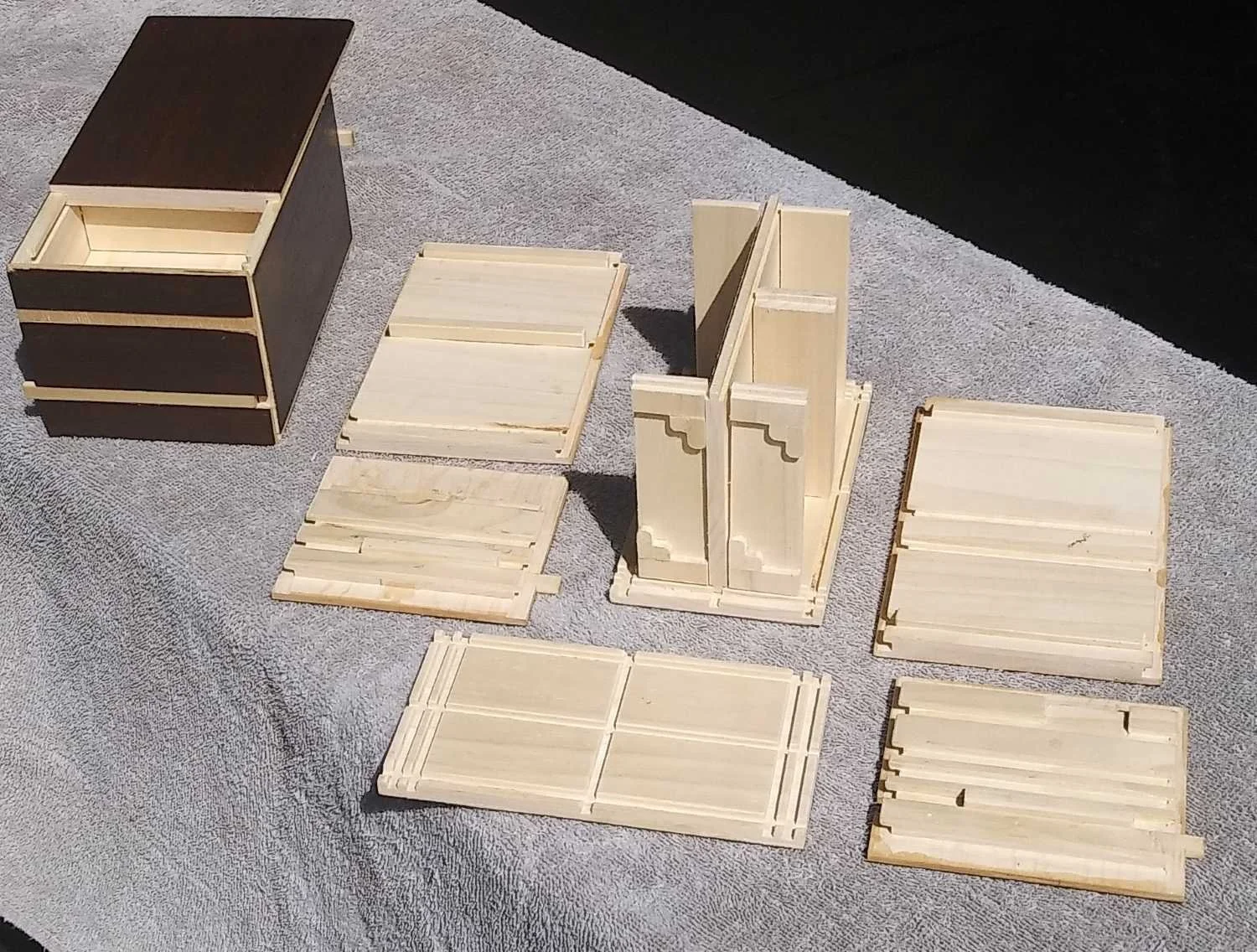
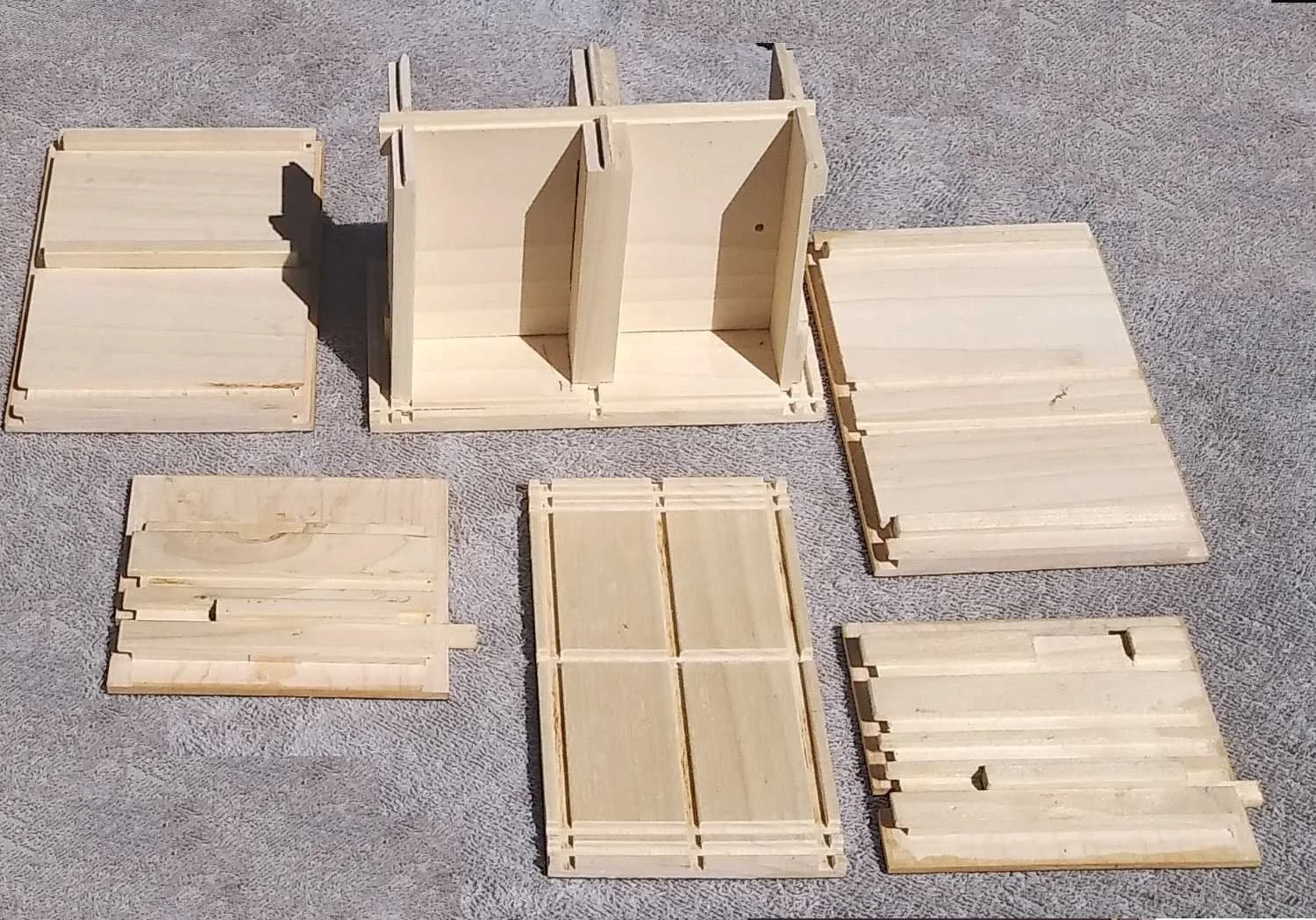
kit assembly - courtesof Robet Yarger
“Production of the kits took about 9 moths. This was a lot of work for what turned out to be a rushed 2-hour assembly workshop. I recall walking into the workshop, and also being at the founder’s reception hours later, but not much of anything in between.
What I do recall is how puzzle legends came together to save my butt by assisting in the workshop. A special thanks to Lee Krasnow, Stephen Chin, Perry McDaniel, Kagen Sound, Kathleen Malcomson, and Joe Turner, as the workshop would not have worked without them.
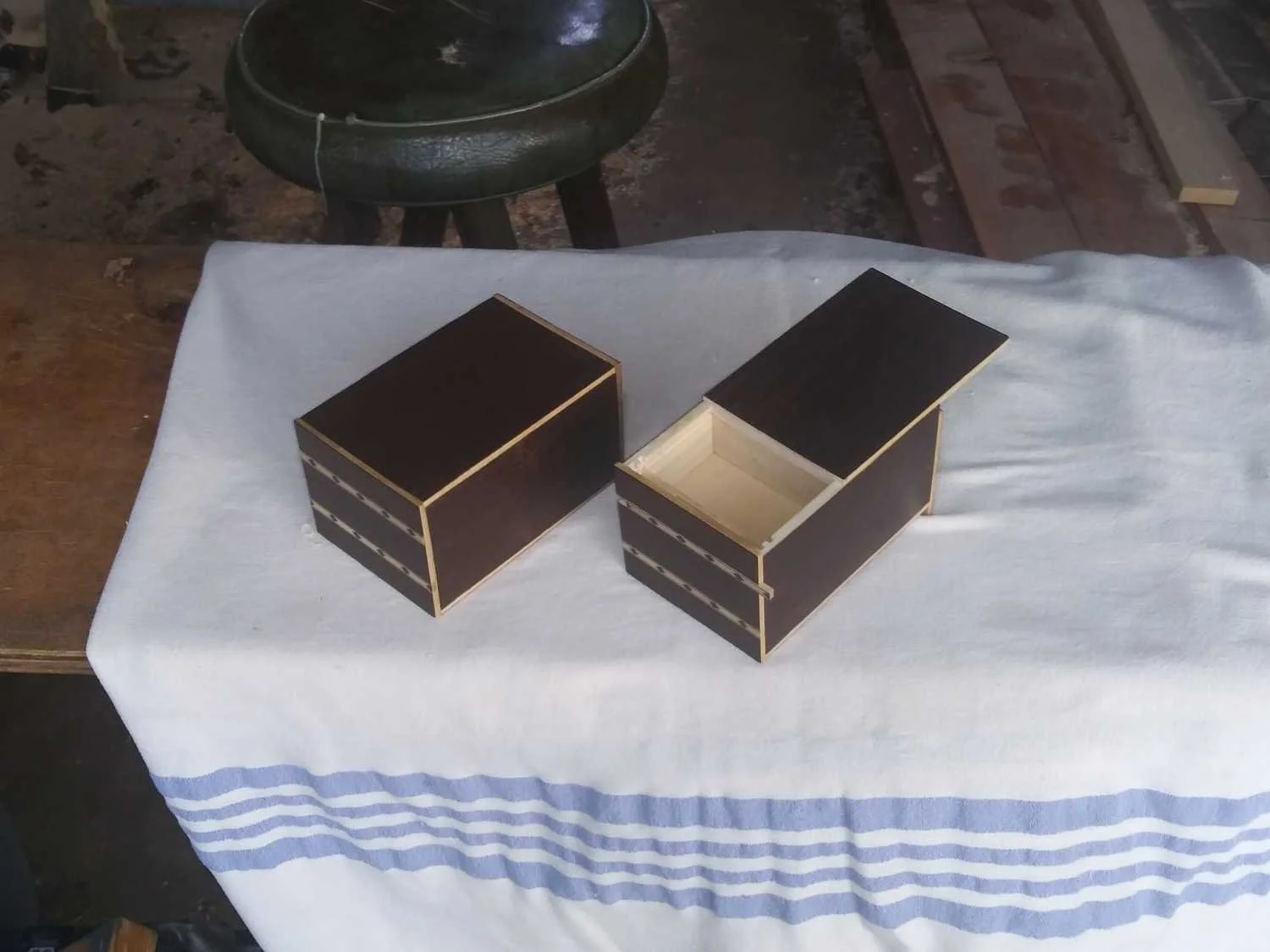
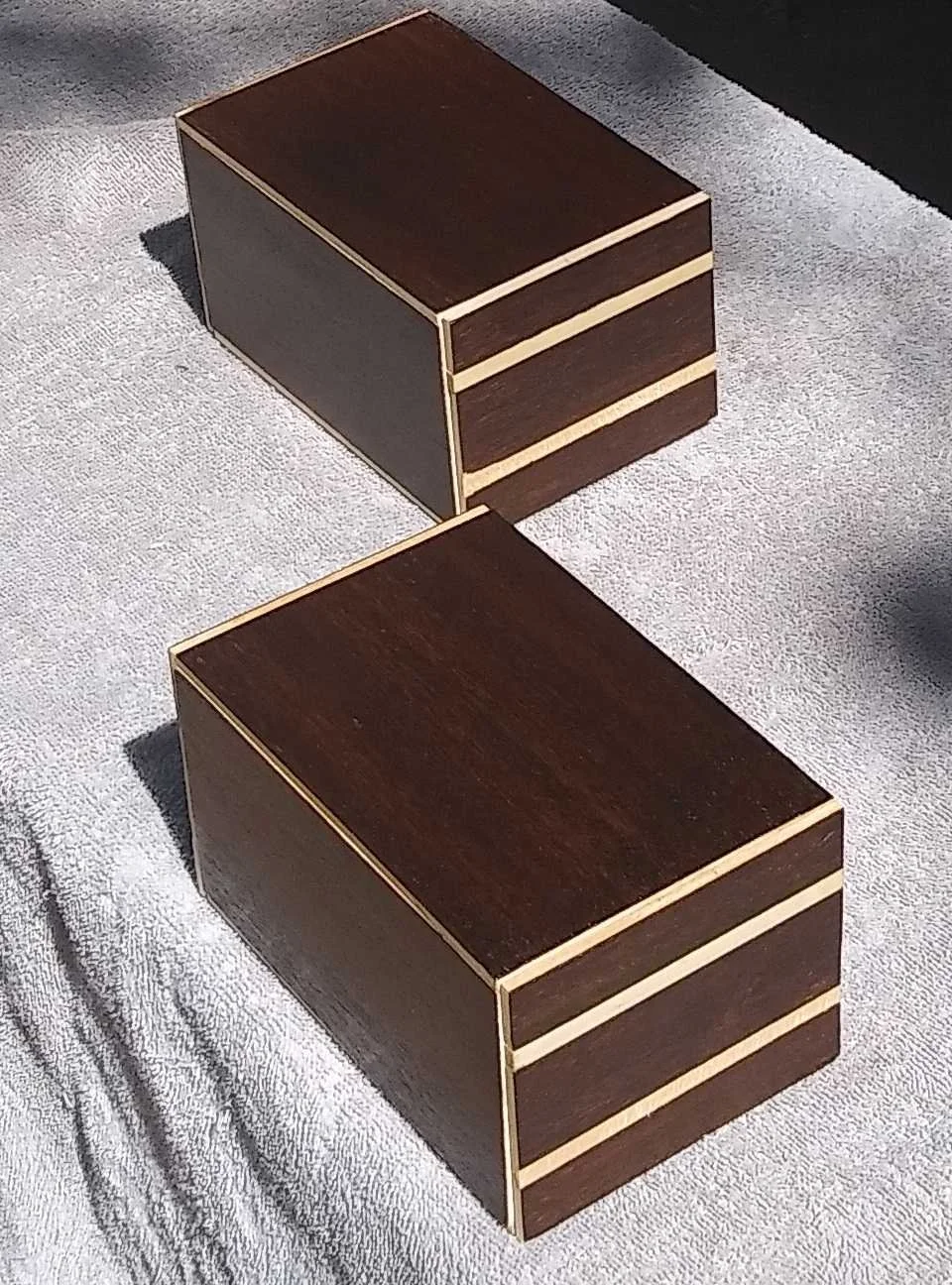
testing the assemblies - courtesy of Robert Yarger
Kelly Snake would have been there too, but he had his own workshop to survive. [To read about Kel’s workshop, follow this link] Joe and Kathleen also assisted in testing prototypes, and the streamlining of assembly instructions.
Holding to Japanese tradition, the interior was constructed of a soft humidity-stable wood, with a decorative marquetry covering. This project used basswood for the skeleton, with an ironwood veneer exterior.”
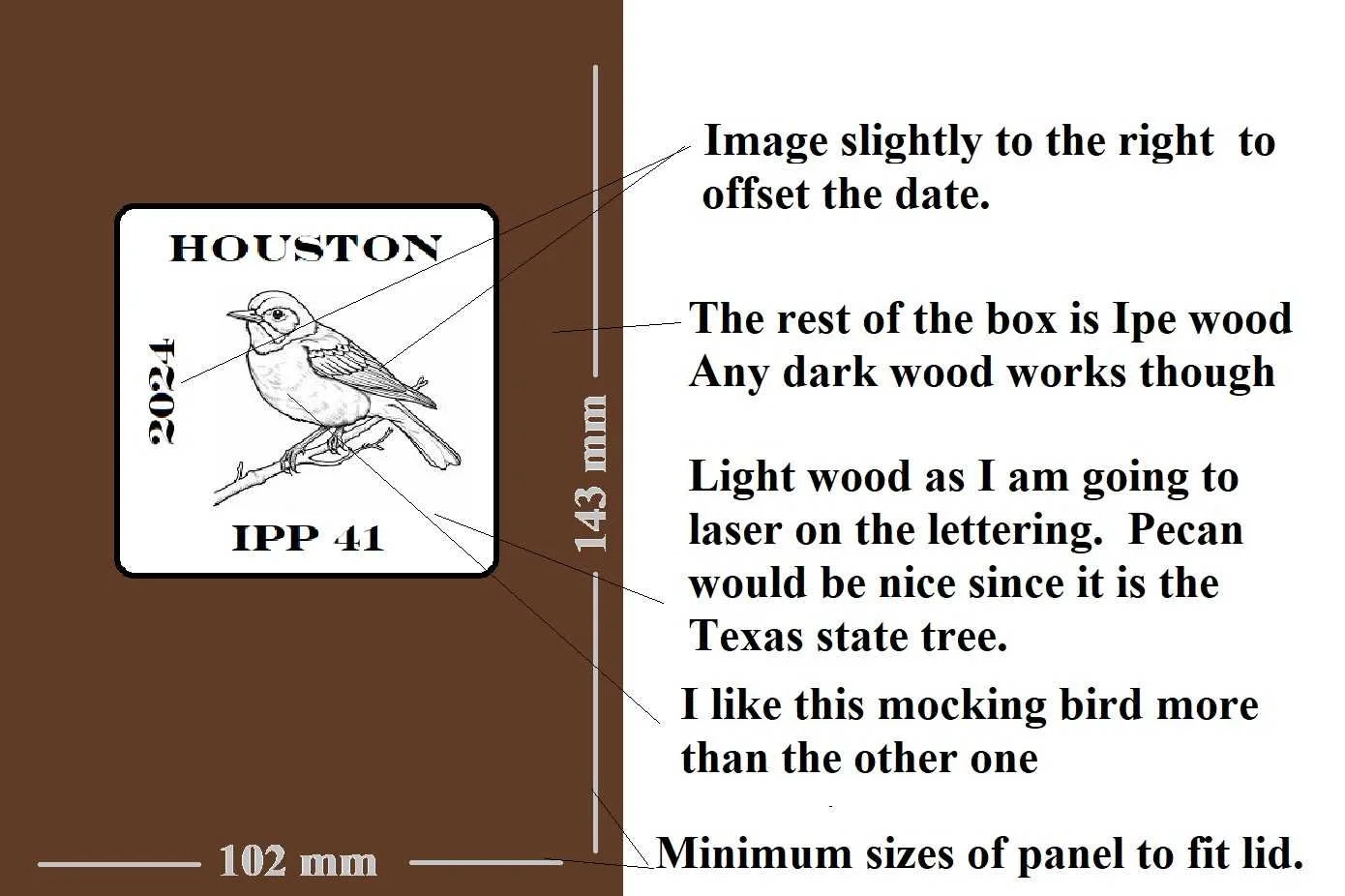
marquetry planning with Elena Simonova - courtesy of Robert Yarger
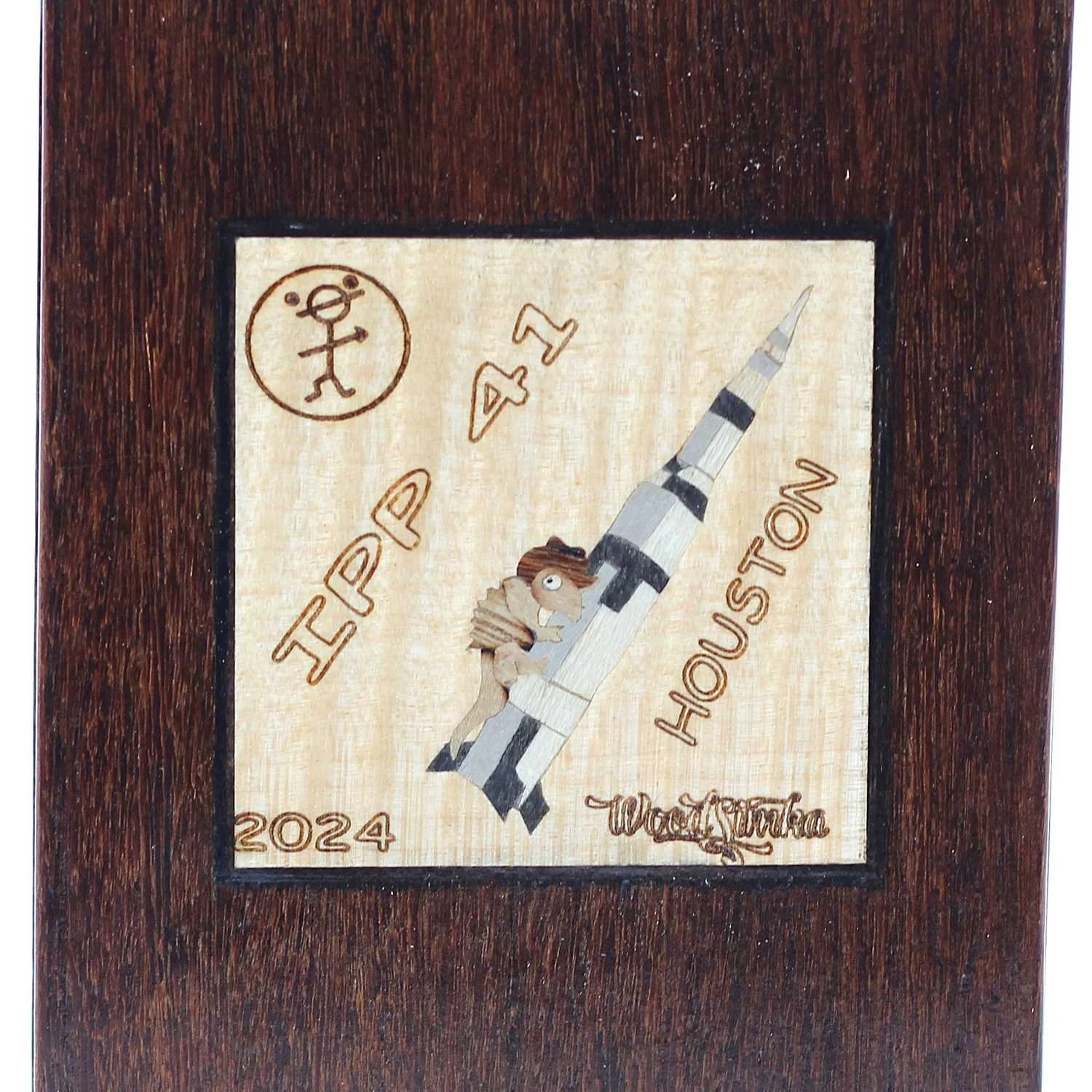
Early on in the project development, Rob and I discussed how we might add some eye catching detail to these boxes, while maintaining a reasonable cost for the workshop. This evolved into commissioning a series of Texas themed marquetry veneers from a very talented craftswoman from Europe who agreed to help. She sent the completed veneers to Rob, who applied them prior to the workshop. Kits were placed face down on the tables, so people would not worry about which of the pretty pictures they got!
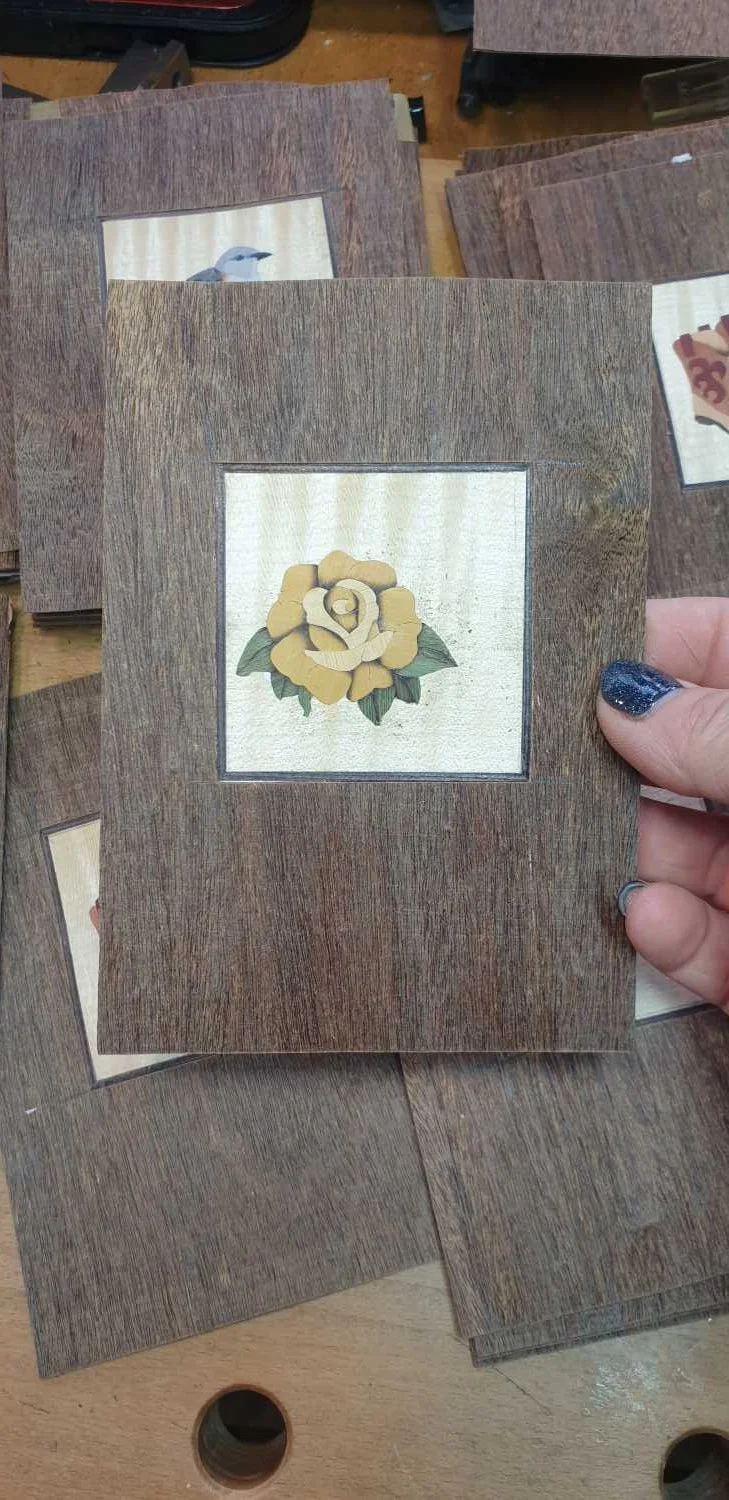
yellow rose of Texas by Elena Simonova - courtesy of Robert Yarger
Many will recall Sundial, the epic joint project between Rob and Jesse Born. Jesse insisted on using a special type of Ipe wood which Rob acquired in bulk. “The ironwood used for these came from the same tree as Jesse Born’s Sundial, as his project required so much that we had to order an entire tree, and then pay to have it sliced. These puzzles used those leftovers out of necessity, as that palate of ironwood sheets took up ¼ of my woodshop, e.g. garage.
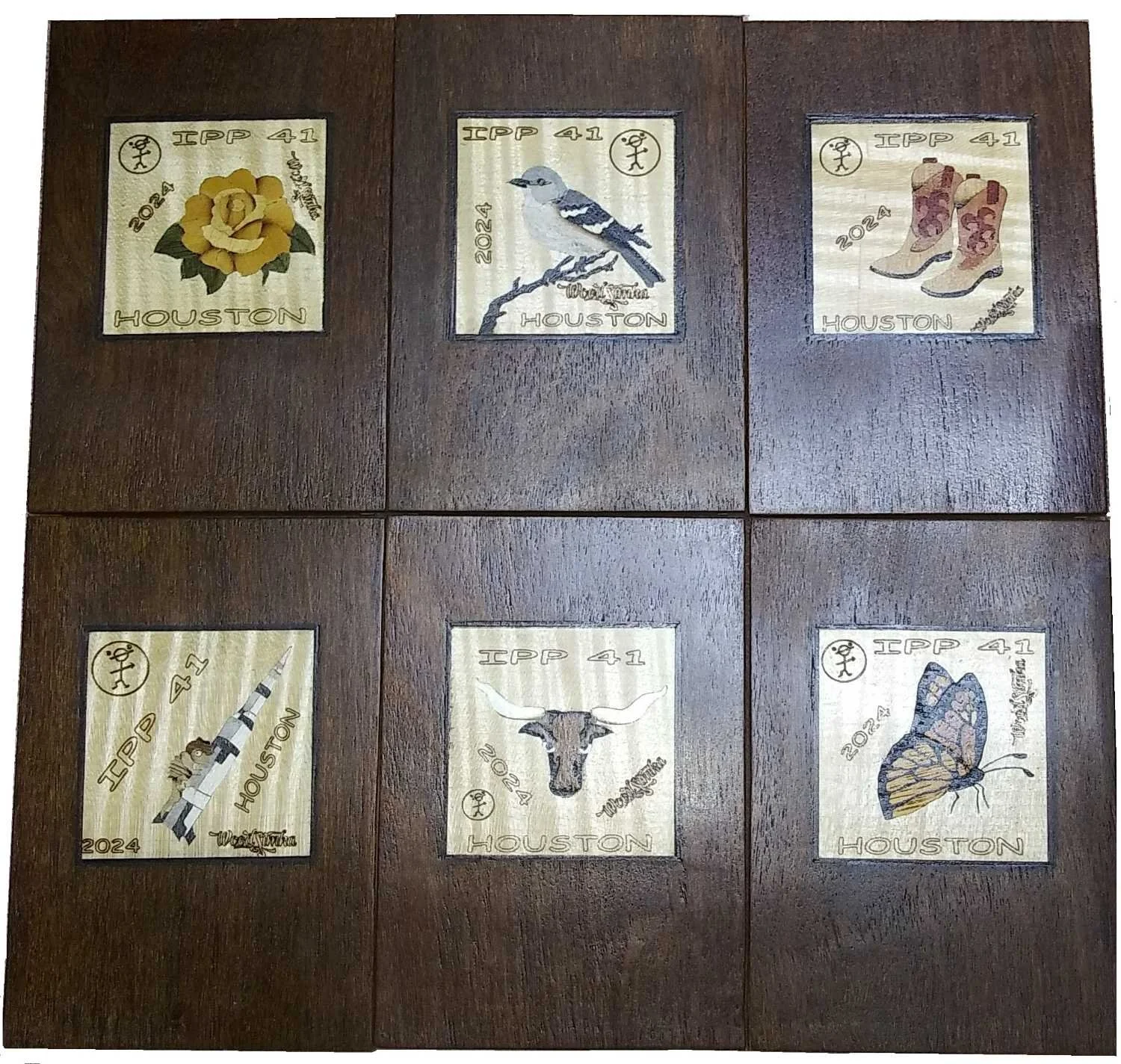
a taste of Texas themes - courtesy of Robert Yarger
When able, I enjoy working alongside other artists on projects. The marquetry was commissioned from Elena Simonova and imported through Turkey. Boxes featured one of 7 different Texas based themes. These were limited in edition to 80 kits.”
are you too cool for school?
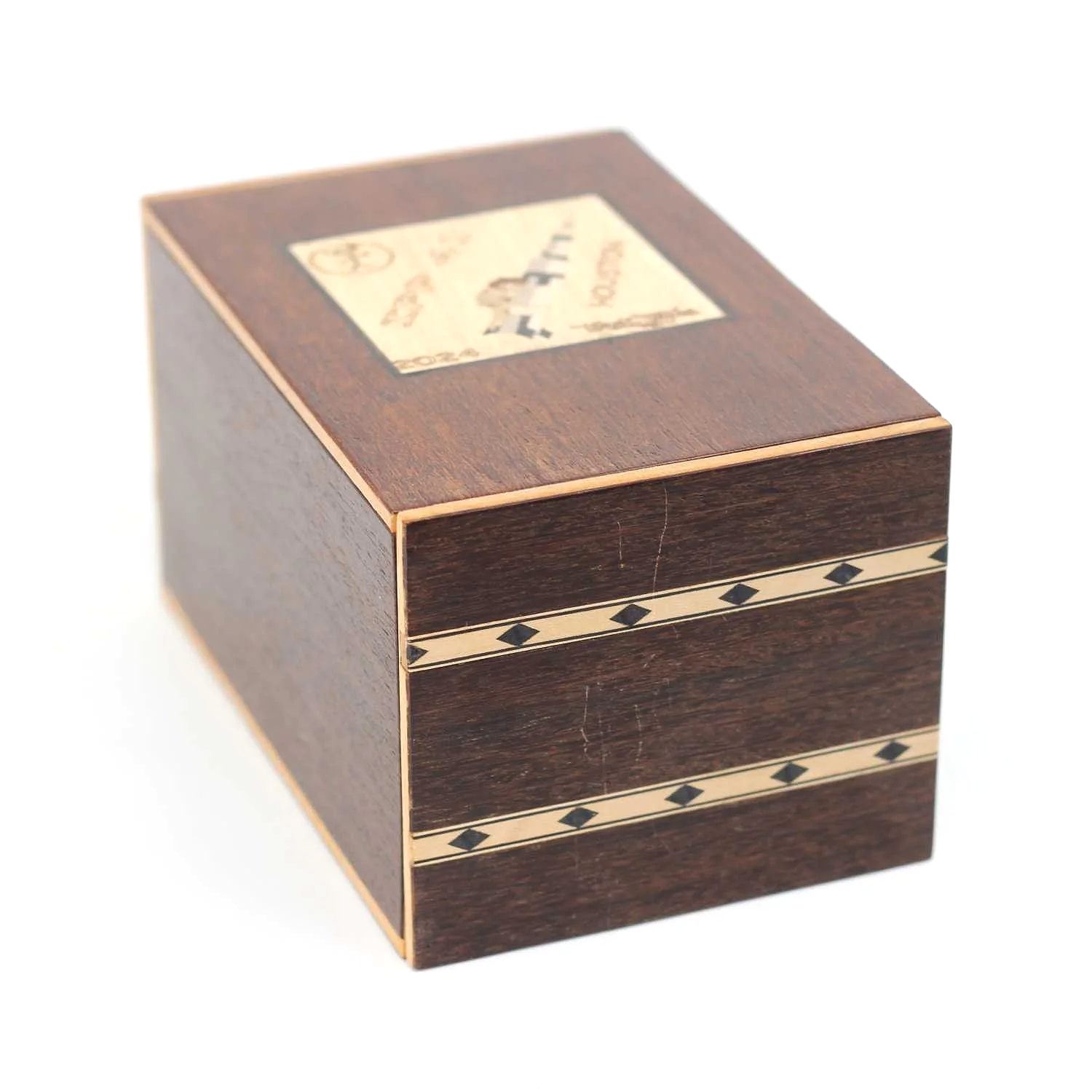
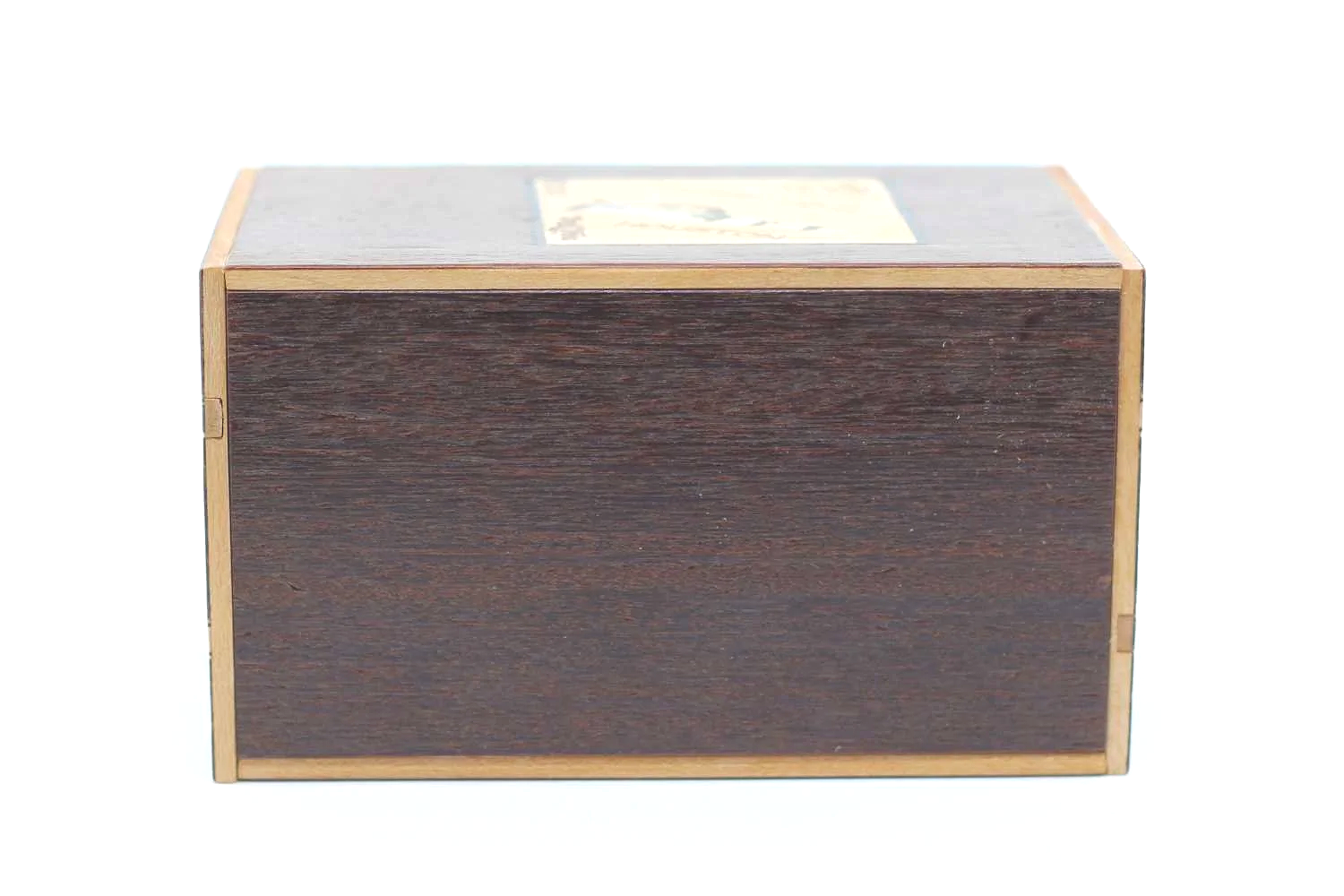
The OldSchool puzzle box is as special thanks to its unique story as it is due to the unique, unexpected twists on the classic genre Rob employs inside what appears to be a very traditional box. It’s not the first time he has put his own spin on the Traditional. In this case, some moves will feel familiar, but will only get you so far. You’ll need to think outside the box, and all around, feeling and listening carefully, finding surprises, and deducing what to make of them, if you intend to reveal all of the secret compartments. Or, you can simply disassemble it, and start over. Now that’s Old School.
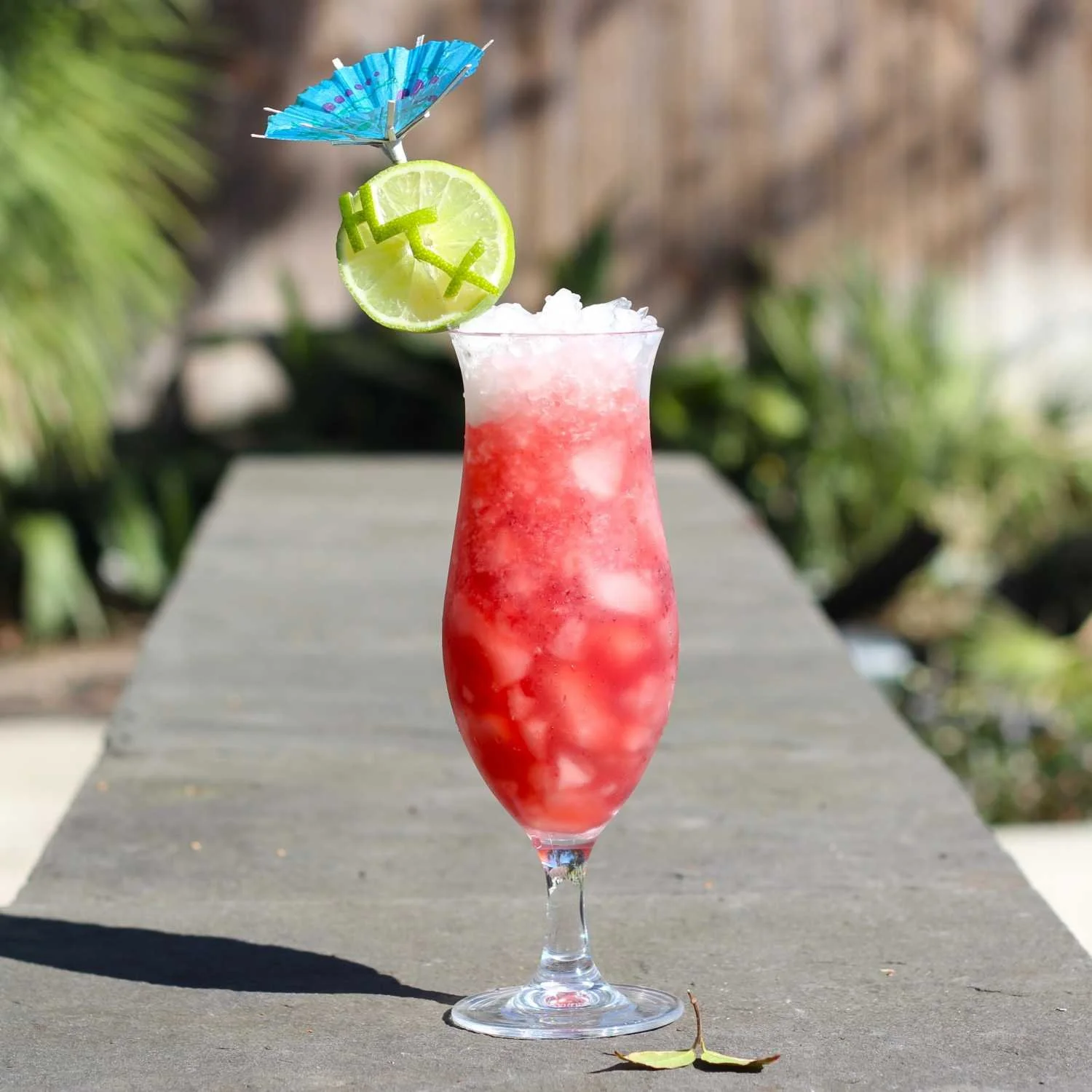
Hurricane by Kirk Estopinal
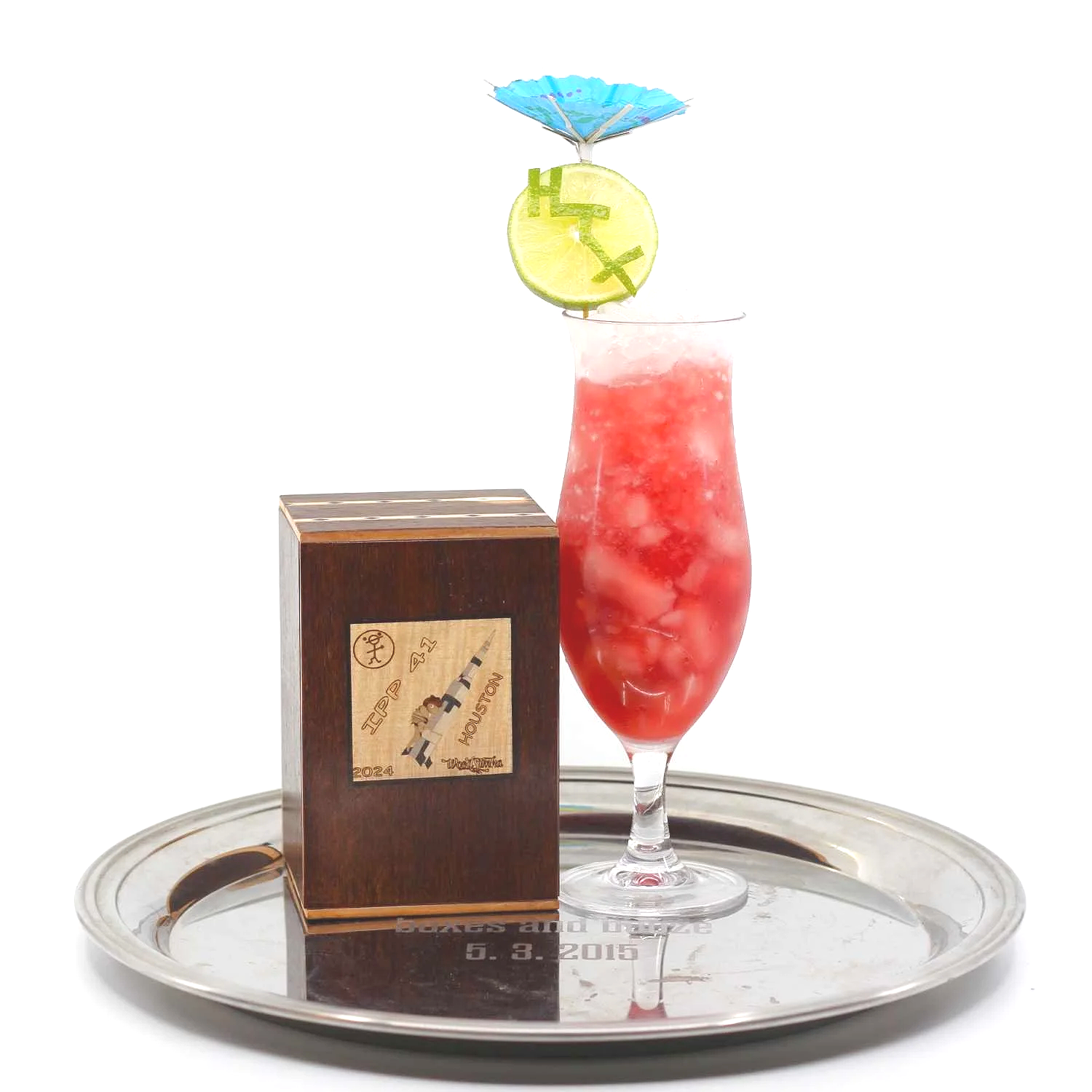
The celebratory toast to this puzzle, and its maker, is itself old school, relatively speaking, although for an old cocktail, it’s still vibrantly full of life, and one that almost everyone may have heard of at some point in their lives. The toast references a surprise guest that arrived uninvited to the International Puzzle Party in Houston, that summer of 2024. Hurricane Beryl made her blustery way into town on the final day of the event, uprooting plans and stranding puzzlers, who promptly hunkered down for some impromptu hotel time. What better cocktail to pay tribute to that moment than the Hurricane.
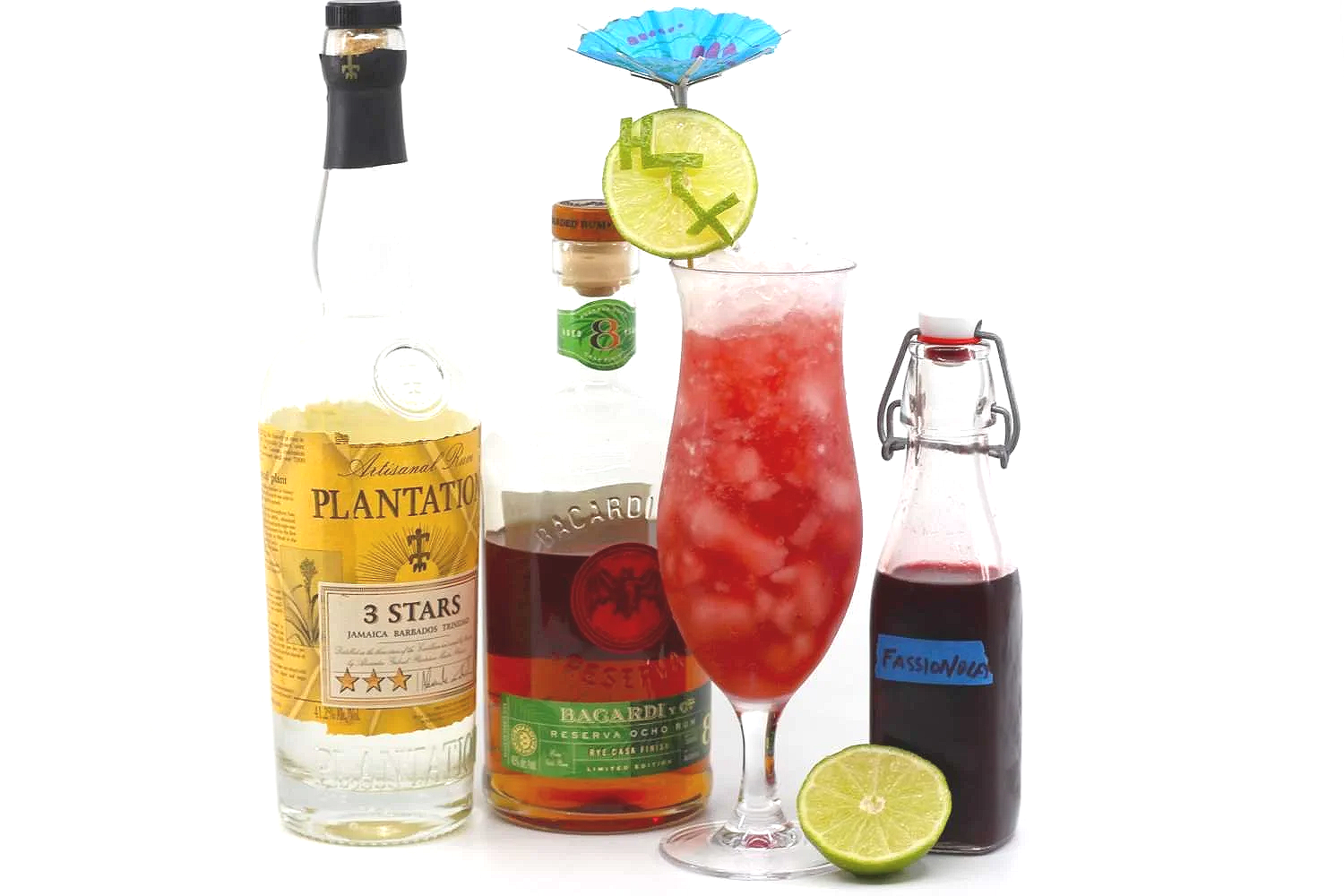
Hurricane’s a comin’
New Orlean’s legendary bar Pat O’Brien’s began as a speakeasy, known as Mr. O’Brien’s Club Tipperary, during the American Prohibition. Following those “dry” days, it became a legal establishment. During World War II, whiskey was scarce, and rum plentiful, so necessity was the mother of the Hurricane cocktail, which O’Brien’s created in 1940. It utilized a wonderfully mysterious tropical syrup known as “fassionola”, which has been attributed to Donn Beach, the father of tiki cocktails who may have invented the syrup in the 1930’s. What is mysterious is the original recipe, which has been lost to history, but most sources agree contained passion fruit, guava, possibly pineapple, and hibiscus. Kirk Estopinal of Cane & Table, one of New Orleans’ best craft cocktail bars, has updated the classic with the essential ingredients and his own version of the famous syrup. I borrowed a similar recipe from the website Saveur to make my own. Once you’ve tasted this version, a bright flavor bomb of a tropical daiquiri, hold onto something tight or you’ll surely be blown away. Cheers!
school’s out!
Hurricane (adapted from Kirk Estopinal)
1 ½ oz Puerto Rican rum
½ oz Jamaican rum
¾ oz fassionola syrup
¾ oz lime
Shake with ice and strain into a Hurricane glass filled with pebble ice. Inside out umbrella garnish.
Fassionola syrup (adapted from Saveur): Simmer 12 ounces of coarsely chopped strawberries, 1 cup passion fruit syrup, ½ cup guava jelly, ½ cup pineapple juice, and ½ cup dried hibiscus flowers in a saucepan for 10 minutes. Strain mixture and allow to cool. Add sugar to taste and water as needed for a maple syrup like consistency. Bottle and refrigerate for use.
explore more: