
Detour Box
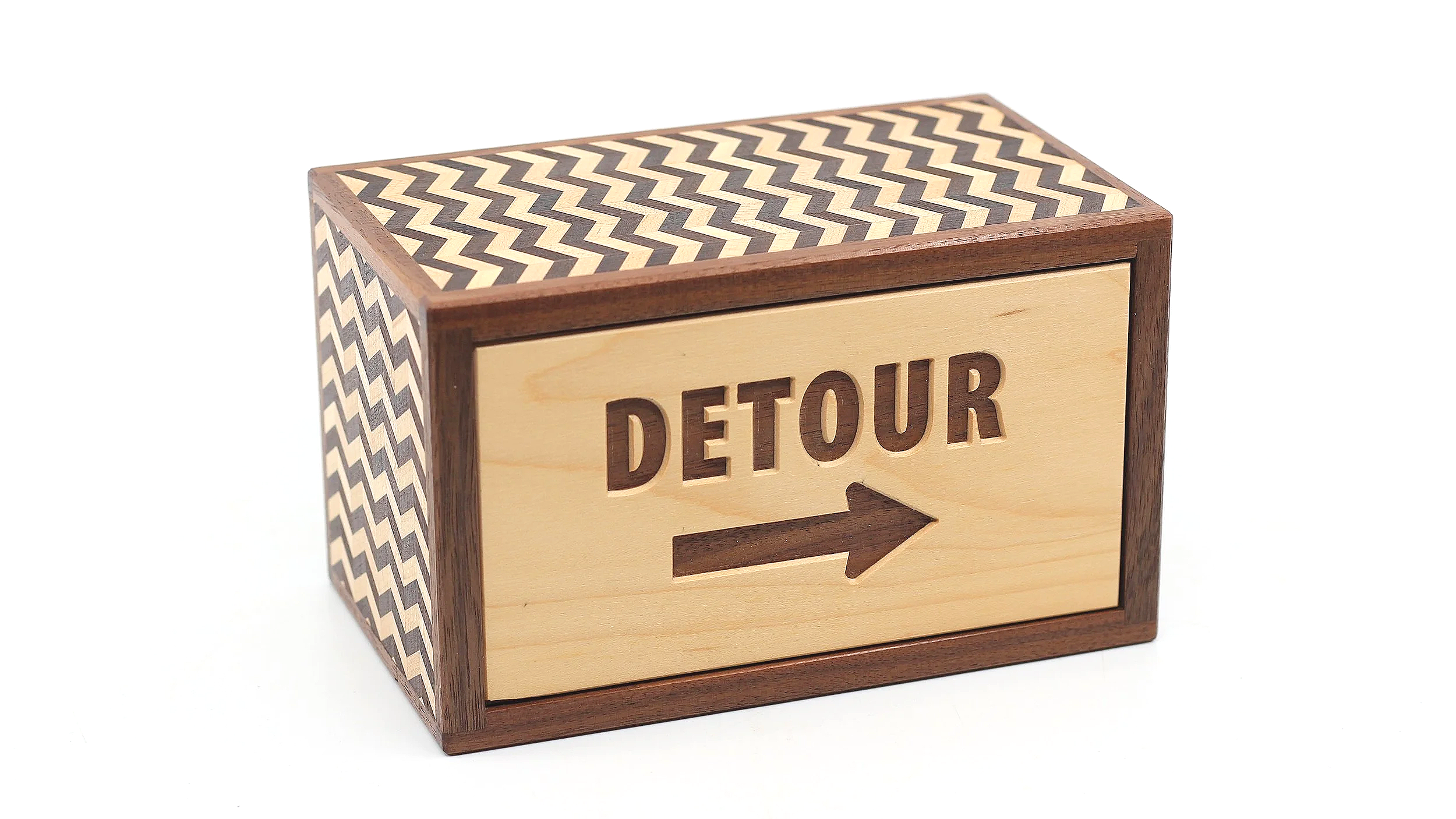
Detour Box by Peter Freese
I’m happily guilty of engaging in pleasant word play whenever the opportunity knocks, and these pages have certainly overheard a loud rapping on the door many a time (despite what they say about it only happening once). I also love to take a detour to introduce a talented new designer. So it is with great pleasure that I present the Detour Box by Peter Freese, who has launched his wood working brand “Ludignum” from his home in Washington state. The brand name is wonderful word play on wood play, a portmanteau of the latin ludus and lignum. Peter has been fascinated with mechanical puzzles from a young age, and describes on his website how this new project “emerged from my desire to merge all of these experiences — puzzles, hidden mechanisms, finely crafted objects, and the joy of storytelling — into a single aspiration. I wanted to create physical objects that explored the logic of mechanisms, the warmth of wood, the narrative possibilities of hidden compartments, and the quiet delight of discovery.”
Sometimes it’s the detours which turn out to be the fruitful ideas - Roger Penrose
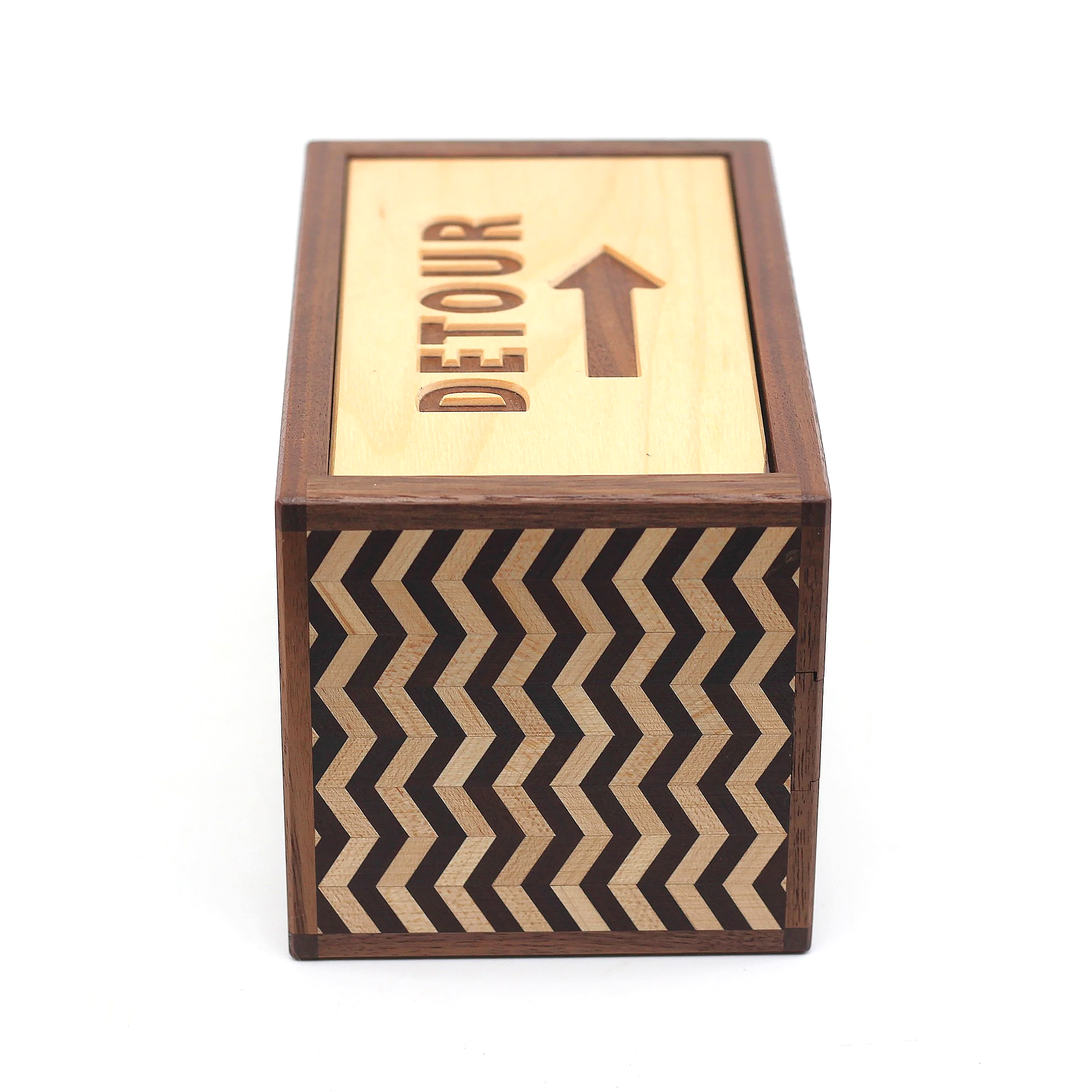
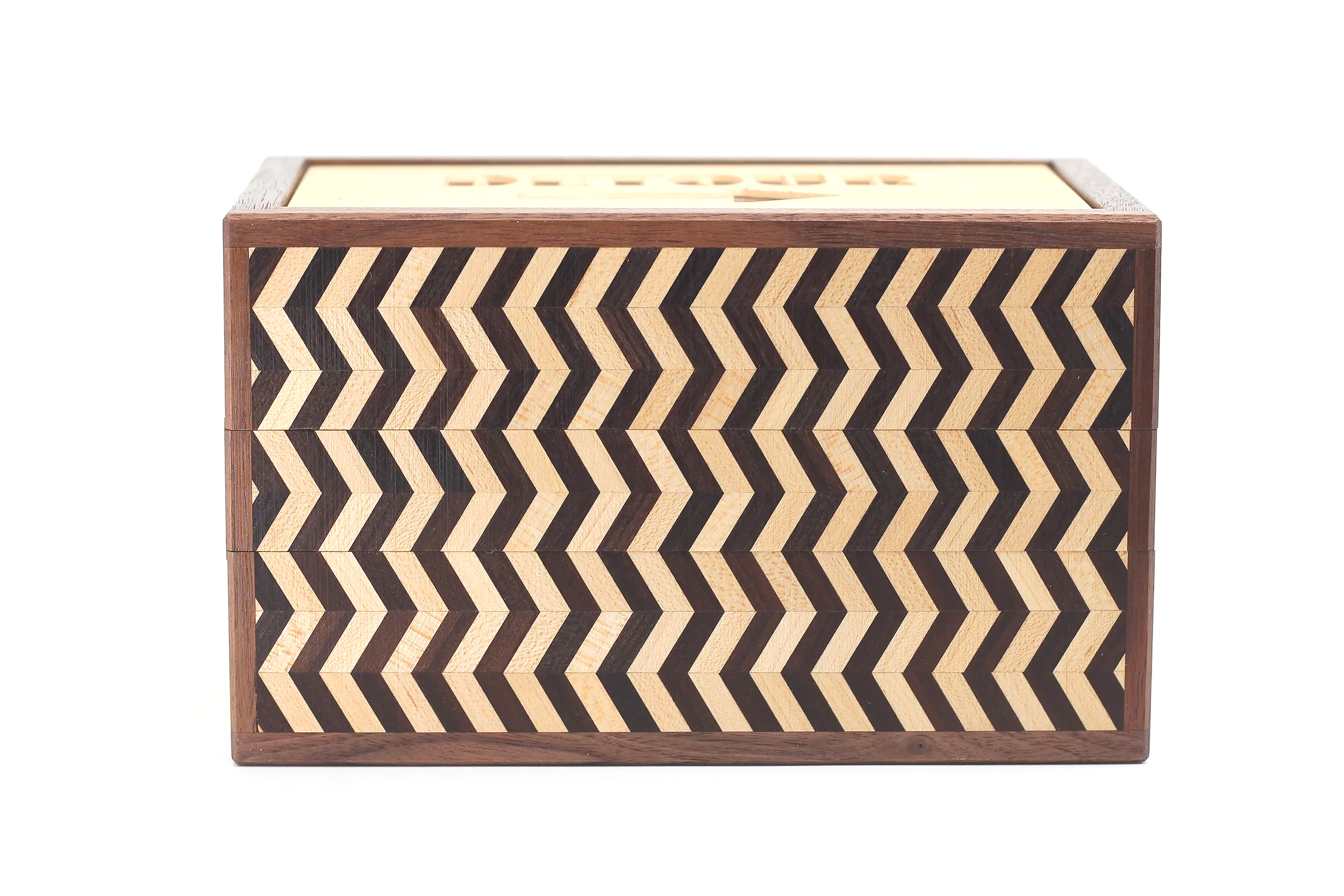
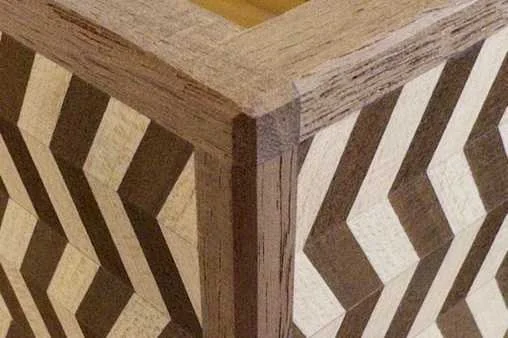
Detour box is very handsome, a finely crafted box made with high quality wood that will compliment any serious collection. Peter’s homemade zigzag veneer is a vibrant and bold choice which gives the project a unique identity. Look at the box from the side long enough and you may experience the cafe wall illusion effect. It should thus not come as a big surprise to discover that Peter attended one of Kagen Sound’s Anderson Ranch puzzle box making workshops, which is where the idea for this detour emerged. The box is dynamic, and moves in ways that are easy to discover, but difficult to understand, for a while at least. I was lost in the detour for days, until I at last discovered the way home. The box has a very satisfying tactile experience to it which is delightful, and just the right balance. Peter, who is also an excellent writer, told me a bit about himself and his maiden project.
A good puzzle box is not just something to solve; it is something to handle, inspect, distrust, and eventually understand. - Peter Freese
“I’ve been a software engineer making video games for several decades, but I’ve also had long-running interests in woodworking, puzzles, and objects that conceal more than they reveal. I’ve spent years participating in and designing puzzle hunts, hosting themed puzzle-hunt parties, and thinking about how people interact with often-hidden structure. Over time, that naturally began to merge with my hobby as a fine woodworker. Ludignum grew out of this intersection of interests: the precision of well-designed systems, the tactile and sensory discipline of woodworking, and the theatrical quality of a well-designed puzzle.
courtesy of Peter Freese
I’m very interested in puzzles that create a narrative experience, and this was a key element in all my puzzle parties, but I’m wary of narrative that is merely pasted onto a mechanism. A story should be integral to what the solver notices, what they misunderstand, what they try, and how their assumptions change. With Detour, I didn’t want to add an external fiction or decorative premise. I wanted the box to tell its story mechanically. At the risk of sounding a bit artsy, I wanted solving the box to be its own story: during the solve, the solver begins to feel they are making progress, but eventually realizes they have been duped and that no progress has been made at all. Upon reflection, they realize that progress did occur, but only in their mental model — and that reconsideration leads them to the solution.
courtesy of Peter Freese
I’m especially drawn to puzzle boxes that look simple but hide underlying complexity. Akio Kamei is an important reference point for me, not because I want to imitate his work, but because his best boxes have a kind of poetic restraint and he has inspired so many great designers at Karakuri Creation Group. I occasionally invite an imaginary Akio into my shop and think about what advice he might give me. My favorite KCG designers are Hideaki Kawashima and Hiroshi Iwahara. I’m also a big fan of Kagen Sound — his boxes incorporate visual elegance, unique mechanics, and a narrative told through the boxes’ appearance and solutions.
courtesy of Peter Freese
Detour Box is my first commercial release under Ludignum. I wanted the first release to establish a particular design language: quality woodworking, a unique visual aesthetic, interesting mechanical elements, and a solve that feels simple and justified rather than gratuitously complicated. The idea for Detour came after attending a workshop taught by Kagen Sound at Anderson Ranch in Colorado. A conversation with a fellow attendee got me thinking about how to create a certain mechanism that is integral to Detour. I spent several weeks prototyping various mechanisms before I arrived at something I was satisfied with. Once this was complete, I thought about how to design the puzzle box around it. This might seem backwards, but many of my ideas begin with: “What if I could do this? What kind of puzzle would benefit from it?”
courtesy of Peter Freese
Another inspiration came from a tester of a one-off puzzle box I had created. He told me he loved the haptics and asked how I made it click when he made certain moves. I had to explain that it was purely accidental, but I mentally vowed that I would make haptic response a priority in any puzzle box I made. I think haptics are of primary importance in the sensory feedback of a puzzle box, and you can find click mechanisms in many excellent puzzle boxes, including those from Karakuri Creation Group.
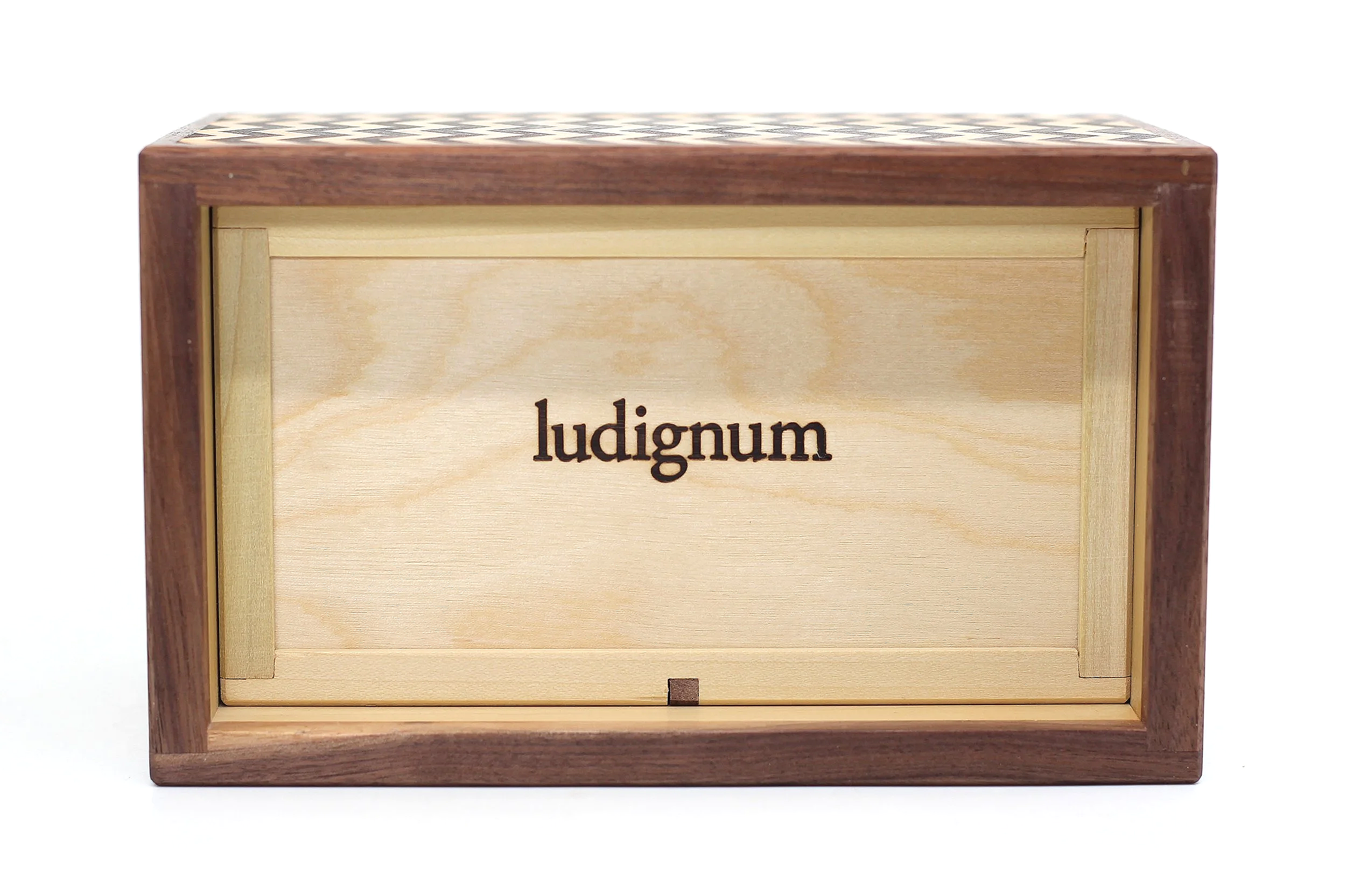
Puzzle boxes appeal to me because they sit in a rare category: they are mechanical, intellectual, sculptural, and intimate all at once. - Peter Freese
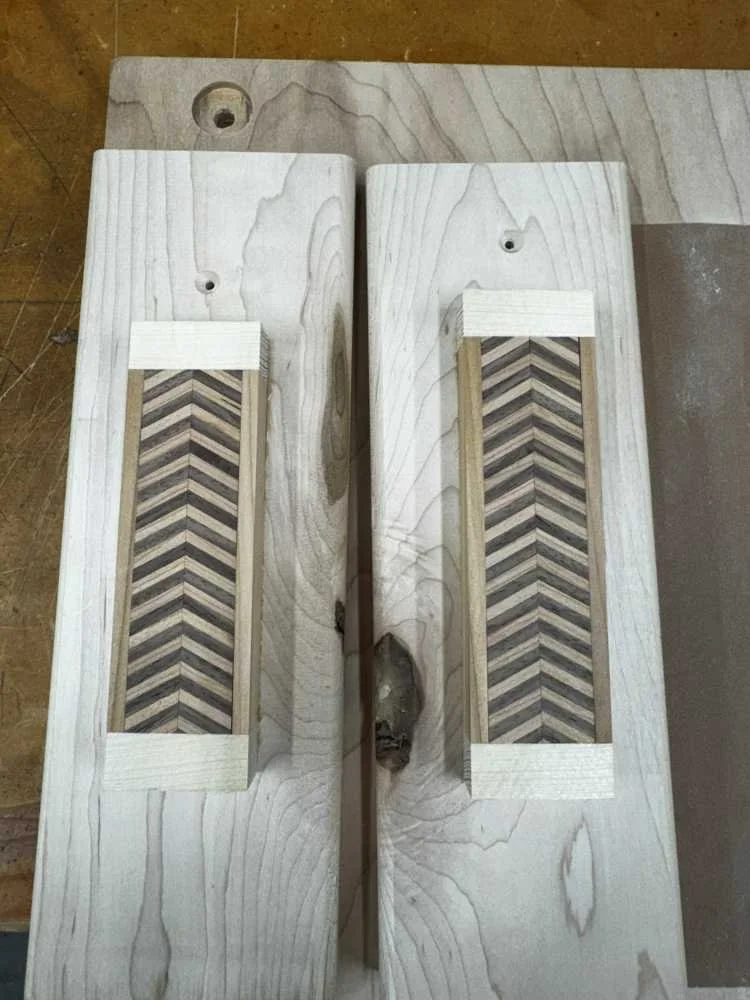
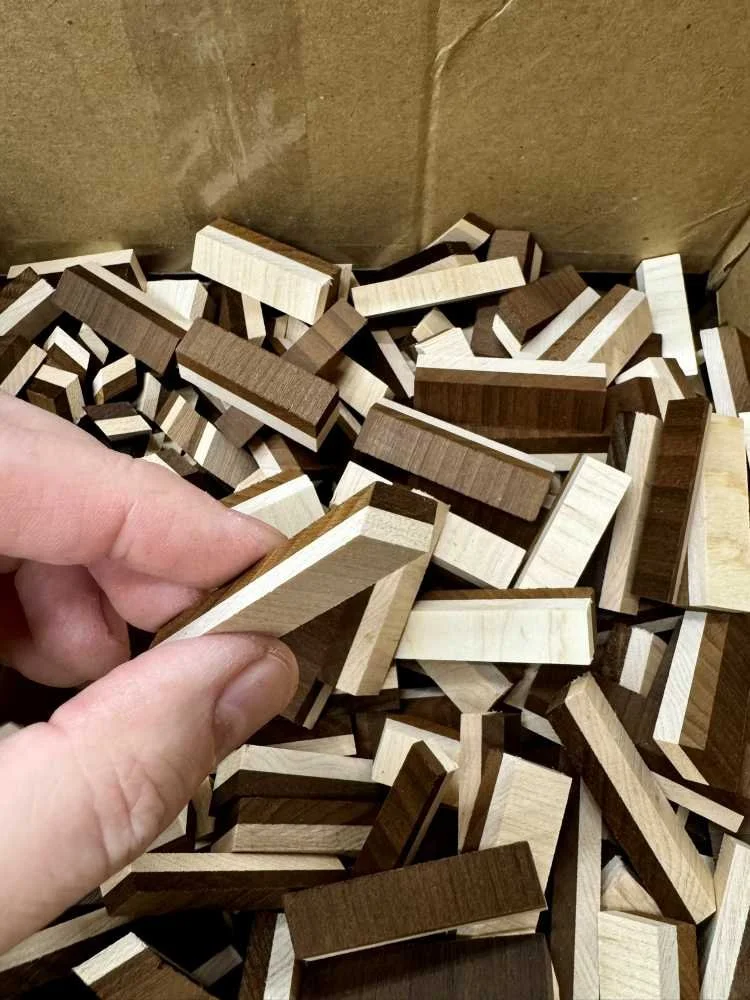
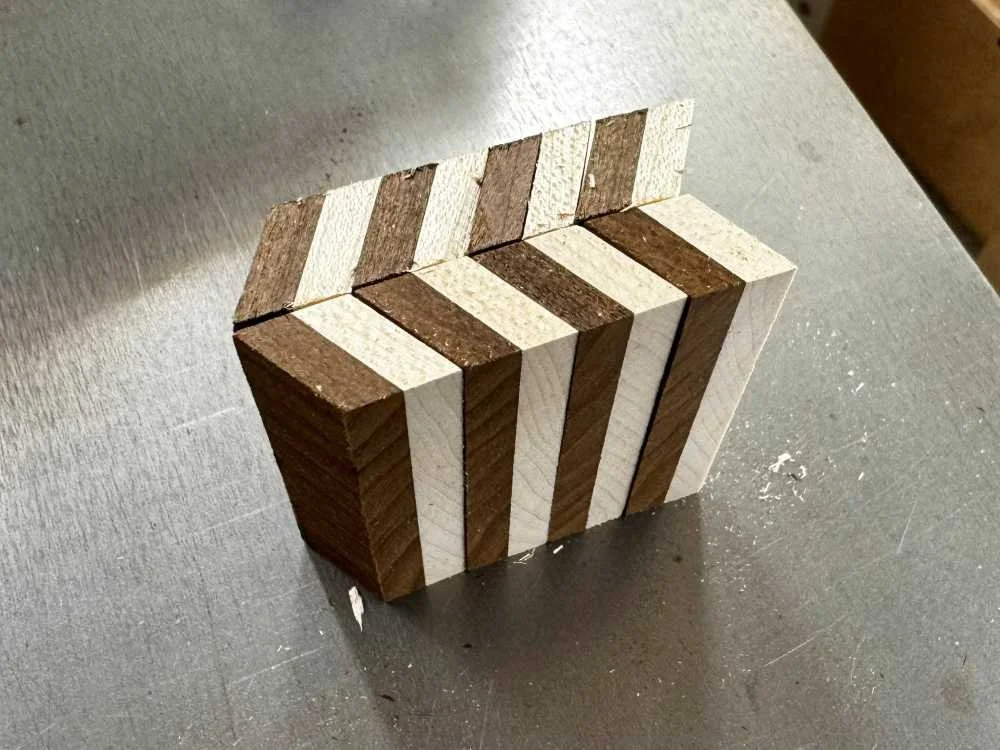
A third idea that I wanted to incorporate in my first puzzle box was patterned wood, such as the yosegi-zaiku on Himitsu-Bako boxes from the Hakone region of Japan. I’d learned a bit about creating yosegi from several online creators, and I got to pull my first veneer from a tanegi block at Kagen Sound’s workshop. Making yosegi is not at all easy, and I have great respect for anyone who can do it at all — and complete awe for those who do it well. My first attempt at hand-planing a tanegi of my own design was humbling, to say the least. I decided two things about incorporating yosegi into my work: 1) I would look for a process that would guarantee workable results even with my poor hand-planing skills, and 2) I would not try to recreate any of the traditional yosegi patterns from Hakone. I feel those belong to the traditional artisans, and anything I created would need to be uniquely my own.
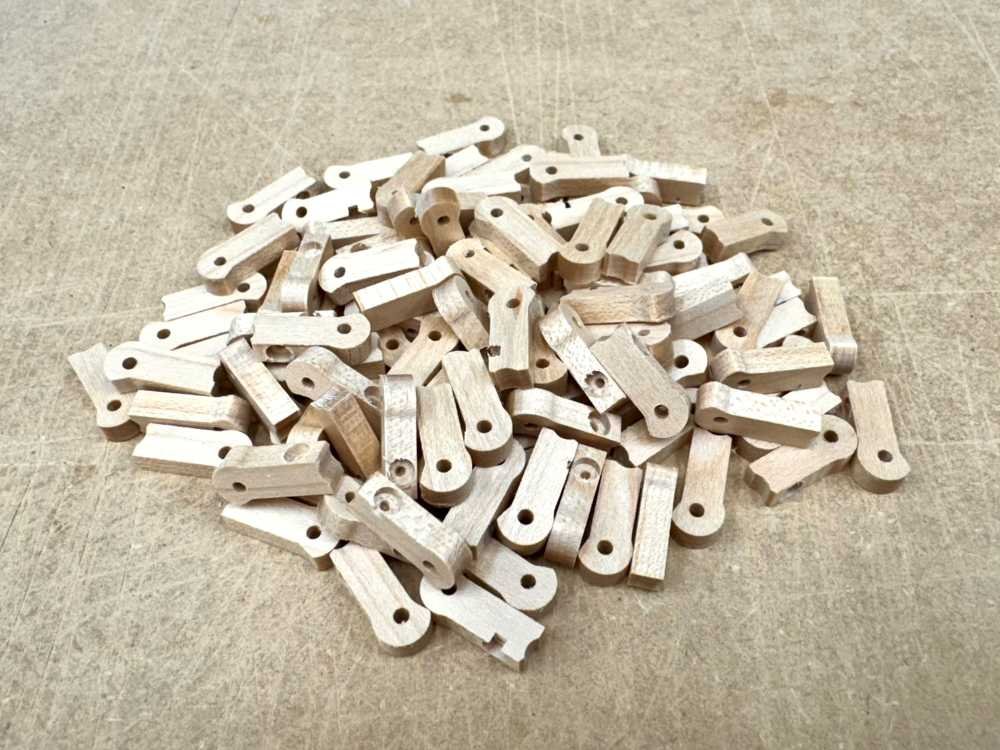
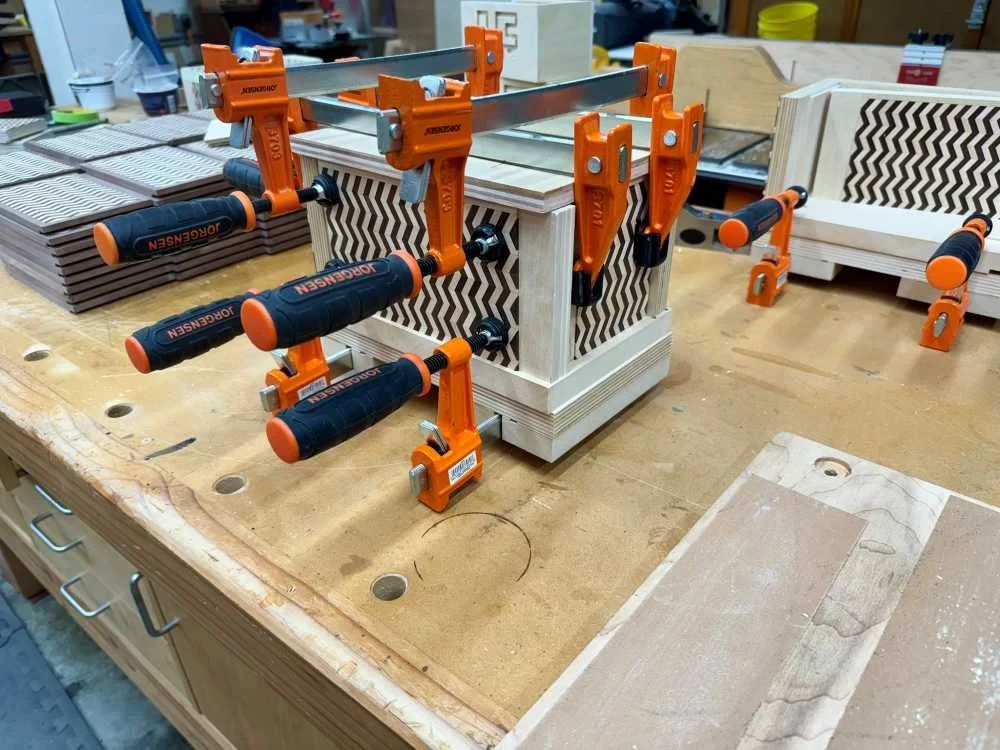
courtesy of Peter Freese
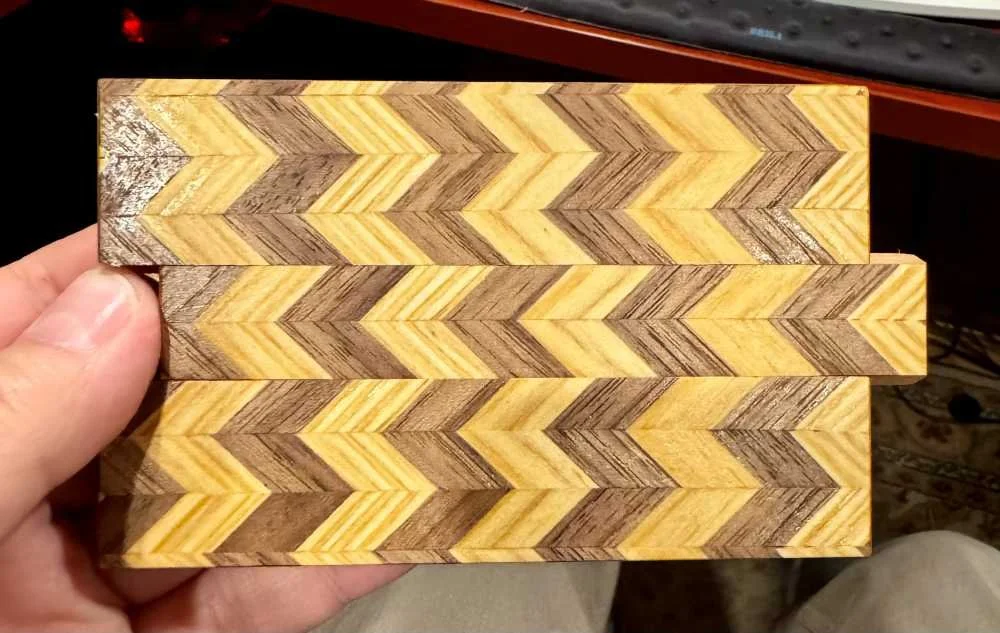
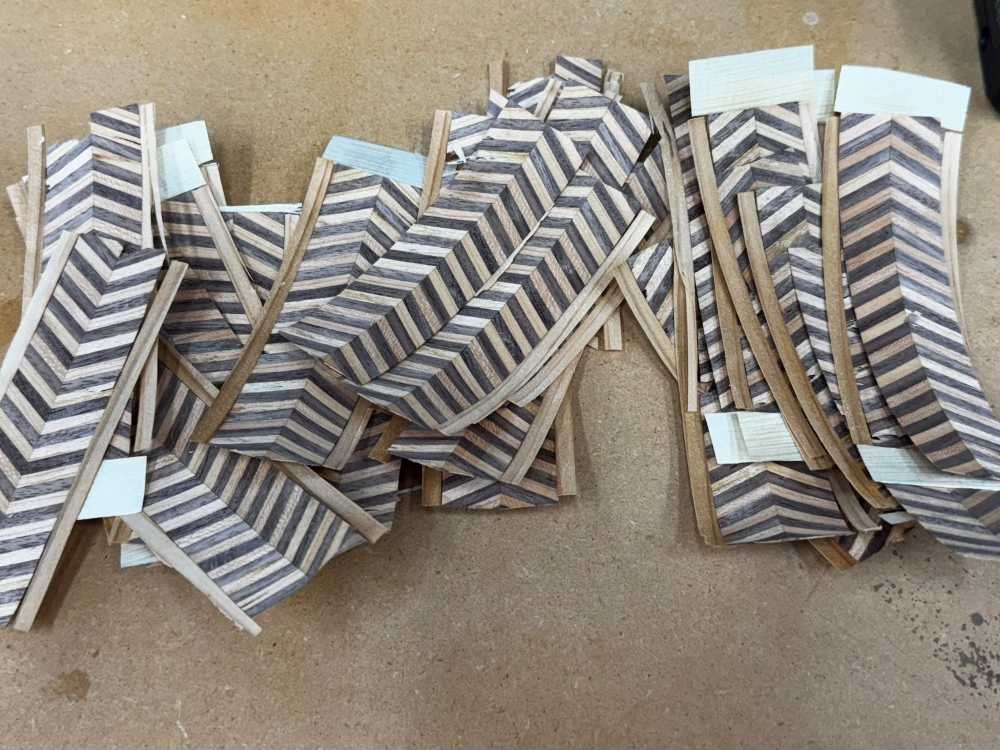
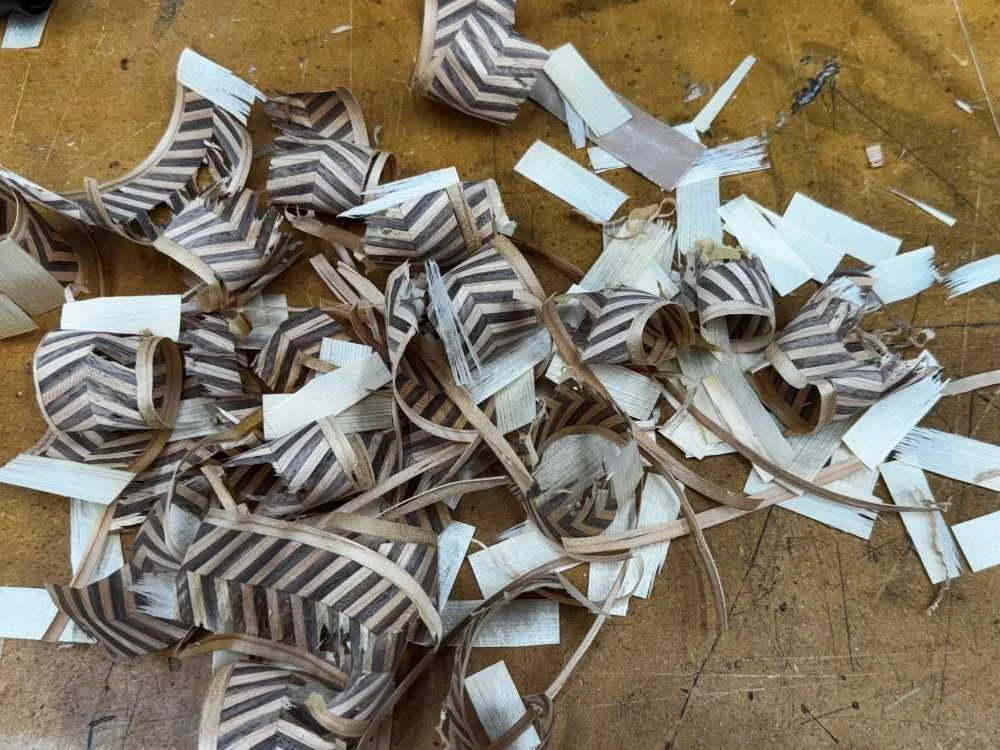
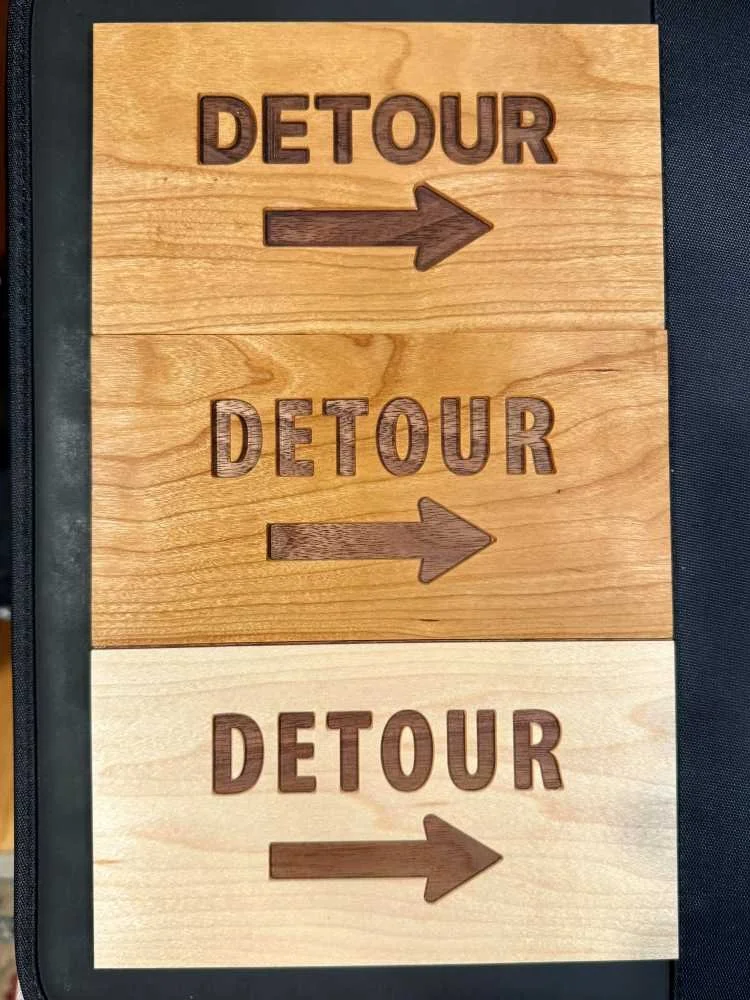
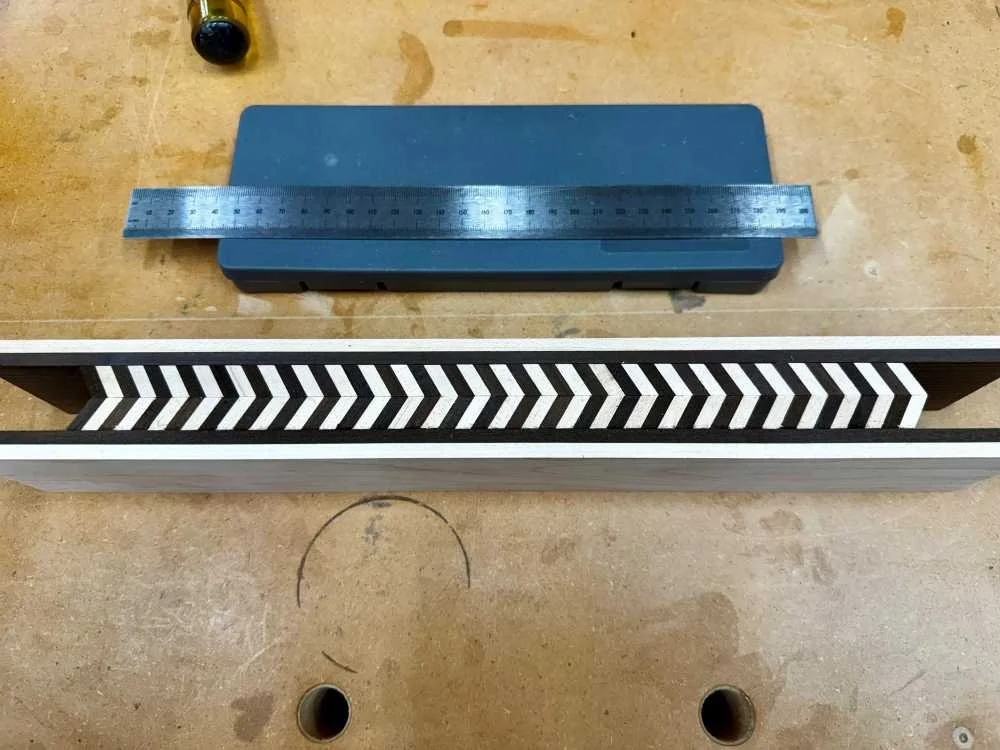
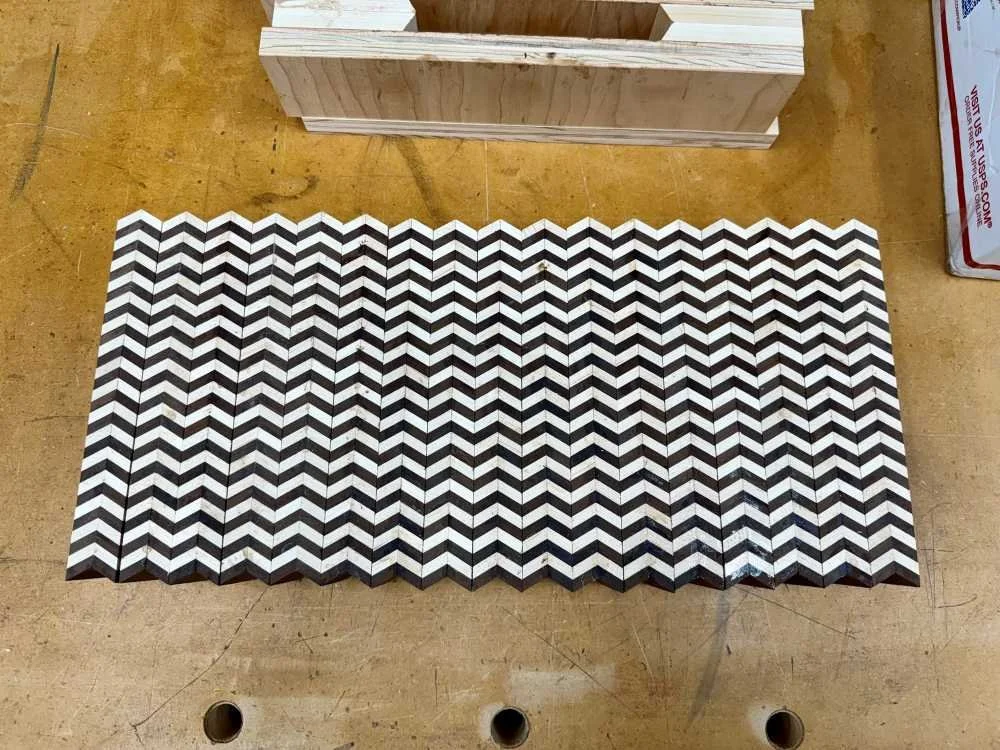
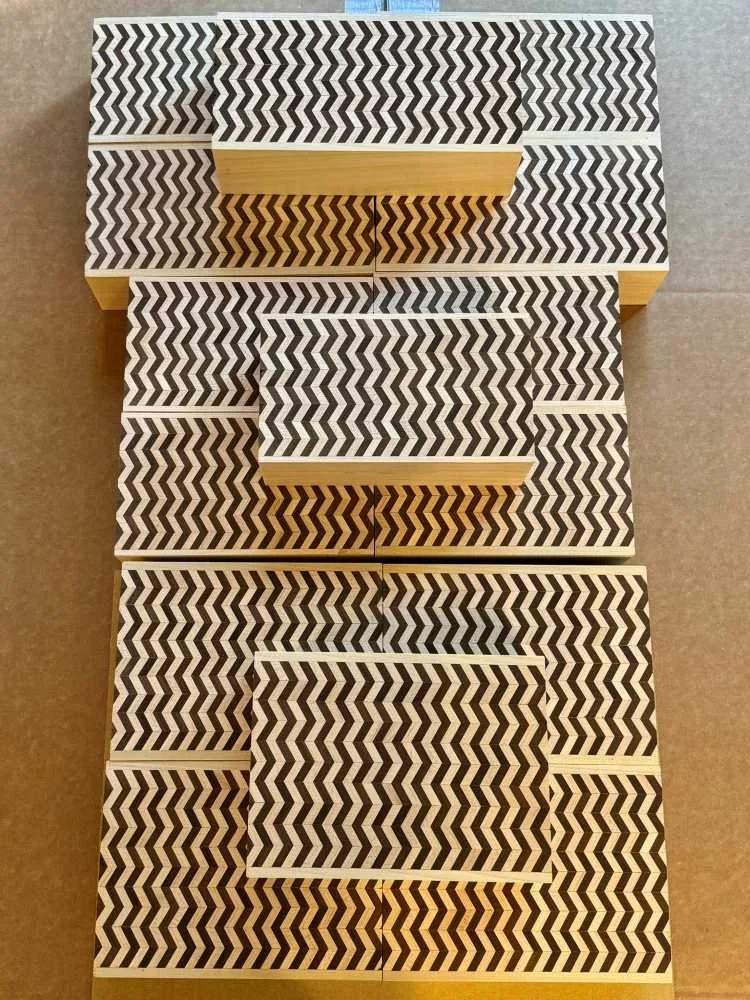
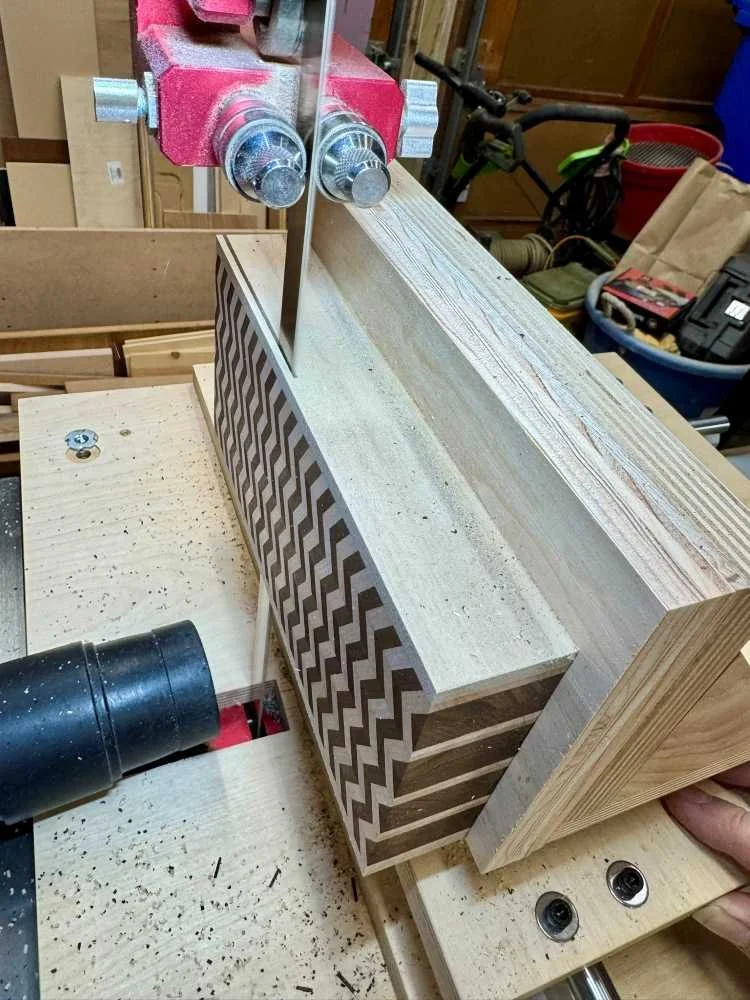
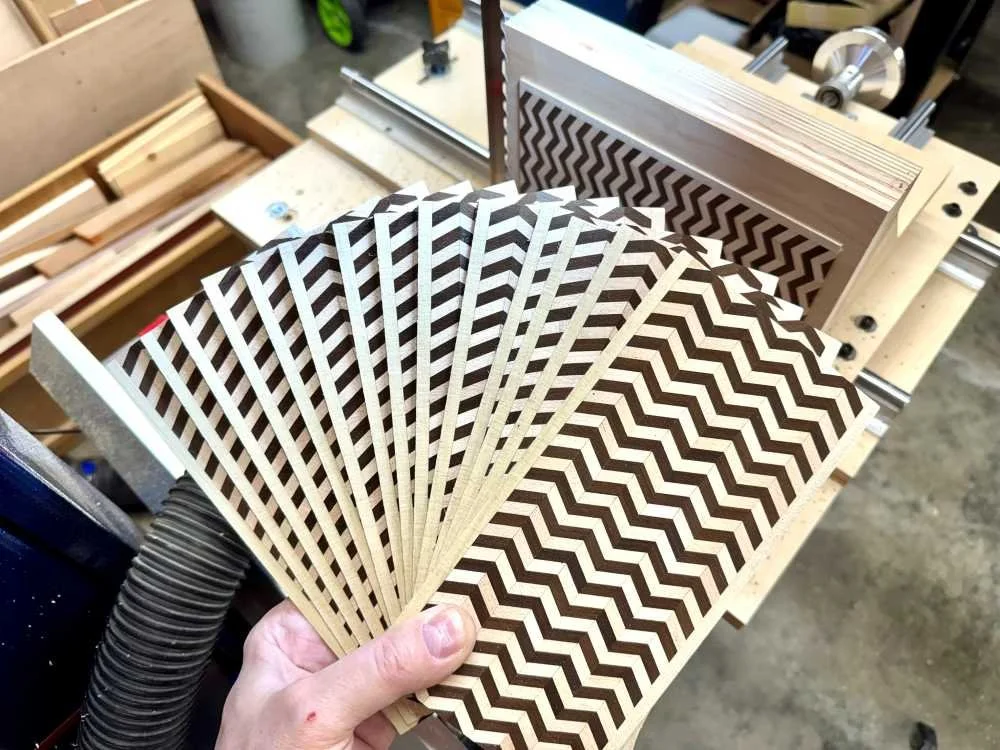
The pattern I settled on, a zigzag comprising stacked dark and light chevrons, along with my mechanical design, immediately suggested the concept of a detour, and thus the box name. This name feels right for the box, and I incorporated it into the lid with a highway-sign font and an arrow suggesting a direction. The zigzag yosegi pattern is made from white maple and thermally treated Cambia poplar. The rest of the box is walnut and poplar. I spent nearly two months creating the yosegi veneer. My initial experiments in hand-planing yosegi showed that it would not be something I could scale up to the size I needed for Detour with any reliability. Some attached photos show early yosegi tests using walnut and cherry. The process I came up with to slice them involved creating a special bandsaw sled that allowed me to create nearly perfect parallel slices with identical thickness, dialed in via a knob on a threaded rod. These slices were much thicker — about 3 mm — than traditional planed yosegi, which are usually less than 0.5 mm. This was fine for my purposes, as it allowed the veneer layer to serve a structural purpose as well as a visual one.
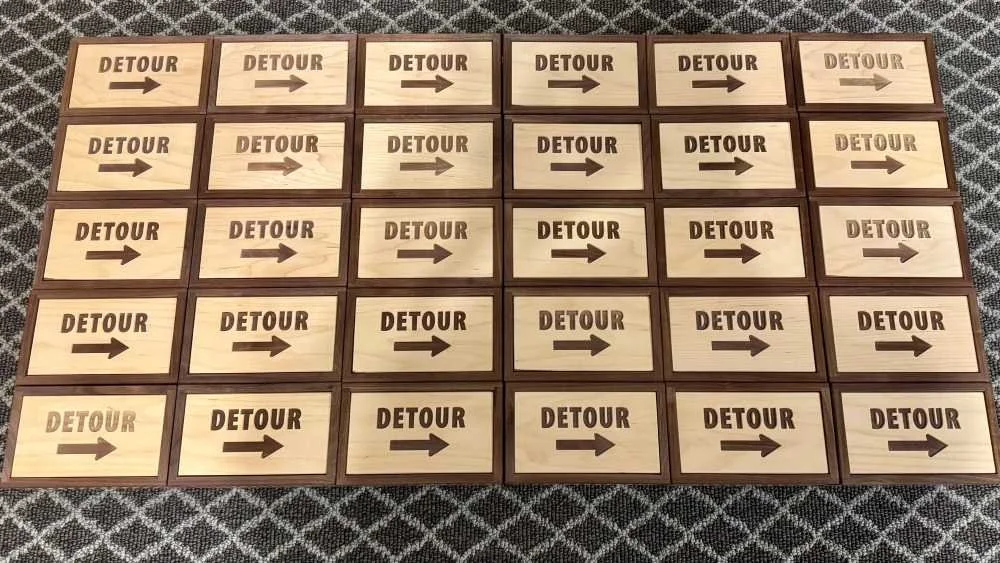
courtesy of Peter Freese
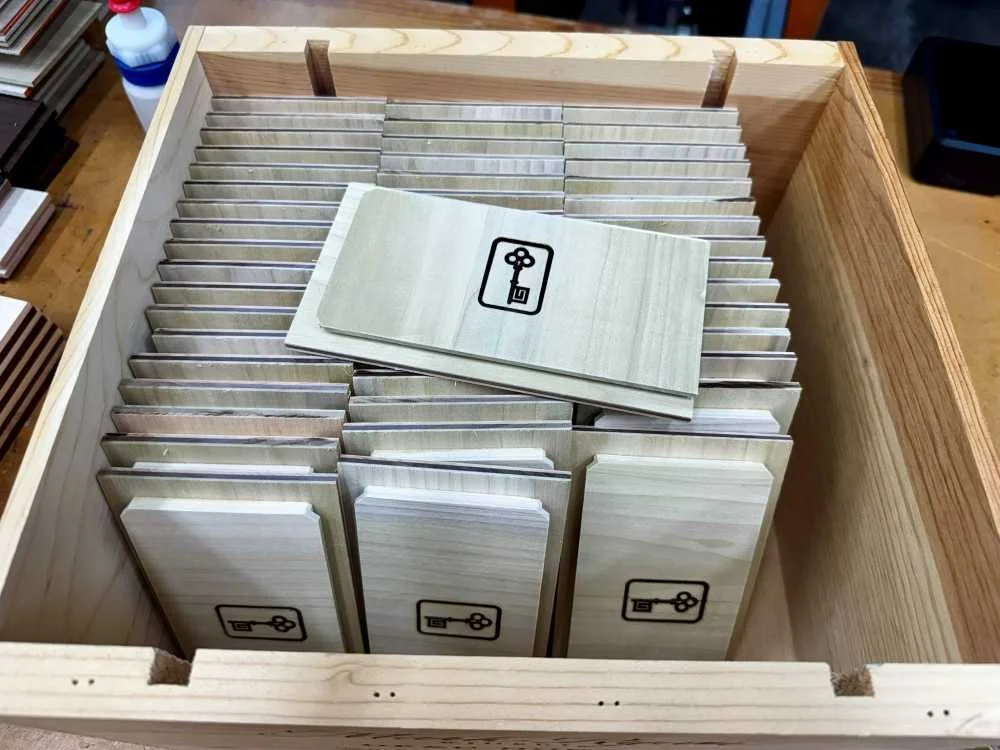
Production of Detour taught me a great deal. I learned that there is a big difference between designing something to be made once or twice and designing something to be made at scale. Not all processes translate gracefully into a production pipeline, and there were quite a few times when I had to pay a high labor price for not thinking early enough about how something would be built en masse. A humbling part of the process is that I underestimated how much of the work would happen after the boxes were “done.” Making the object was only part of the project. Then came numbering, certificates, wrapping, creating presentation boxes, shipping cartons, customs forms, customer communication, replacement planning, and all the small operational details that turn a handmade object into a real release. It gave me a new respect for the invisible labor behind small craft businesses.
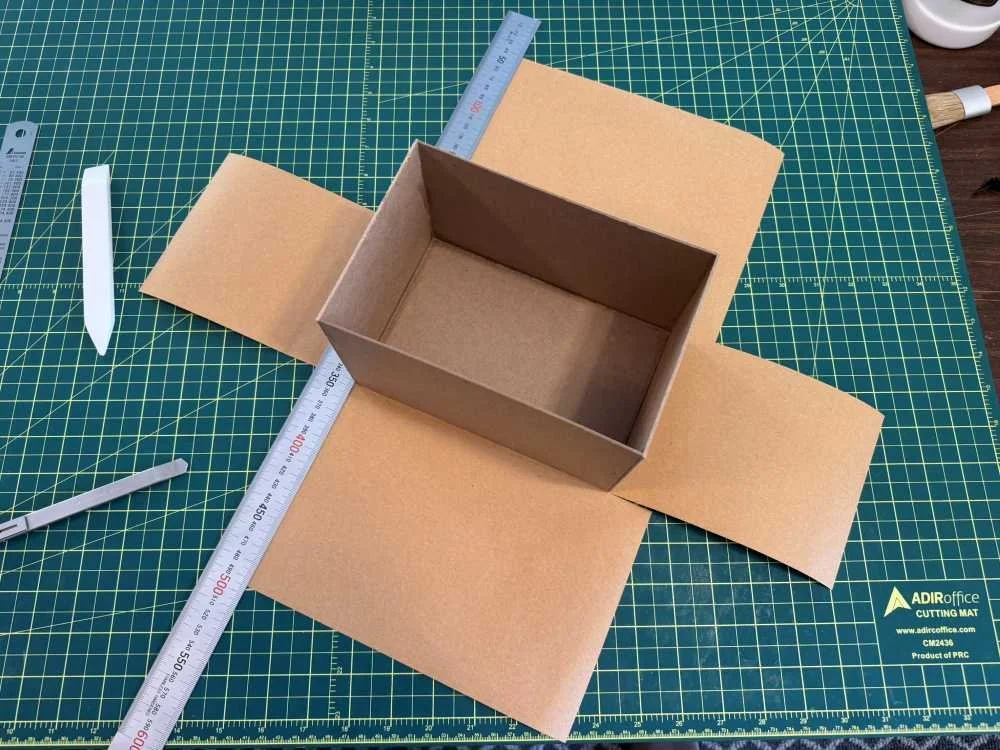
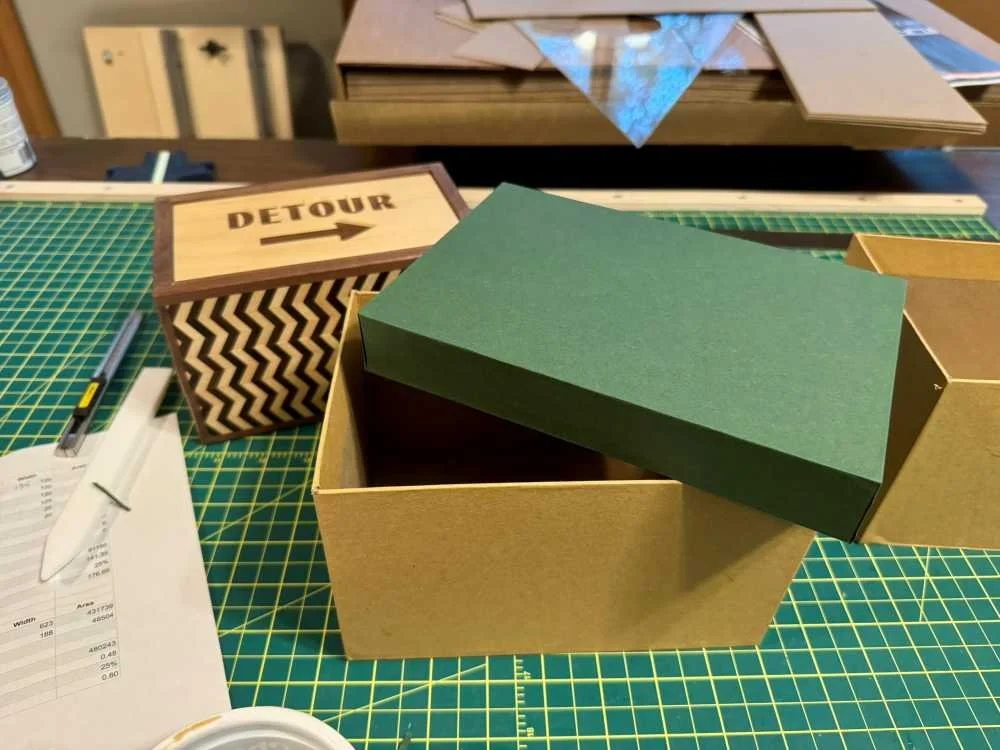
courtesy of Peter Freese
I likely spent more time than many would on the packaging. I wanted receiving the box to be an experience, not just the unpacking of a product. Each box was wrapped in archival tissue with a belly band and wax seal, placed in a hand-created rigid presentation box, and accompanied by a certificate of authenticity and solution materials. I care a lot about this part of the experience and picked all the materials very intentionally. For example, the vellum paper I originally selected for the CoAs didn’t feel quite right to me and was a bit too translucent, so I had to order a different paper from another supplier, which set back CoA production by another week — though I still had plenty to do. This all contributed to the Ludignum “unwrap” experience, and I was pleased that several collectors noticed and appreciated it.
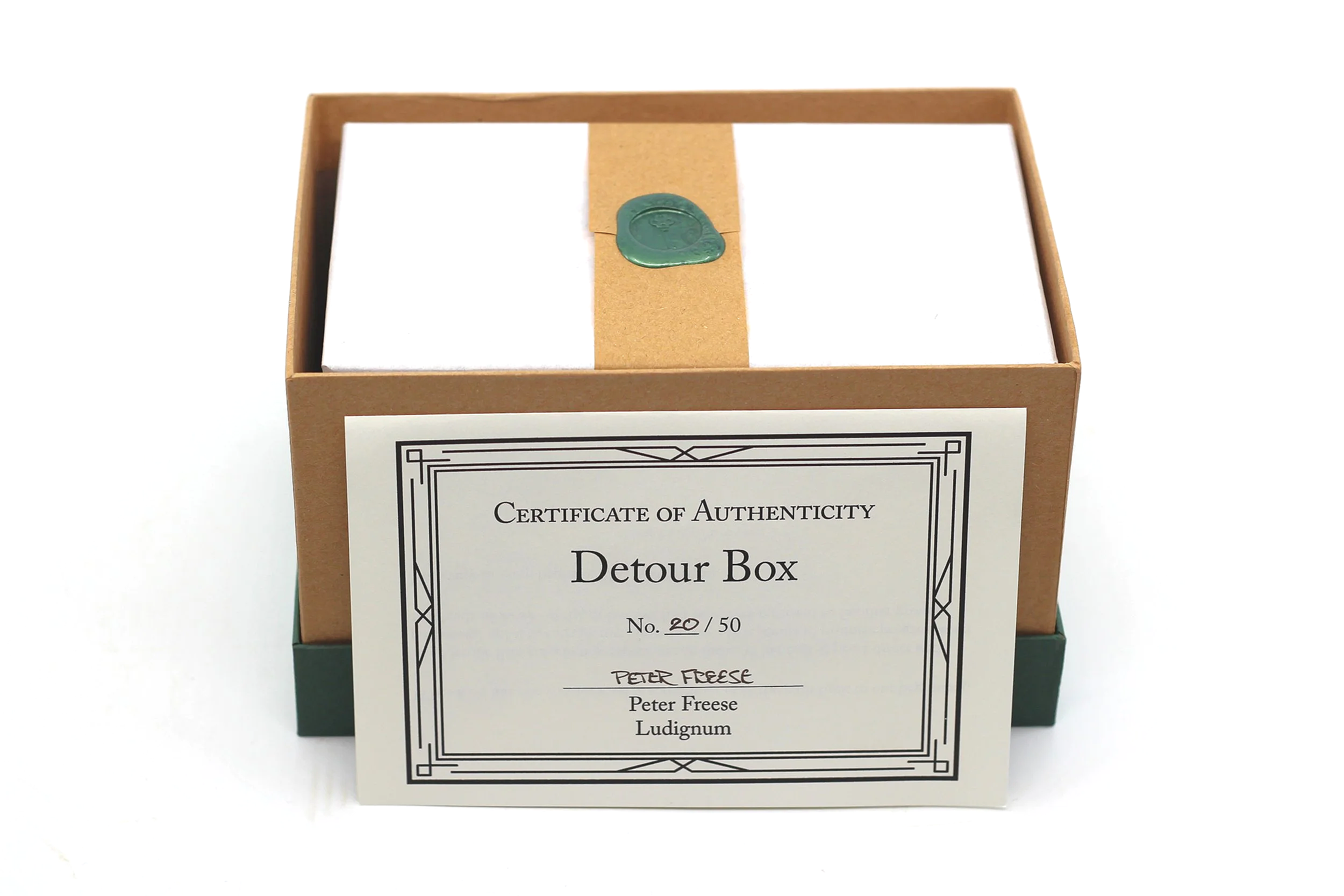
this detour took no shortcuts
The response from collectors has been very encouraging. Several people commented not just on the solve, but on the workmanship, the packaging, and the overall aesthetic of the object. That matters to me because I intend for Ludignum not to be only a puzzle brand; I want to create objects that are a pleasure to hold and look at, and that invite their owners to occasionally pull them off the shelf just for the joy of solving again. I currently have more puzzle-box designs in my head, in drawings, and in documents than I can possibly build for the next few years, and I’m already at work on the next one. My goal is to build a range of Ludignum pieces, from approachable small boxes for a larger audience to more elaborate collector works, all sharing the same underlying values: restraint, precision, material beauty, and a solve that feels earned.
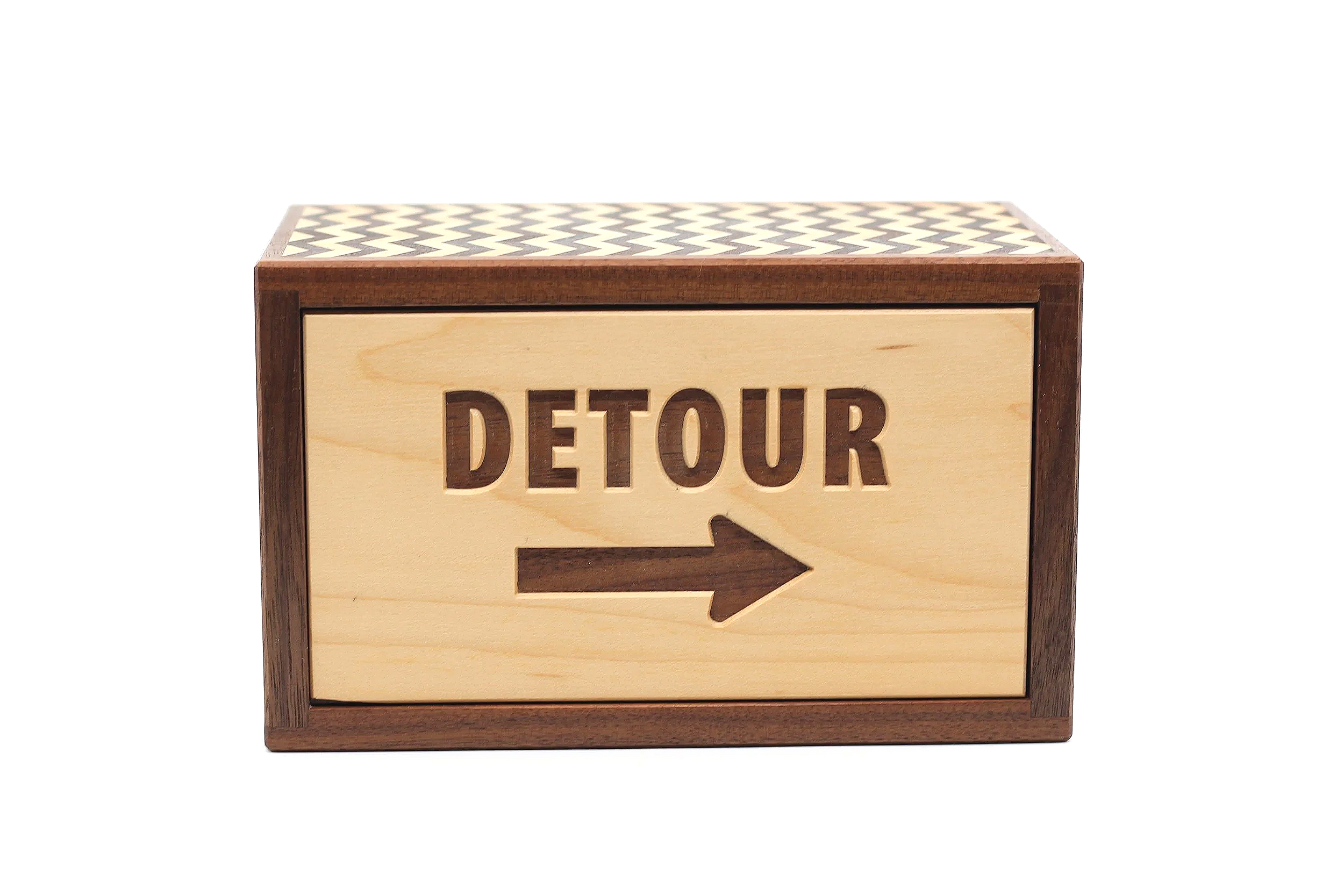
take a turn with this box
The one thing I’d most like people to know about Detour is that it was designed to mislead, but not in a cruel way. Sometimes detours can lead us to new vistas and new insights. That, to me, is one of the great pleasures of a physical puzzle box: it creates a small private encounter between maker and solver, mediated only by wood, gravity, friction, and curiosity. I think the best puzzle objects do not need much explanation. They create their own little drama through touch, resistance, misdirection, revelation, and recognition. That is the kind of narrative I want Ludignum pieces to have: not lore for its own sake, but meaning embedded in the physical experience.”
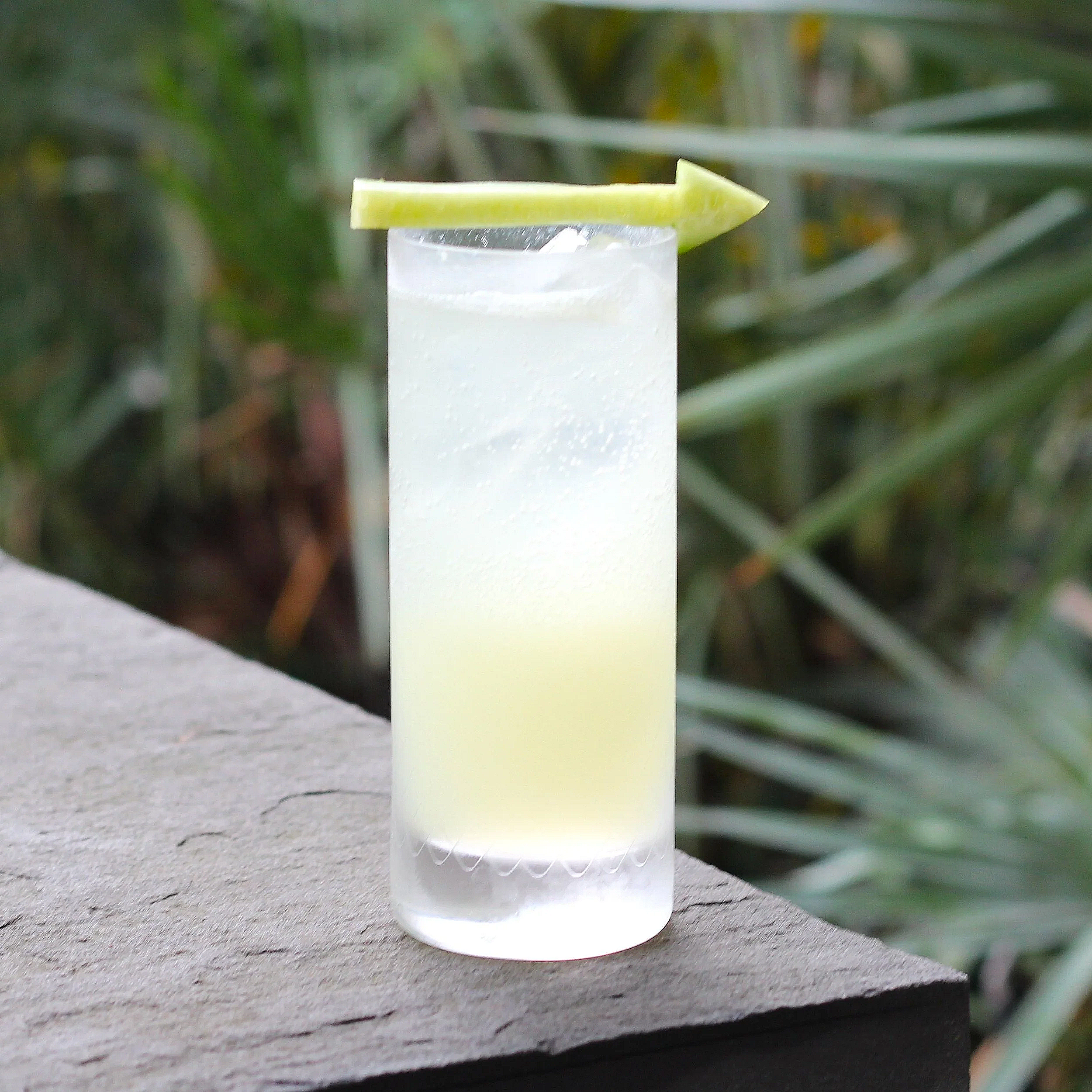
Detour by Cocktail Detour
A collaborative detour felt exactly right to celebrate this lovely puzzle box. For the toast to the Detour Box, I reached out to my friends Joakim and Mattias from Stockholm, Sweden, who run the Cocktail Detour brand and website. I asked them if they might be interested in creating a cocktail that starts out in a familiar way, but takes a little detour, turning into something new and unexpected. What they came up with is a wonderful drink for the summer season, a light and refreshing highball that I will undoubtedly be making again for myself and my guests. They describe it best:
“Just a slight detour from the regular route can take you in interesting directions. Gin, cucumber and elderflower - a familiar formula for a good cocktail, but maybe lacking a bit of excitement. But then add the tiniest splash of smoky mezcal, and suddenly this highball is grown up. We love this, deviate ever so slightly and grand things can happen.
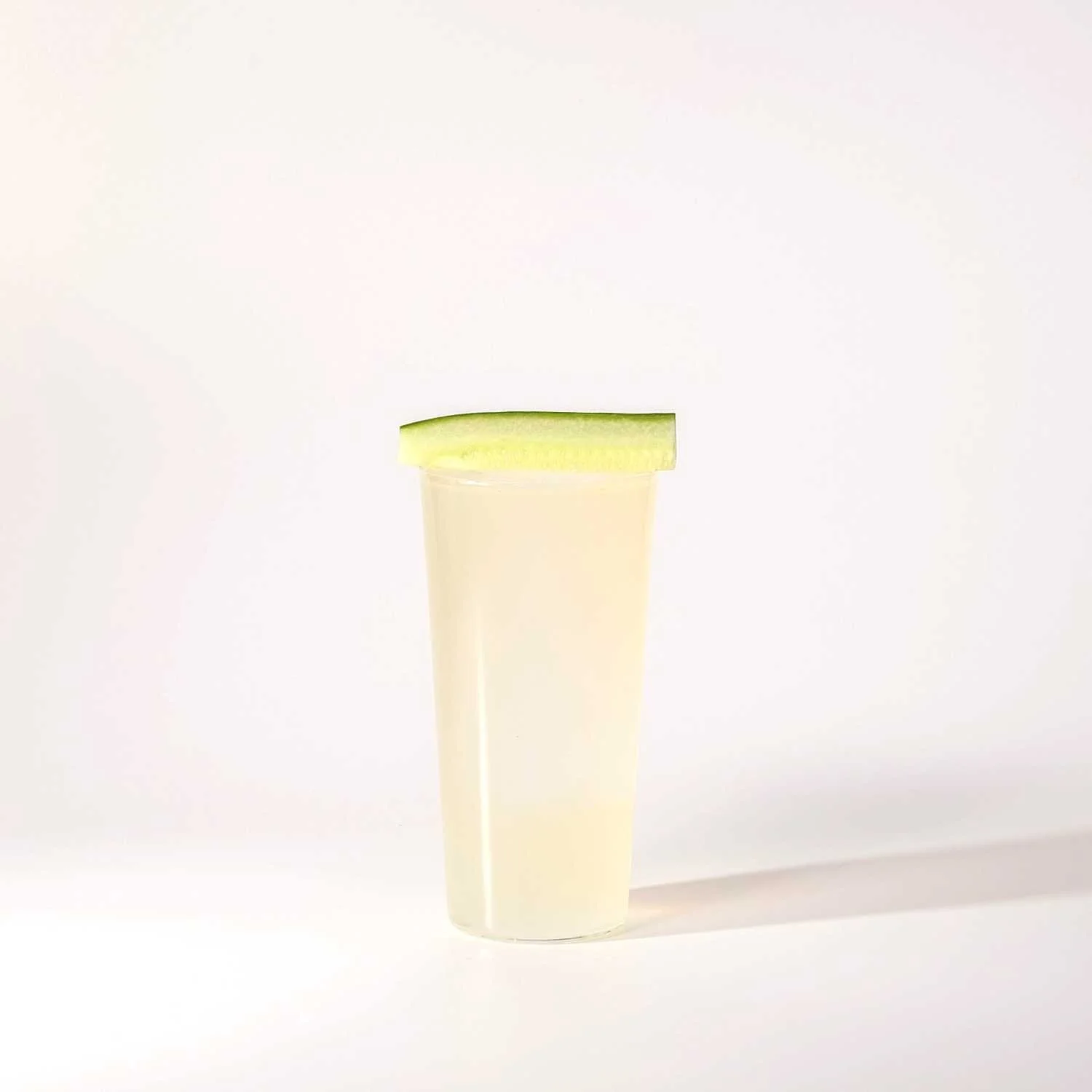
courtesy of Cocktail Detour
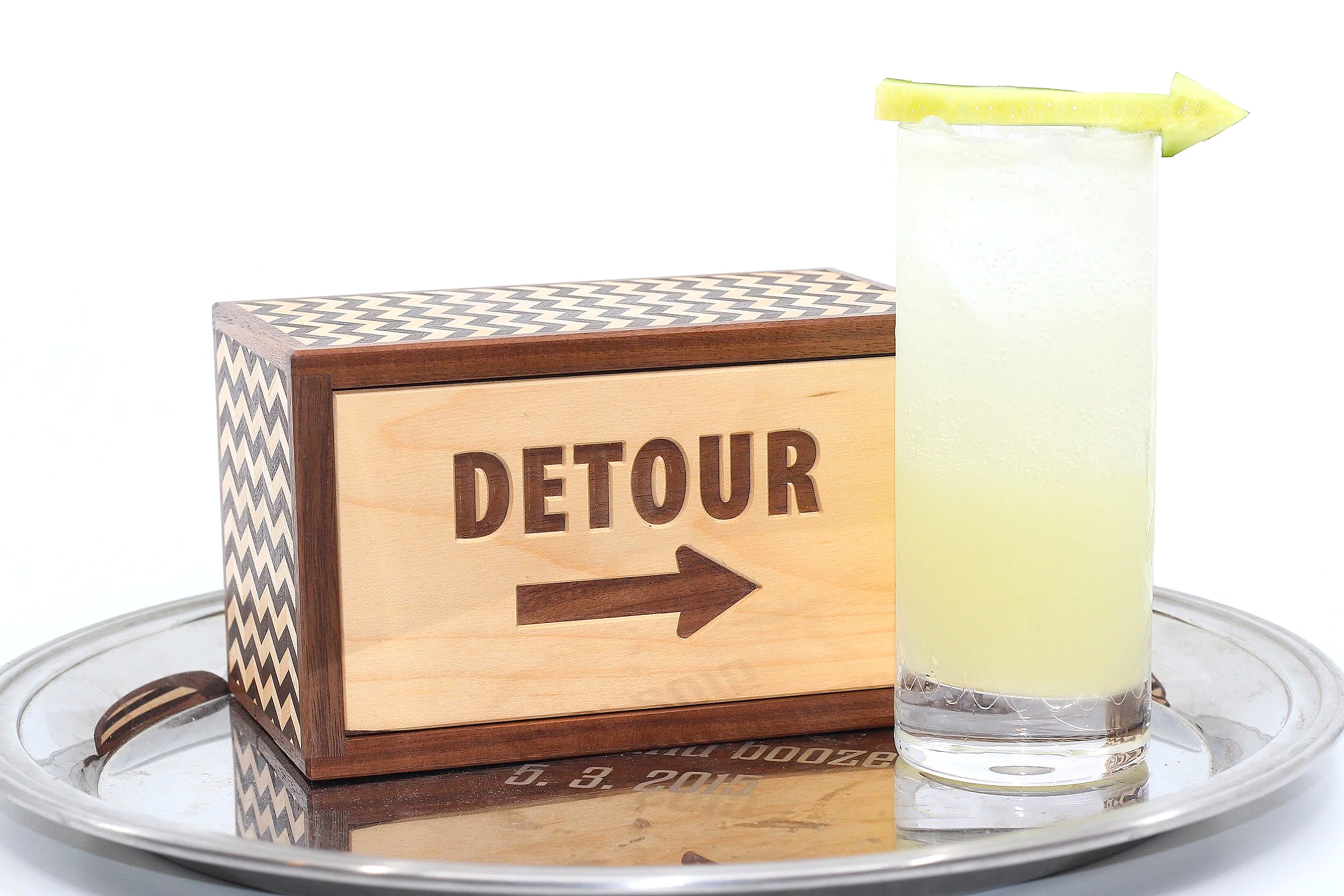
The glass we serve the cocktail in is from another detour. We went to Japan some years ago to look for beautiful glassware. Pretty soon we discovered that Japanese thin cocktail glasses are generally sold in these gorgeous wooden boxes. Of course we had to bring several of them back to Sweden, and they are amongst our most precious glassware today.
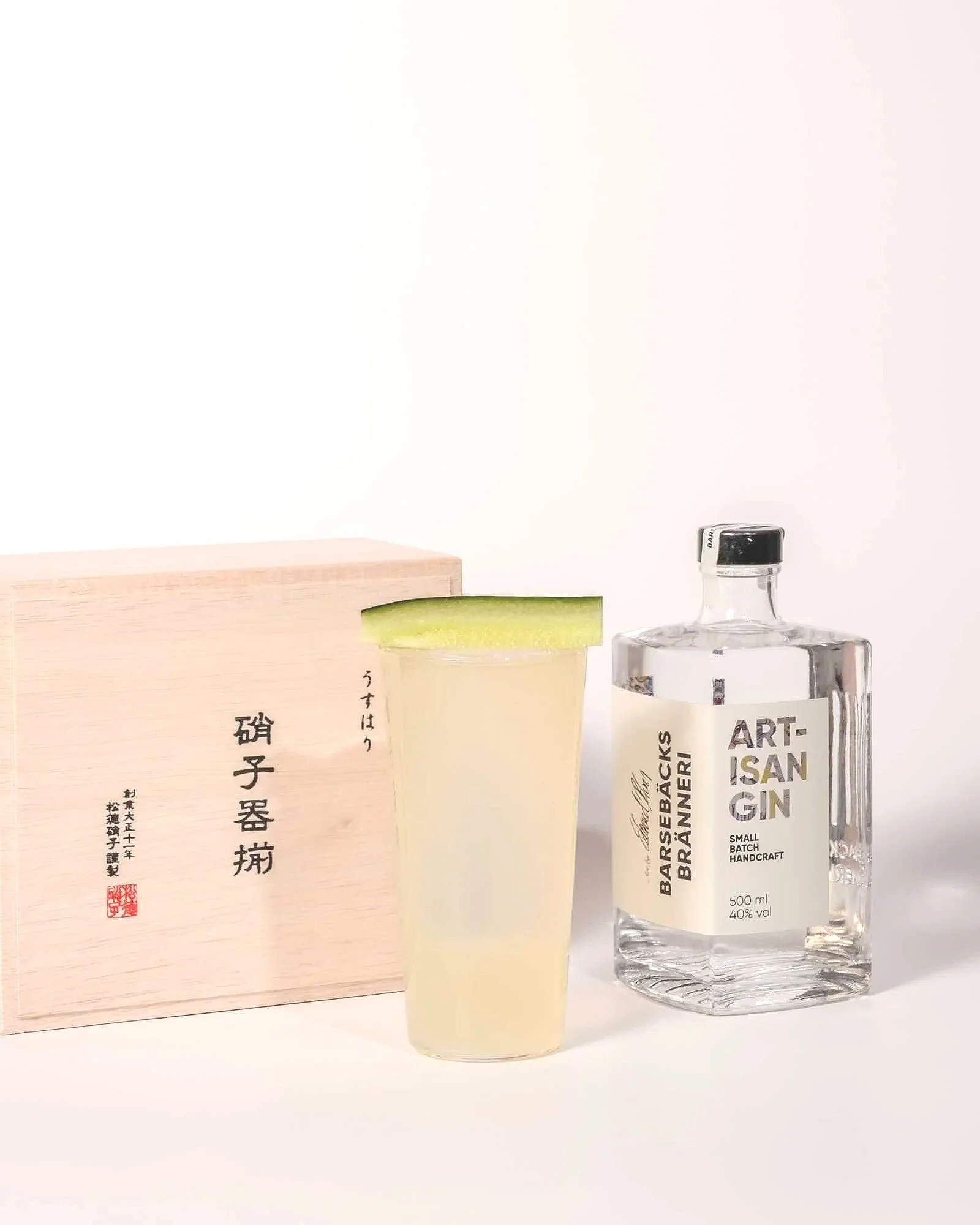
courtesy of Cocktail Detour
The gin we’re using is from a small distillery in the south of Sweden, called Barsebäcks Bränneri. It’s actually the part of Sweden both of us grew up in, before reallocating to Stockholm, the capital of Sweden. A detour on its own, but we still go back to the south of Sweden ever so often.
take a detour
And we’ve just started a new detour! After ten years with cocktails, we decided it’s time also for wine in our lives, so we are now studying to become sommeliers. A detour, not a U-turn. Cocktails will forever intrigue us, but now we’re also exploring the route of wine. And we love it!”
Here’s to finding the unexpected and allowing yourself to follow a new path now and then, to the detours in life that turn out to bring you somewhere you may never have gone, somewhere wonderful. Cheers!
pleasant detours
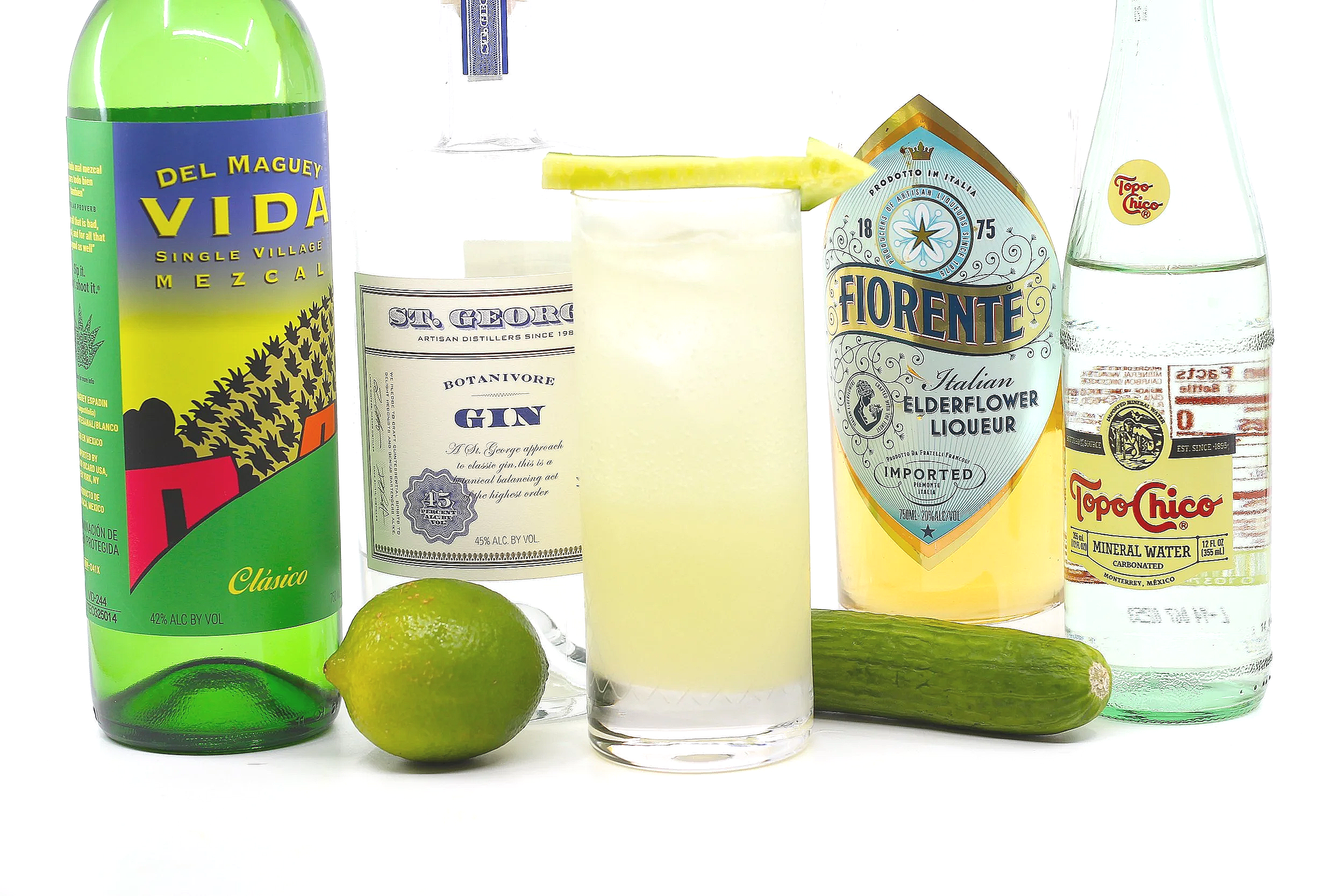
DETOUR COCKTAIL
1 ½ oz gin
¾ oz lime juice
¾ oz elderflower liqueur
½ oz fresh cucumber juice
¼ oz mezcal
½ oz simple syrup
soda water to top
Build over ice in a highball glass. Gently stir and garnish with cucumber.
explore more: