
Bach’s Box

Bach’s Box by Luke Waier
Johanne Sebastian Bach was one of the most prolific composers of the late seventeenth and early eighteenth centuries, during a period of musical evolution known as the Baroque. He is widely considered to be among the greatest composers in history. I have always been particularly fond of his Brandenburg Concertos, and of course who can deny the absolute pleasure of the second movement of his Orchestral Suite No. 3 in D major, BWV 1068 for cello, which not only sounds transcendent but has the greatest colloquial name of any piece of music ever (IMHIO).
What better inspiration then for an homage to music. When we last checked in with mechanical puzzle prodigy Luke Waeir he was off fighting dragons in his phenomenally fortified fortress of Fafnir. The castle took the puzzle world by storm and left us wondering what marvels awaited next. As fate and fortune have it, Luke is from Houston, and he and I sat down for a brewed beverage (or two) recently to talk about his creative process and the newest addition to his new business. He has recently pivoted from solving complex mechanical engineering problems for big business in order to tune his attention full time to puzzle development and production.
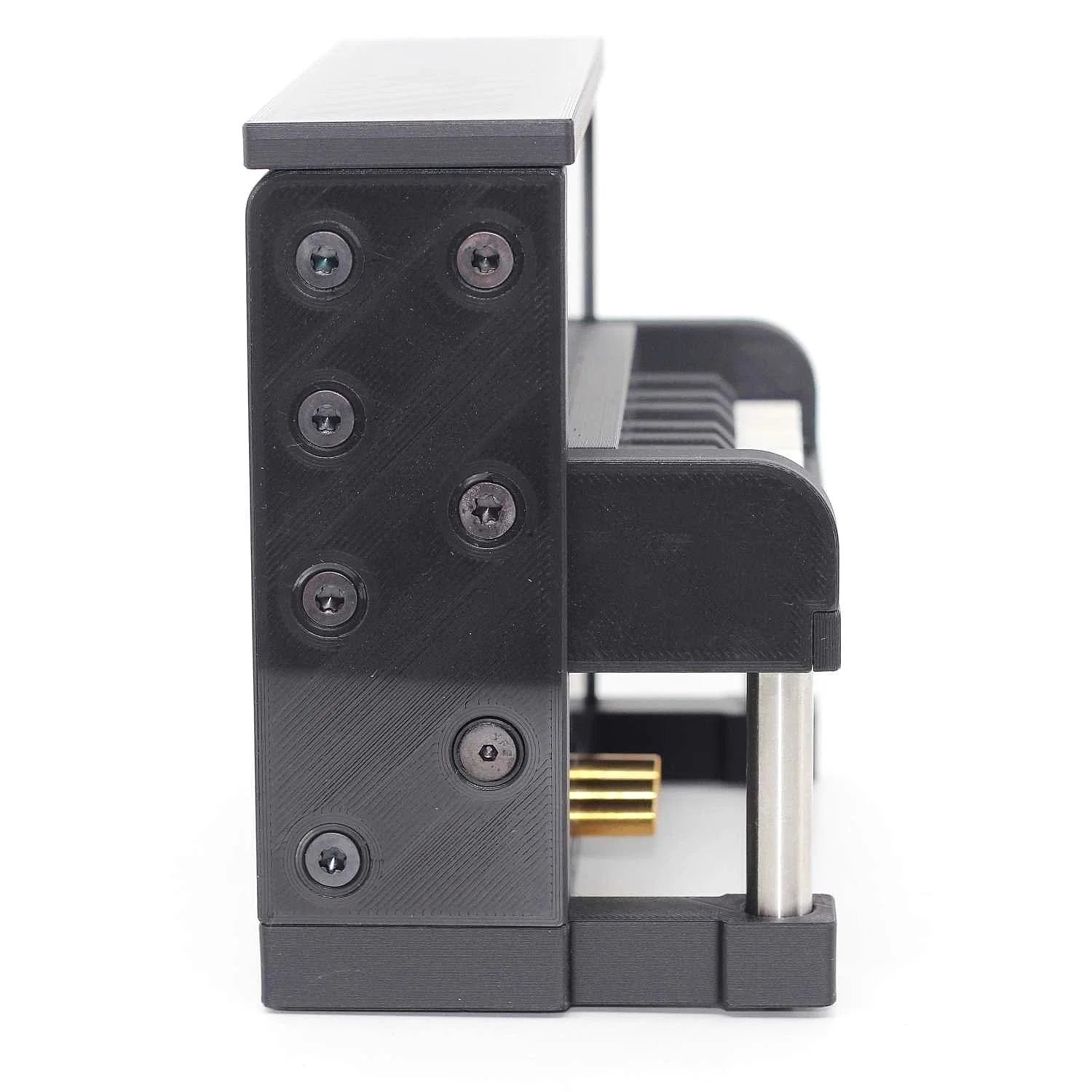
musical aside?
“On the origins of Bach’s Box:
Bach’s Box originated as an idea to use a melody or chord played on a piano as an unlock mechanism. Remember the scene in Willy Wonka & the Chocolate Factory, where Wonka dabbles a tune on a keyboard to unlock a door? It turns out it would be an incredibly secure lock. Given a full 88-key piano, the number of possible combinations of, say a 16-note melody, is into the trillions. Literally 88^16 possible note combinations. What is also interesting is that while a 16-character password is difficult to memorize, a 16-note melody is quite easy to memorize, at least for a trained musician, and if it is relatively pleasing to the ear. Furthermore, if you made the unlock code a chord rather than a melody, it also would be significantly faster to gain entry than a typical combination lock. And if it was a chord of more than 10 notes, you could only gain entry if you had a partner to play the other notes. Pretty cool, right?
Between ages 10 to 20, I spent quite a lot of time playing the piano, taking lessons, and composing and recording music. At the time, I was convinced my career would be in music. It certainly could have been, but after my first semester as a music major in college, I wanted to explore more of the kid that grew up dreaming of invention ideas that I would sketch on sheets of paper. So, I started taking classes like physics and computer science and started a robotics club. I’ve never really stopped playing music though, and it will forever have a place in my heart.”
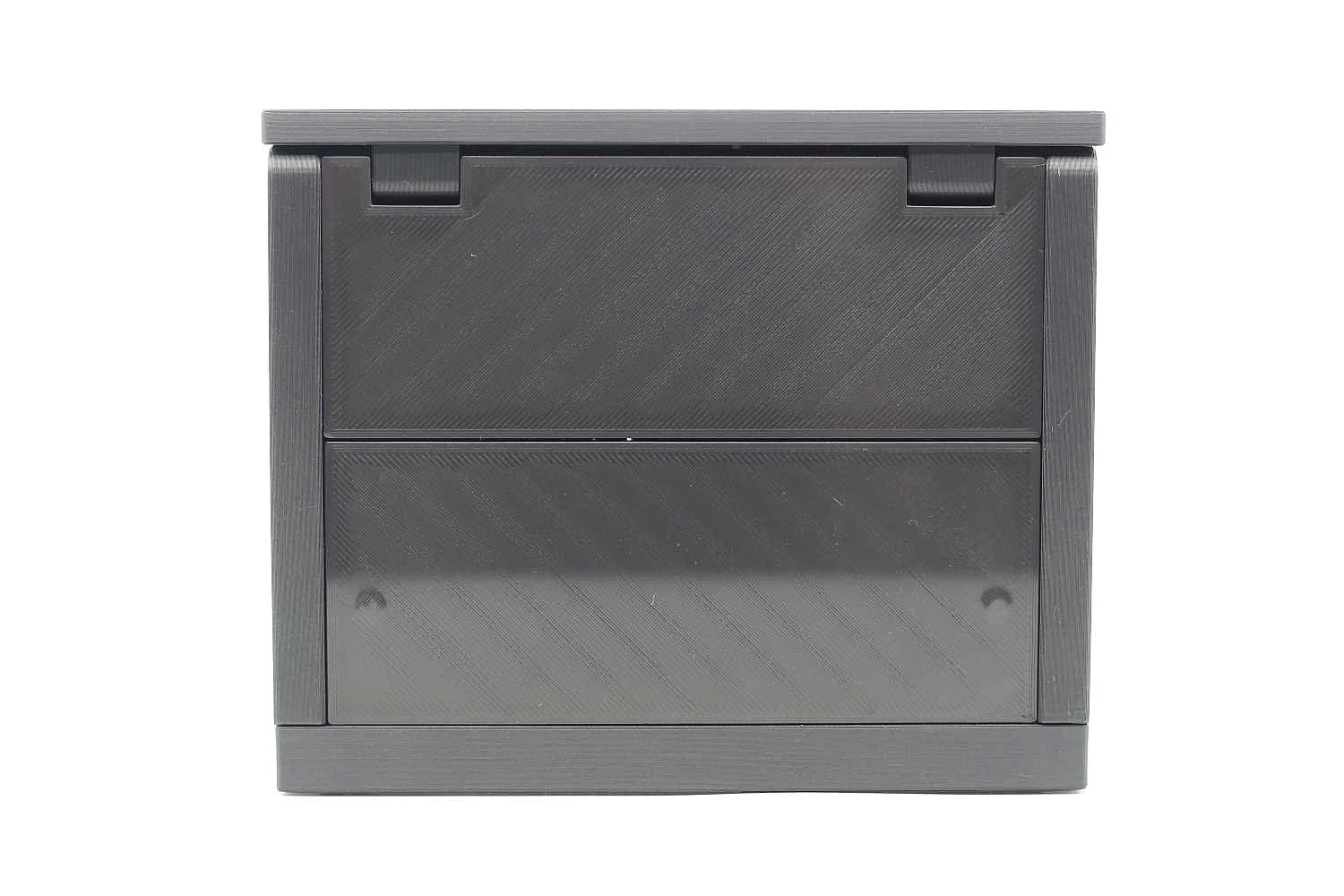
bach of Bach’s box?
Luke loves the artistry of creation, and would be as happy creating large art pieces as puzzles. His recent space ship in a bottle idea, for example, was a labor of love that very few people purchased. I suspect he just needs to find the right audience for that sort of piece, as such collectors must surely exist. He will likely continue to intersperse those types of passion projects within his puzzle building business over time.
“Construction process for Bach’s Box:
Bach’s Box is made of over 175 parts, unfortunately for me, the builder. The metal parts are press-fit into the printed parts using a small arbor press. I avoid the use of glue as much as possible, but for some parts glue is the only practical option. Press-fitting is faster than glueing and it avoids the possibility of getting any amount of glue on your fingers and ruining a part by touching it. Which can be hard to avoid. Yeah, I hate glue.”
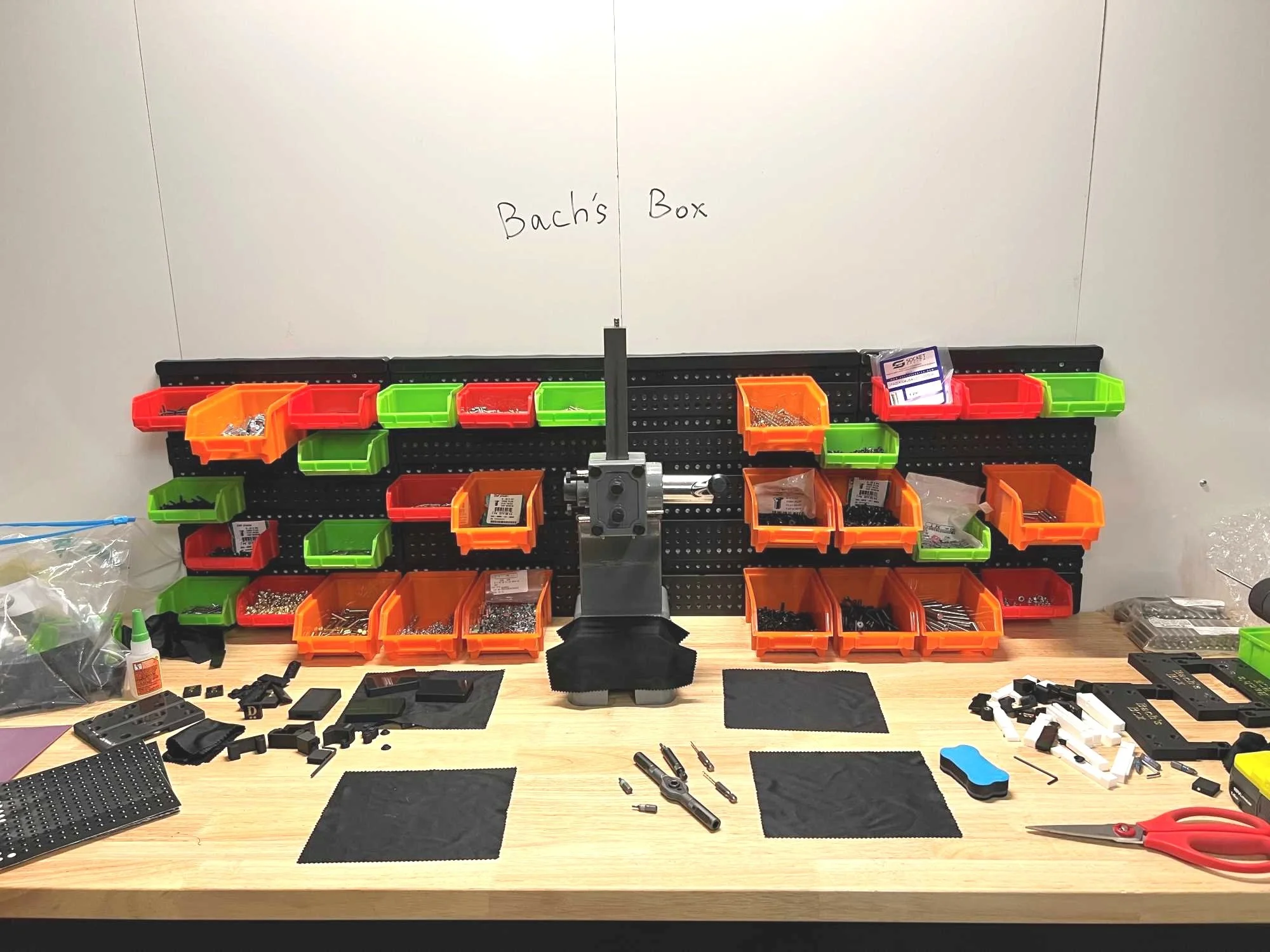
courtesy of Luke Waier
Something that really struck me about Luke is his apparent unlimited potential for new ideas. Unlike some designers, he never has any trouble coming up with new tricky mechanisms for puzzles, he has loads of ideas and can easily come up with more as the need arises. He also has more ideas for themed puzzles than he can make, which seems like a really good combination for success. He recognizes the appeal of themed puzzles and gravitates towards these naturally.
“On my puzzle design philosophy:
If you’re someone that should’ve been a video game developer and instead became a mechanical engineer, you’re probably going to be a pretty good puzzle designer. How I like to view mechanical puzzles, particularly themed SD puzzles, is that they are like the mechanical equivalent to a video game. The best video games are both works of art as well as technological achievements. They have an engaging story or theme, artistry, and a lot of engineering under the hood. Developing one requires seeing through the eyes of the player and understanding how to make their experience the right balance of fun and challenging. I’m not sure how other designers do it, but my approach to puzzle design tends to be an “outside-in” approach. The reason is that, somewhat unique to puzzles, the solver only sees the outside of the puzzle, typically with little knowledge of what lies ahead. Here, already the experience has begun, before they have even purchased the puzzle – and having little other information to make that purchase decision. Then, they hold it in their hands, feeling the weight and texture, still no understanding of the solve, and the experience continues. This is why I start with the outside appearance, the scale, the weight and feel.
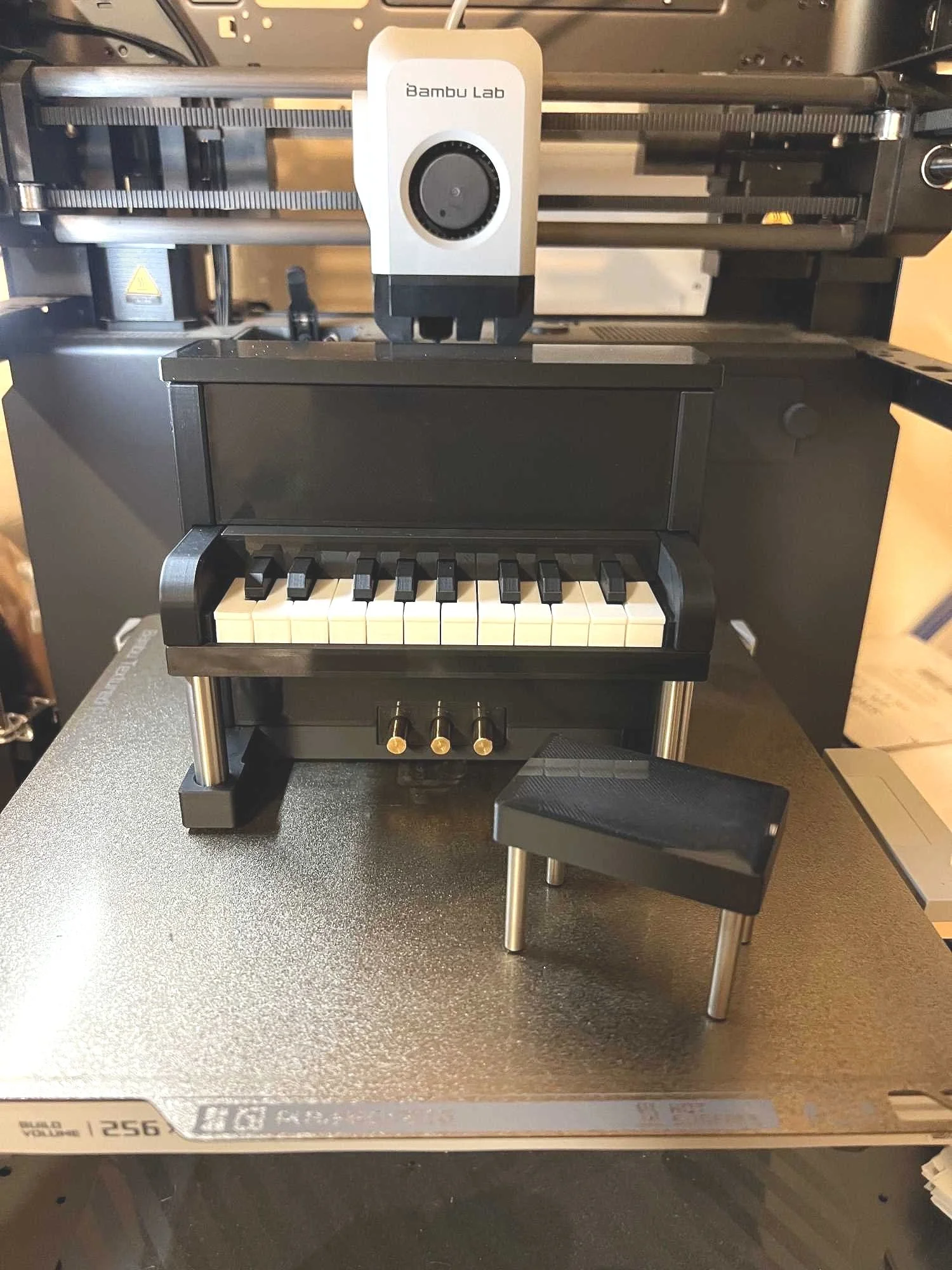
printer piano - courtesy of Luke Waier
Once I decide on those things, I have placed the constraints on what can be done in terms of the internal mechanisms. And here, there is a lot of flexibility. There is essentially an unlimited number of combinations of parts and geometries to create various mechanisms – see above, how only a small number of notes can produce an extremely large number of possible melodies. This is not to say that any of this is easy. Making a good puzzle that encompasses all these elements in an appropriately balanced way, whilst making it robust against the forces of human hands poking, pulling, and twisting in every imaginable way, is an extremely challenging task. What helps me is that I develop most mechanisms independently from the puzzle theme. It’s like a bucket of ideas, and when I need a mechanism, I grab from that bucket and see if it can work in the puzzle I’m designing. Did I mention I spent a lot of time as a kid with a literal bucket of LEGO bricks?
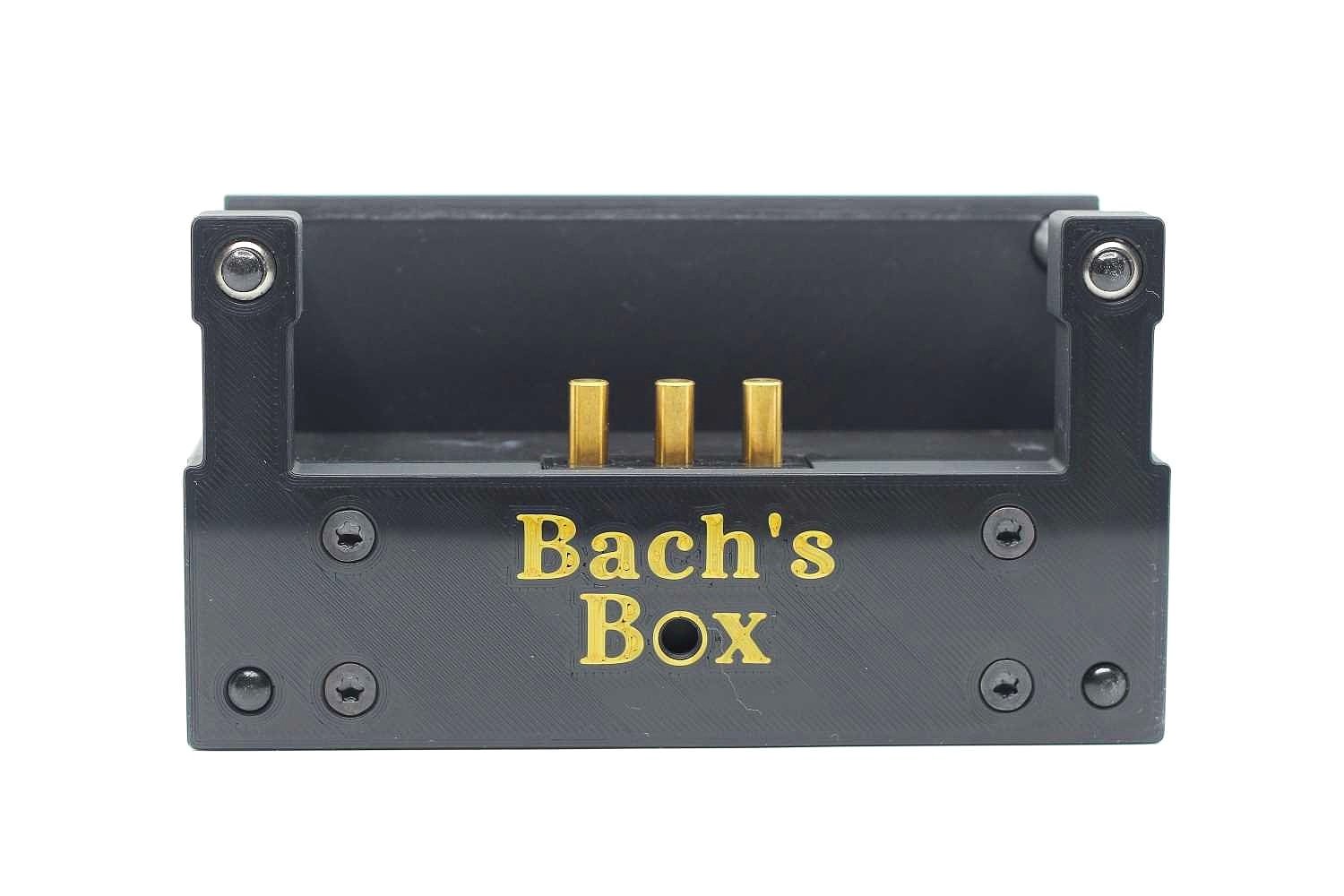
don’t Bachs me in
One of the things that might make me somewhat unique amongst puzzle designers is that I did not first start with an interest in puzzles. I started my journey into design and storytelling long before I knew mechanical puzzles were “a thing.” When I think back to when I was a kid creating my own board games, drawing intricate mazes and watching my classmates delight in trying to solve them, and preferring the level-maker function in video games to the actual game. And then, developing many years of mechanical design and fabrication skills through many different projects, including lock mechanisms, I see now all the throughlines cross at puzzle design. So, I am basically destined to do this. And I hope the community continues to support my work.”
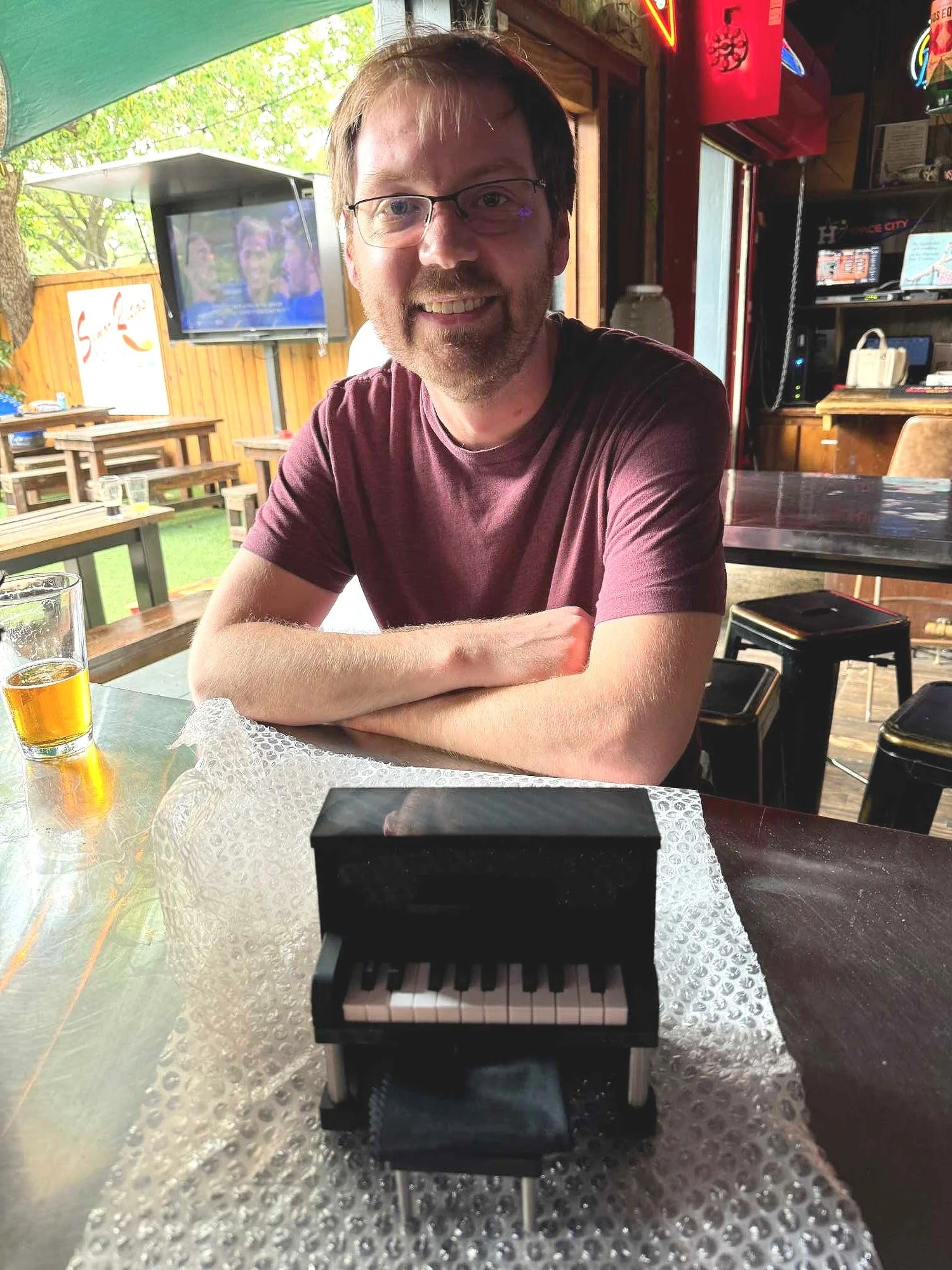
boxes and brews with Luke
Bach’s Box does not disappoint. It is an impressive creation, beautifully made in mixed media, and of high quality. There is a lot to discover, and the secrets range in difficulty to allow plenty of steady progress but also plenty of head scratching. Luke is really good at designing puzzles! The current iteration of Bach’s Box includes a very satisfying additional step, or really set of steps, which “force” the solver to achieve all of the mini-goals of the puzzle in order to proceed to the finale or endgame. There was a prior version that allowed an easy cheat to the finale, discovered by Nick Baxter, who often plays the unglamorous part of beta tester, to all of our benefit. You might see this early version in a video from Doc Hitchcock as well. Luke was able to modify the puzzle at the last minute with very little reprinting of parts needed, in the end making the puzzle even better.
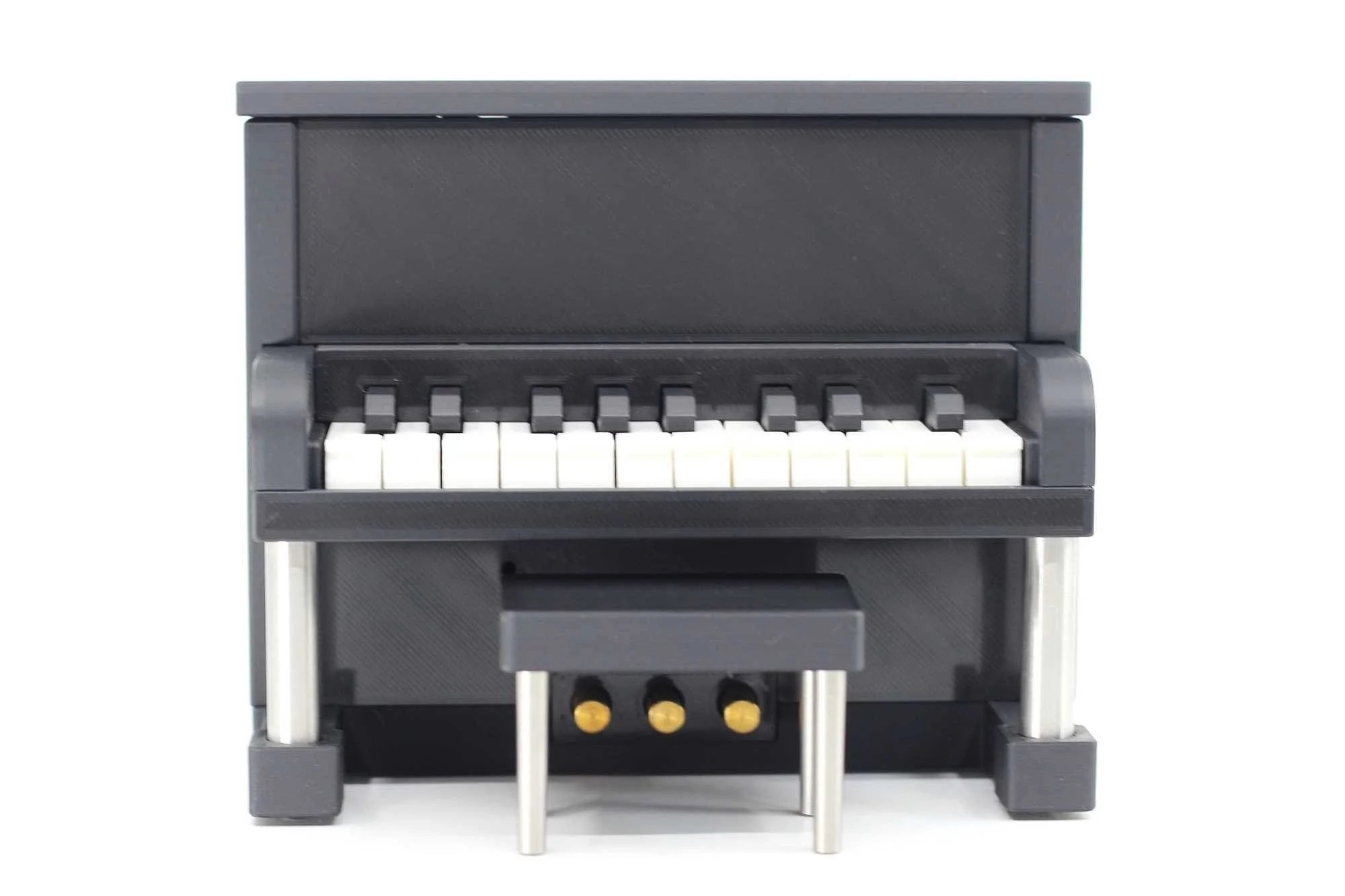
if it aint Baroque don’t fix it
“Future Puzzles:
At some point in the future, I would love to build the original version of Bach’s Box. It would be much bigger with about 20-25 full-sized piano keys, made of wood and metal, and it could be played like a real piano, using an internal glockenspiel to produce the tones when the keys are pressed. You must solve a series of smaller handheld puzzles, found inside the piano, which each reveal another music note. When all the notes are played together in a chord, the box is opened. This one would likely require collaboration with another puzzle designer, as I’m not a great woodworker. So far, nothing is in the works, but I could see this coming together.
Nearer term, I will introduce the name of my next puzzle: “Gold Rush”. I’m stoking the firebox with this one and giving it full steam. So don’t miss it.”

Player Piano by Colin Shearn
Here’s a toast to the piano players. I’m not Haydn my admiration for this creation, so I hope you can Handel this fine potion. It was created by Philadelphia bartender Colin Shearn at the Franklin Mortgage and Investment Co, circa 2011. The Franklin is a Philadelphia institution, a speakeasy style bar named in homage to a fascinating piece of American history. Max “Boo Boo” Hoff was a Philadelphia mobster in the nineteen twenties who ran a legitimate prize fighting organization, but became one of the richest gangsters in America thanks to his alcohol bootlegging operation which sprang up after Prohibition hit in 1919. He ran the illegal operations from an office at the Hotel Sylvania in Philadelphia, through a sham front called the Franklin Mortgage and Investment Company.

a Liszt of ingredients
Shearn’s musical creation is a delicious equal parts cocktail from the Last Word template. It’s actually named after the debut novel from Kurt Vonnegut, Jr., which skewers technology on how it can negatively impact our lives and make us irrelevant. The concept makes Vonnegut seem a bit like a Luddite, as technology has certainly improved our lives in innumerable ways, but the point is well taken and prescient as we grapple today with how AI will continue to replace the common worker in so many ways. It’s best we contemplate these big ideas over a good drink, perhaps sitting nearby the soothing sounds of a piano, as it plays out the mysterious puzzle of human experience. Cheers!

I’ll be Bach …
Player Piano by Colin Shearn
¾ oz rhum agricole
¾ oz Aperol
¾ oz elderflower liqueur
¾ oz lime
A few dashes tiki bitters
Shake ingredients with ice and strain into a Philip Glass.
explore more: