
Pin In The Pebble
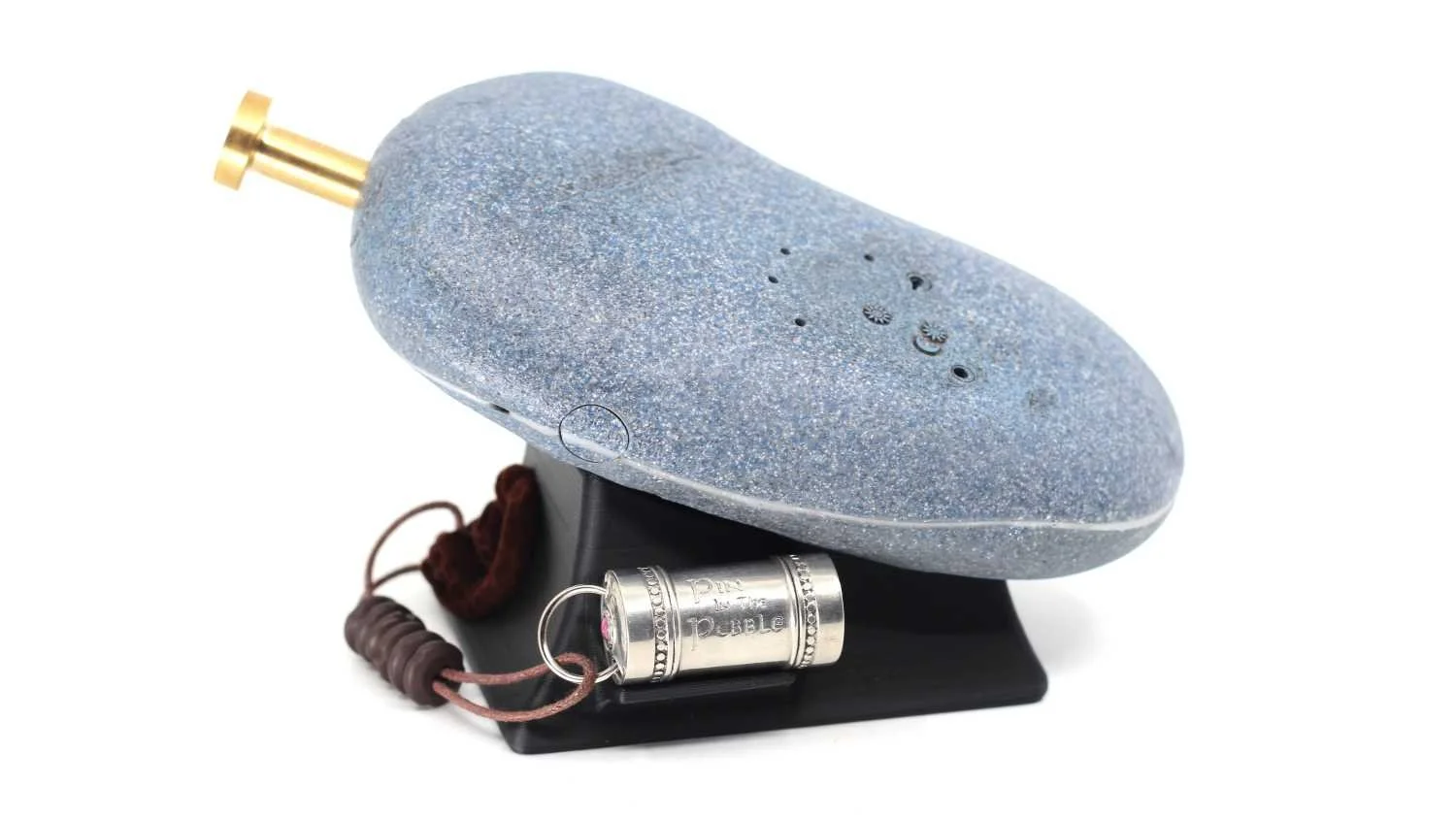
Pin in the Pebble by Lewis Evans
The enduring legacy of the King Arthur mythology, and in particular his origin story, can be seen in overt or subtle references throughout modern-day media. The theme has also been the source of inspiration for many different mechanical puzzles that all share, in some way, the common goal. I recounted the literary history of Arthur and his tales once before, when I embarked on the truly epic quest of Philip Black’s Excalibur. It’s time to revisit the lore and legend, this time with a bit of Monty Python’s Holy Grail, perhaps, thrown in the mix.
pinstripe?
Arthur is of course a distinctly English cultural treasure, so it’s no wonder that another epic creation on the theme is the work of another English genius. Lewis Evans is a prototype engineer with an artistic eye for high quality fabrication in cast resin and other materials. His love of puzzles and enjoyment in designing complex conundrums has led to a number of highly regarded creations over the years, such as the amazing Triple Yolk puzzle, and his collaborations with puzzle maker Robert Yarger. The sword in the stone idea has been a few years in the making, but is finally complete and in the hands of would-be kings worldwide. Lewis told me the story of this legendary accomplishment.
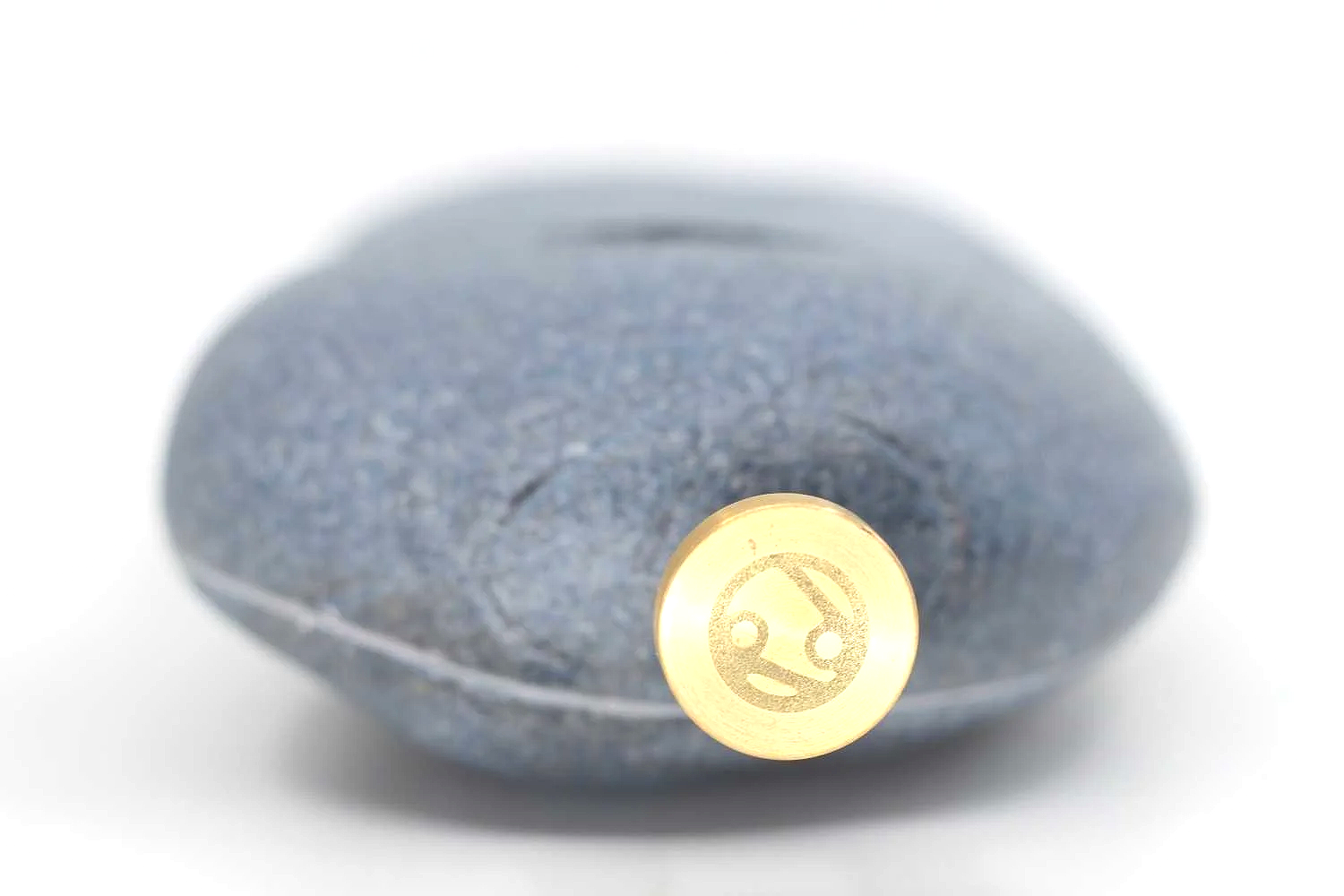
who built the hilt
“Think development started during covid, I was developing another puzzle at the time and I had hit a huge wall design wise that had stalled it. Maybe one day I can circle back to it but at the time Mike Quigly had sent me a small puzzle that he had prototyped. it was quite simple and blind but a nice little puzzle. It was a pin in a small box. Mike had asked me to take his puzzle and add some steps to it to make it a bit more interesting, so that’s what I did. As I had stalled on my other design, I figured this was a welcome distraction to clear my head. The “problem” came when I kept adding more and more to it. Before long I had gone down a bit of a rabbit hole with it and at some point I asked Mike if I could keep the design to just keep running with it and he agreed. Indeed a big thank you has to go to Mike for that. Somewhat hard to see that original start point now with how much has been added to the design but it’s still there. So that’s the original inspiration.
sword swallower
The name came from a play on the sword in the stone obviously. The geometry of the puzzle it seemed a good fit. I’ve always liked Monty Python, the comedy appeals to me so the pin in the pebble I figured was a nice piss take of my own puzzle. It being a smaller almost laughable version of the more famous counterpart. You can’t take things too seriously (famous last words). Its why the tongue in cheek video me and my friend made for the launch.”
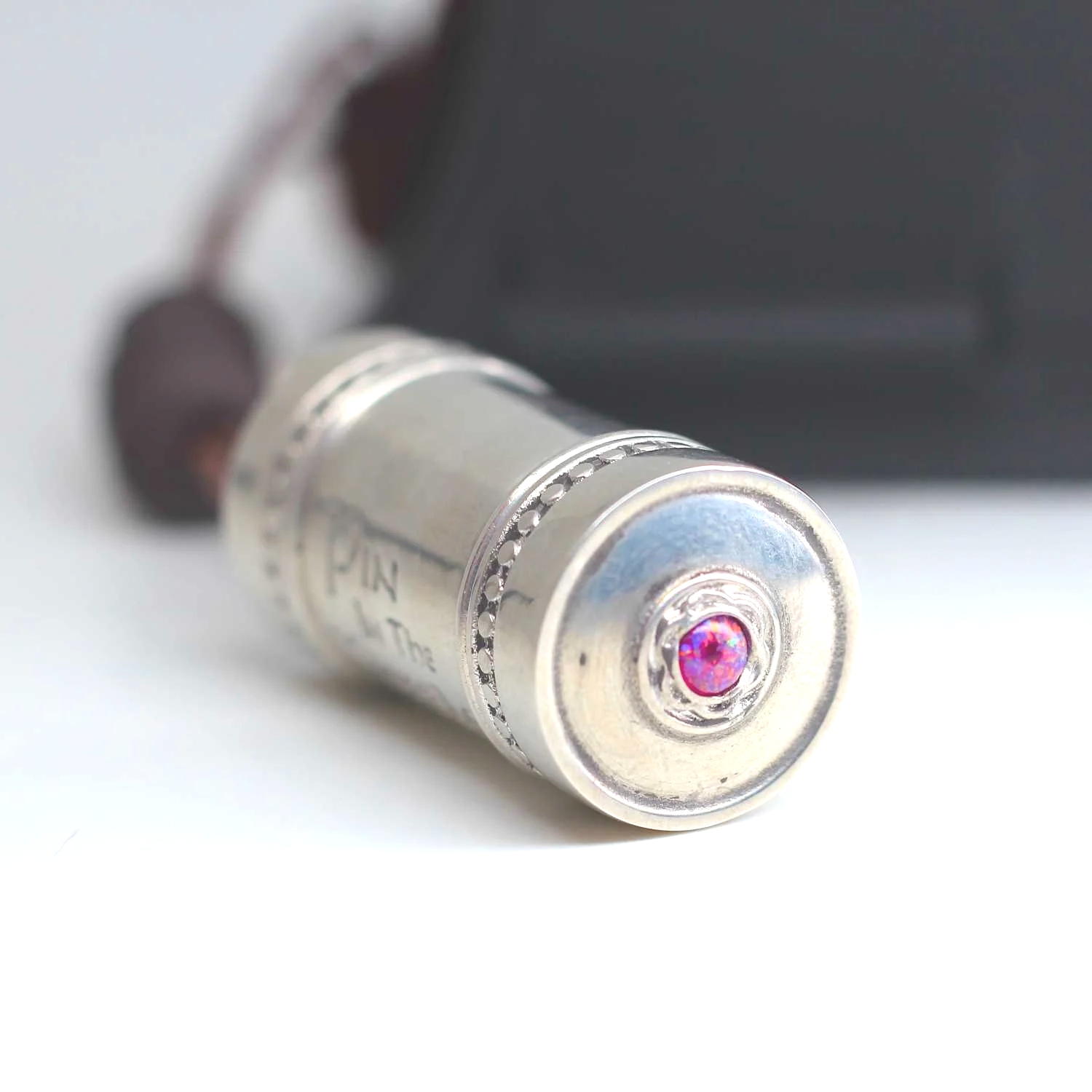
this puzzle’s a gem
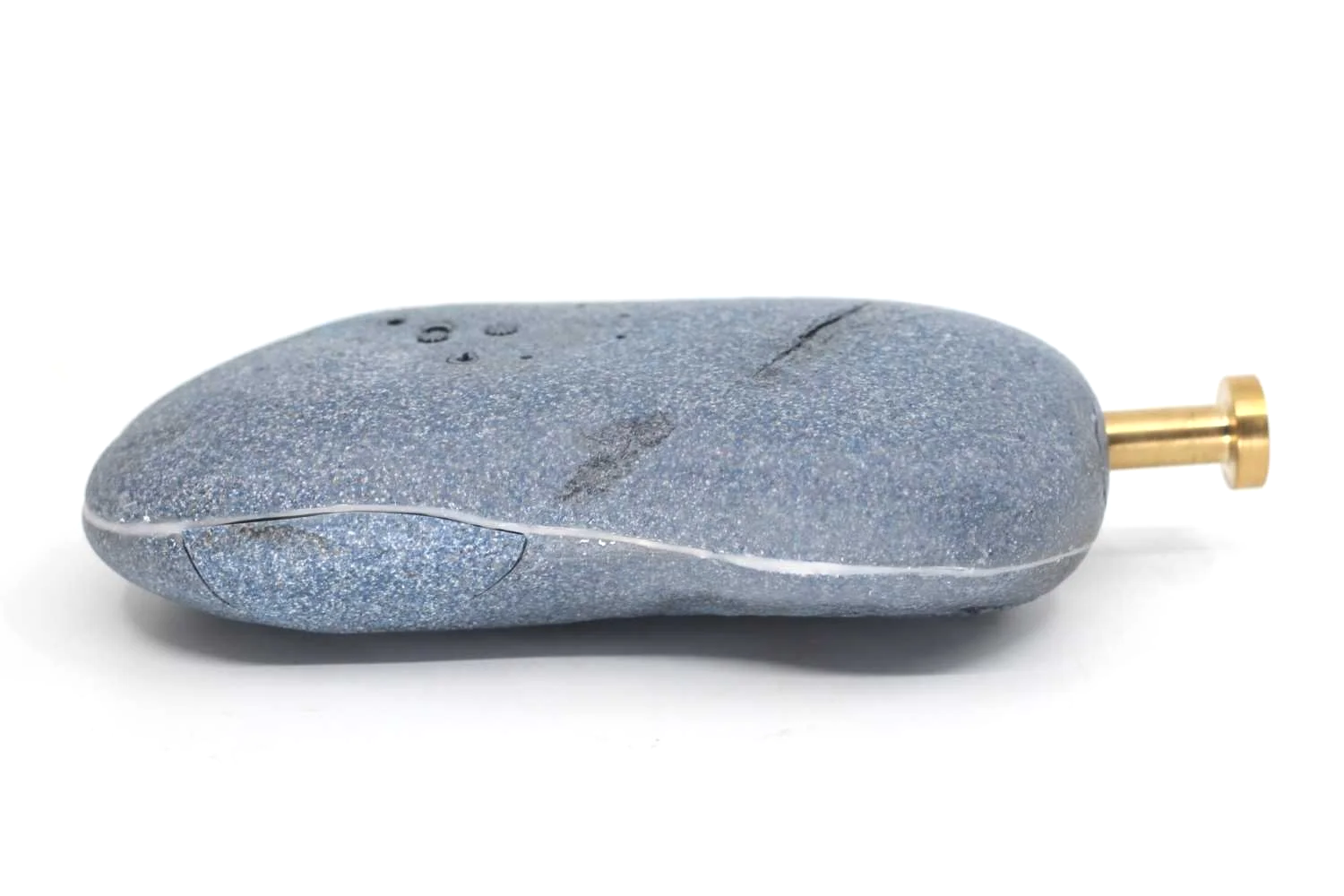
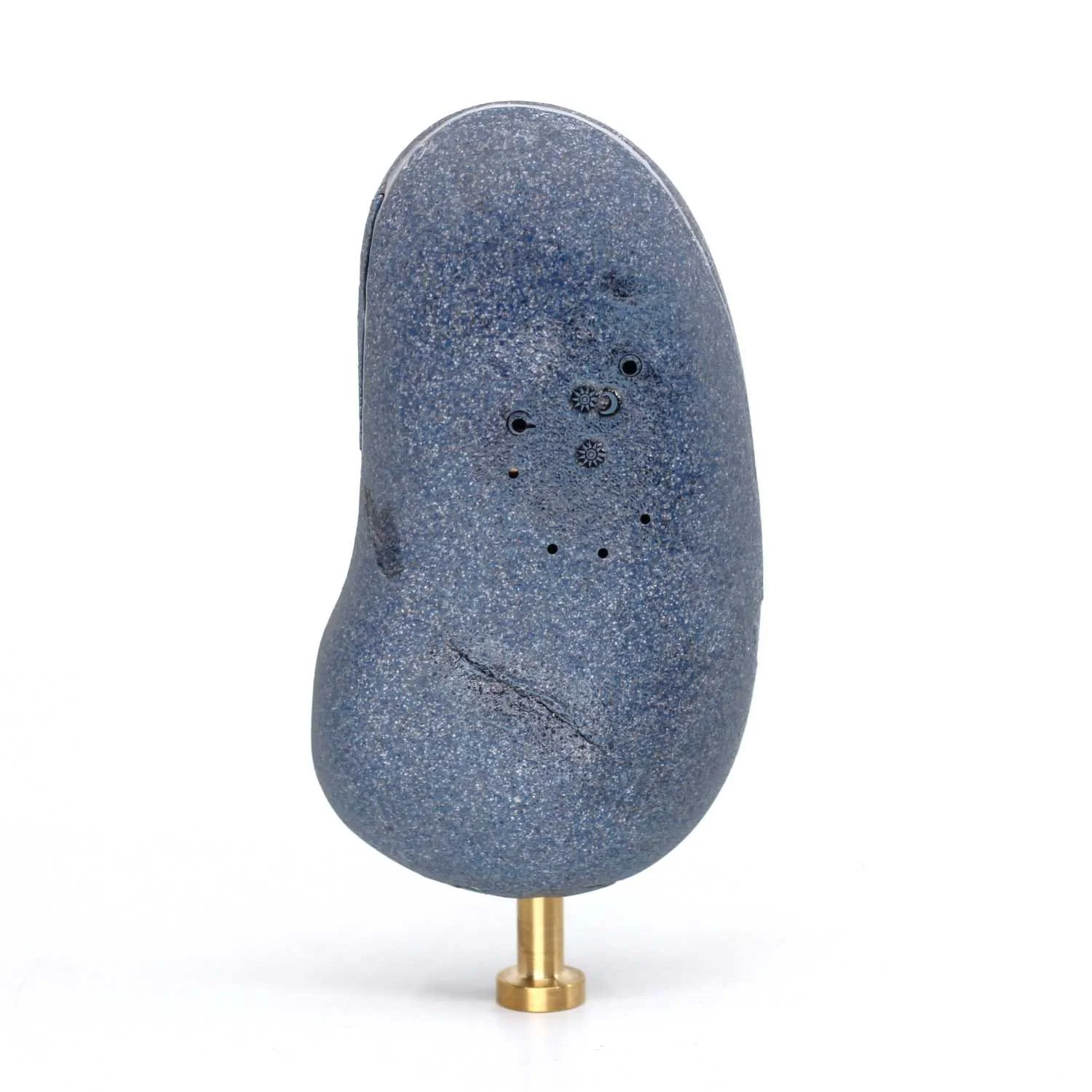
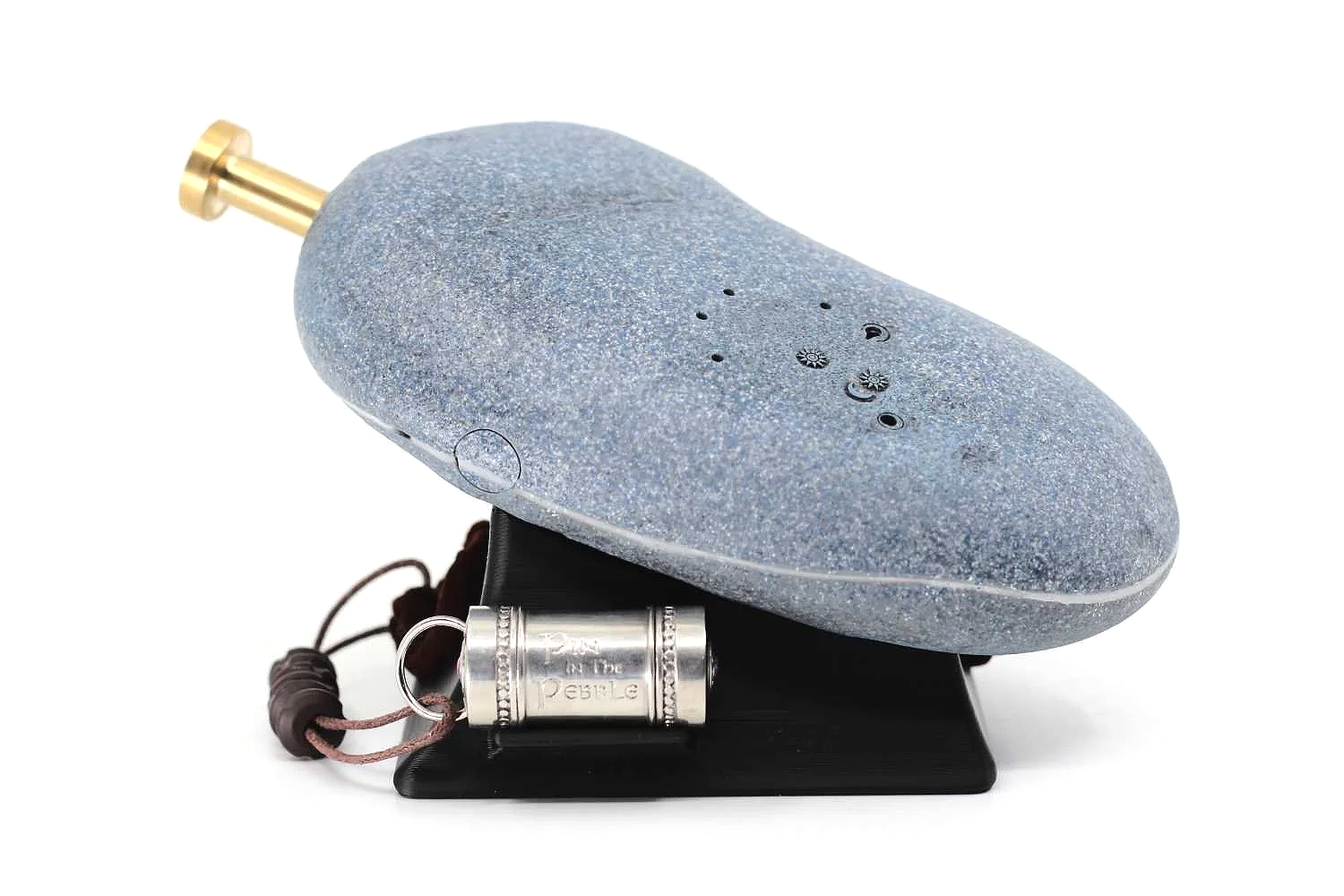
Lewis clearly has a great sense of humor, but his sword in the stone quest is no joke! Every aspect of the creation has been tended to with the greatest of care, and dare I say, artistry, down to the very last detail. I don’t think Lewis hand crafted the velvet pouch that holds the precious pebble, but every last bit of everything else is his handiwork. Pay close attention to these lovely details that augment the presentation, if only to admire their beauty. The “pebble” itself is intentionally realistic, and save for the little hidden compartments you can make out could easily be mistaken for the real thing. Grasp the “sword”, pull it out … well, you may yet be crowned King of England, but it certainly won’t be that simple. Lewis has laid out a long and magical journey. Take courage, and have faith.
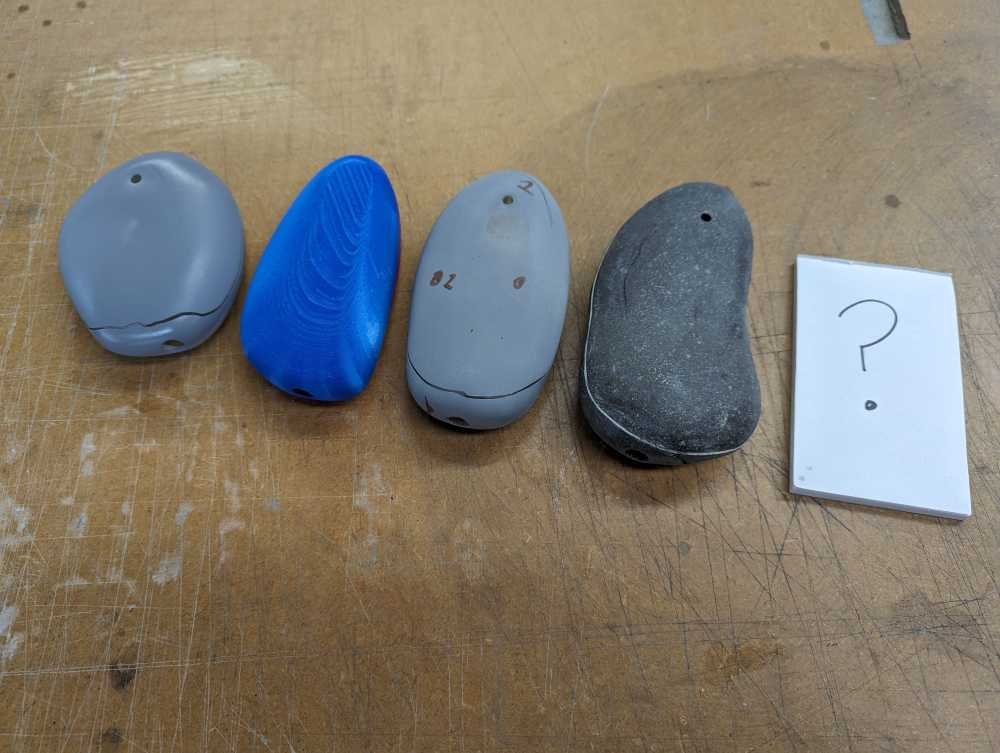
prototypes - courtesy of Lewis Evans
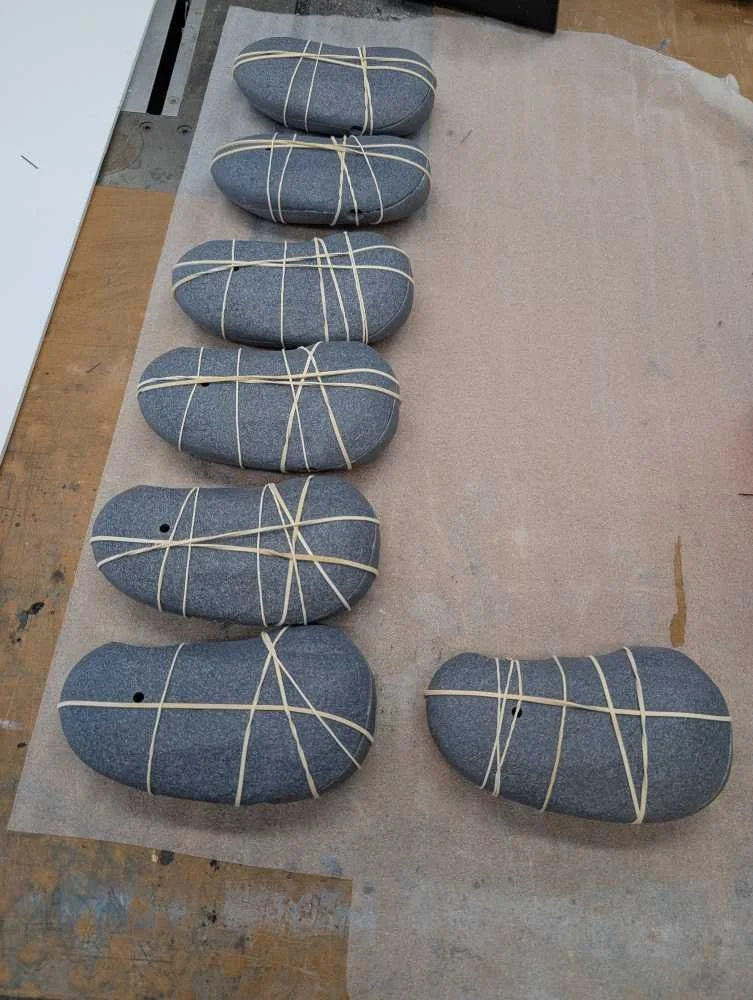
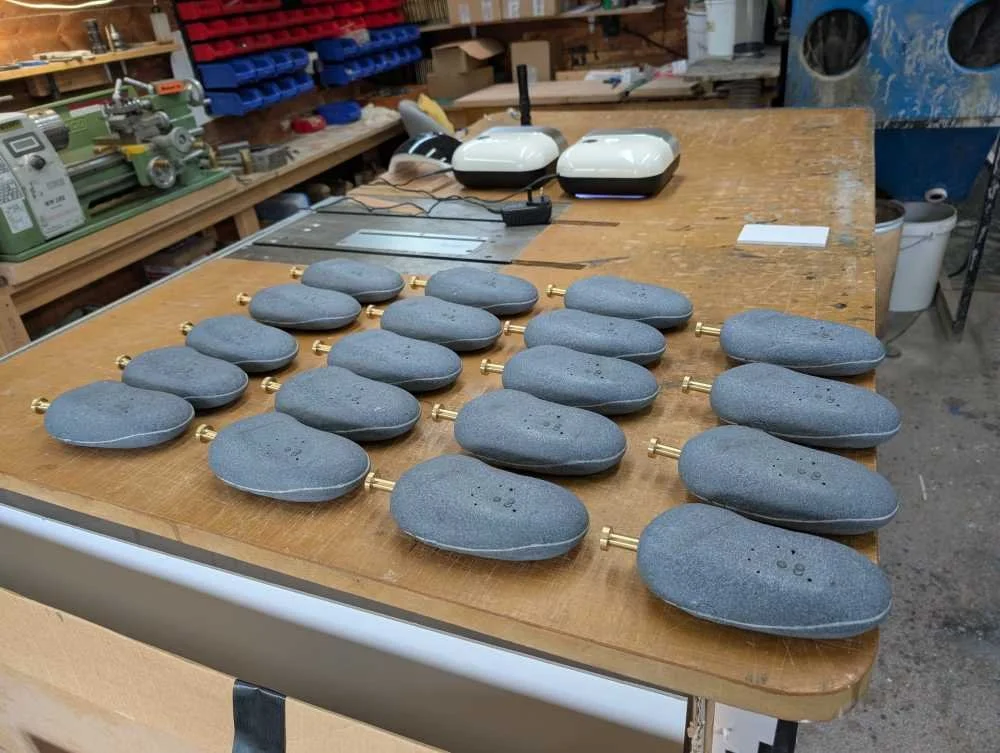
“That idea to theme it that way backed me into a corner design wise though. Problem I faced was the balance between keeping a nice aesthetic of a pebble without lots of holes and split lines etc and making a puzzle that was too blind. It can be a good thing limiting yourself in that way as solutions can often be more creative than they otherwise would have been in situations like that. But dam it was a headache at times. In the end I was very happy with how some of the elements turned out, keeping the outside looking deceptively simple and as much like a pebble as I could but also playing into the Magic theme.
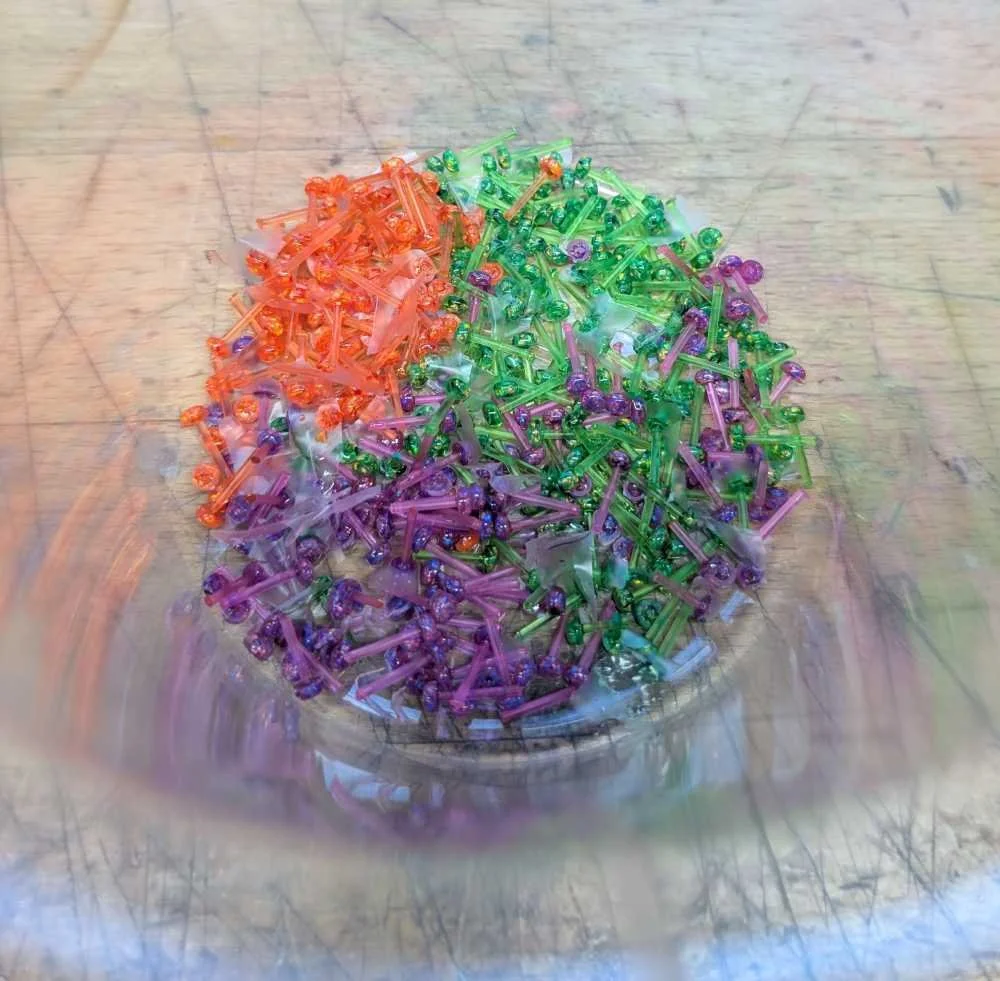
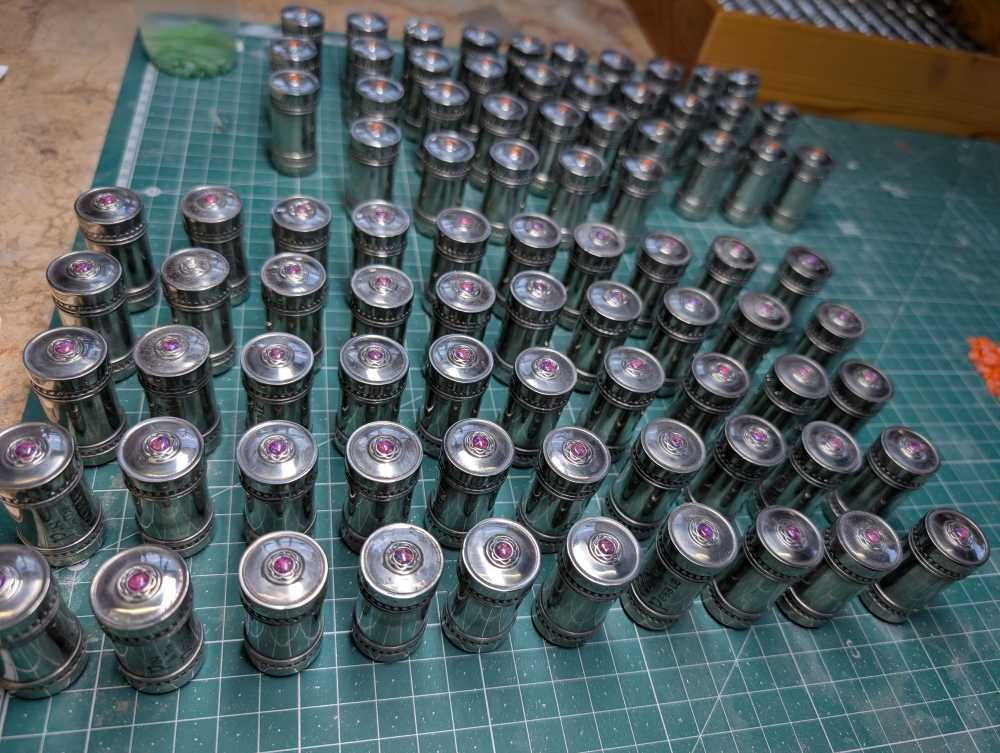
courtesy of Lewis Evans
Making a puzzle like this is an extreme challenge. There are a vast number of elements that need to come together for it to function well. In the end the puzzle is made up of 45 separate parts, mostly resin but also brass, steel and tin alloy. I had to figure out quite a few new processes in order to make some of the parts. Things like the small gems, creating a recipe to make them look as close to an opal as I could, or the outer main pebble bodies. I spent such a long time trying different mixes of fillers to find a good balance of effects so that it looked and felt as close to a real pebble but was also a good fit production wise. One part I literally had to grow it. But I love doing things like that. Think I’m most happy when I’m pushing what’s possible at least for myself and learning new skills along the way.”
pindrop
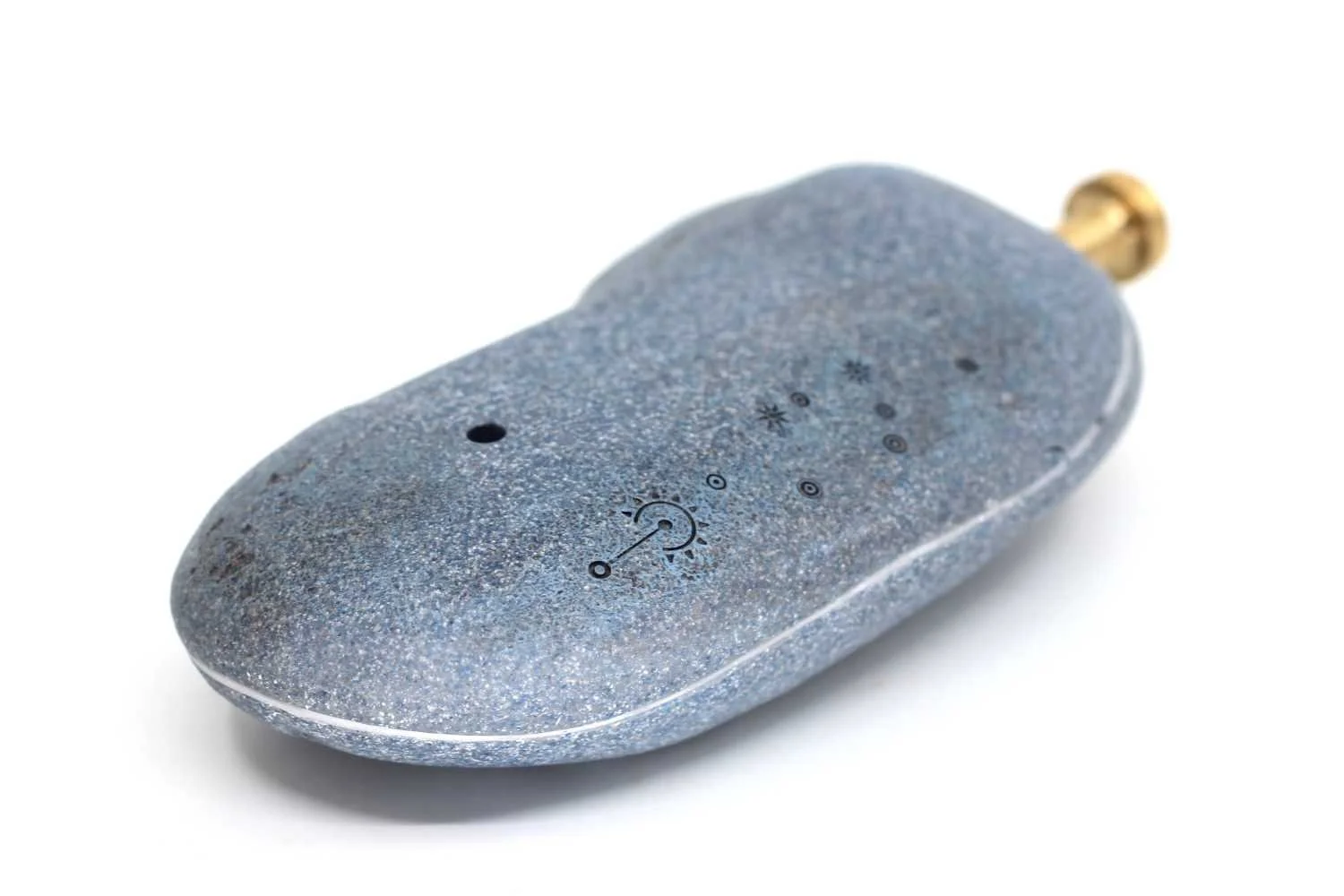
The Pin In The Pebble is an incredible creation, and if there were any prior doubt, Lewis can unquestionably be considered a master of the art, of both puzzle mechanics and fabrication. The puzzle is wonderfully themed, and presents a lengthy journey with so much to discover. Lewis has left some ancient runes, sigils of a sort etched into the stone, which may help you along the way, but only if you are as wise as Arthur, and as crafty as Merlin. Speaking of Merlin, some of the mechanisms are indeed truly magical, and marvelous to behold. Others test your mettle and perseverance, and like many a knight on the holy quest, I believe I succumbed to despair, but was propped up by my fellow knights who set me along the path again now and then. I may have even felt a certain sense of disappointment when I at last pulled the sword free, much like never wanting a good book to end, while at the same time needing to know the ending, but it just didn’t feel complete, somehow. Indeed, if you listen, there is ancient magic here, waiting for the King.
courtesy of Lewis Evans
“I did struggle with the design at some points, as I did with the one I was designing before this. End of the day I am or was at the start of this puzzle, a new designer finding my feet, I have allot to learn. The journey of designing it has been a long one and has spanned the transition from me doing this as a hobby to now doing it as basically my day job. That brings with it a level of pressure that I found difficult to manage at times. I knew people liked triply yolk. People’s expectations of what I would do next were in my mind often. So I found myself second guessing design directions allot. It took me a while to get my head around that and learn to let go and remember why I enjoy designing puzzles in the first place. Like I said still have allot to learn.”
will you be put to the sword?
Lewis continues to work on the production run of Pebbles for his many worldwide fans, so it’s a bit too soon to start speculating about his next masterpiece of mystery, but the idea already exists. “I have made a small start on the next puzzle design. Galileo’s Vault. Still not sure on the name. But will likely be a wood/brass SD puzzle with some resin elements. Love stargazing, so excited to explore some ideas themed around that for this next one. Have some exciting ideas for it. Don’t want to give anything away too much at this point. I will certainly aim to make this one a little easier, and bit more tactile and playful. I’d just like to give a big thank you for anyone that helped me along the way, you know who you are. And everyone in general that bought a puzzle from me. It means the world that people are happy to support my work, just know it is very much appreciated!”

Knight Cap of the Side Table
The Knights of the Round Table were of course not well known for their cocktail culture. Cocktails wouldn’t be invented as such for well over a millennium. But let’s not mistake our fine knights for teetotalers – they clearly enjoyed their wine and ale. On special occasions, spiced mulled wine would be just the thing to raise up inside a chalice, holy or otherwise. Although, it wasn’t the kind of mulled wine we think of as such today, a rich red wine infused with baking spices and citrus, for example. In Arthur’s era, they drank piment, a precursor to mulled wine that was sweetened with honey and seasoned with familiar spices like cinnamon, ginger and cloves, but also spicy pepper and other exotic herbs.
good quests come to good ends
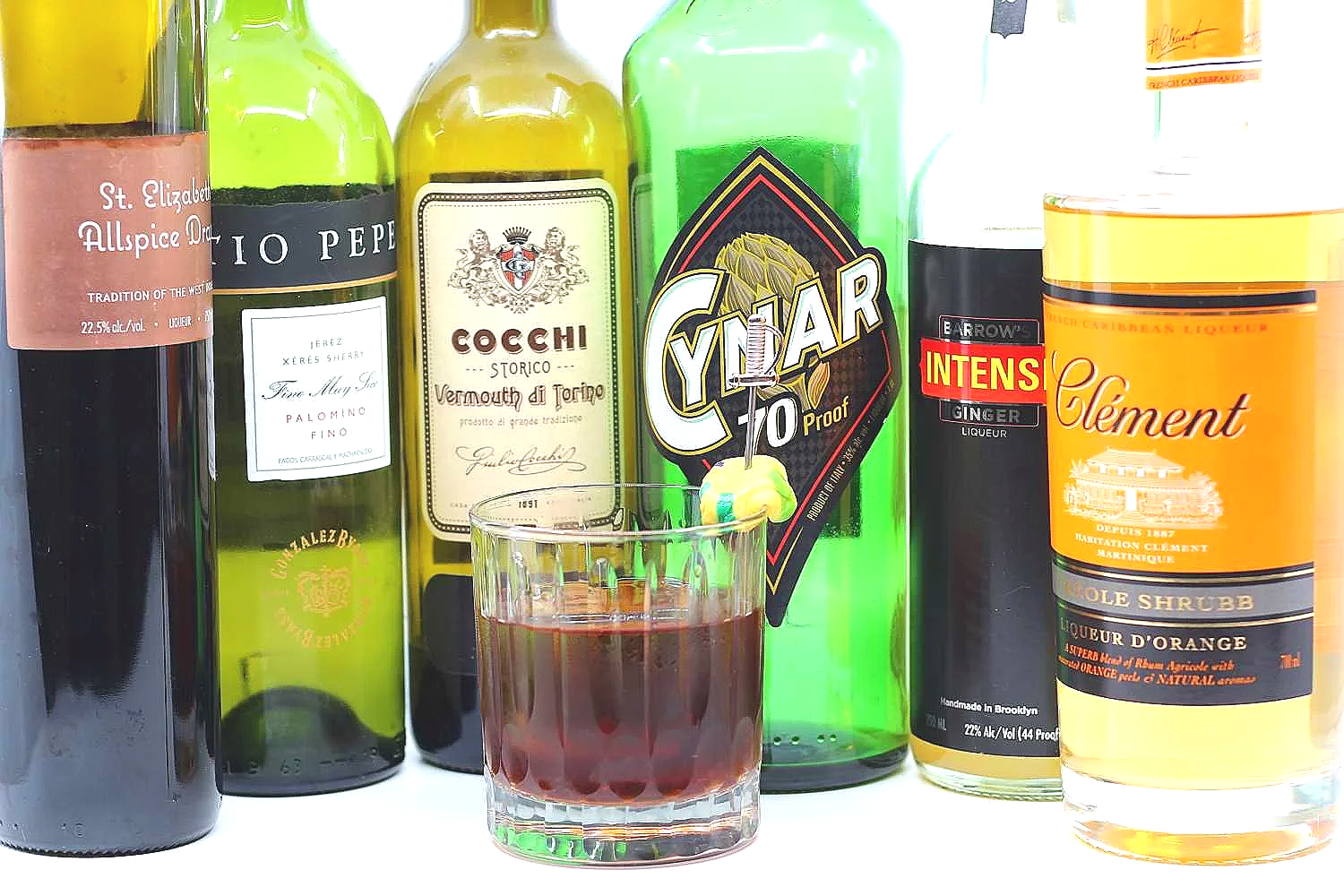
For this epic toast I wanted to pay homage to that history, but incorporate it into a modern cocktail, and I’ve been known to love a Negroni. Simon Difford, cocktail aficionado and author of the cocktail compendium Difford’s Guide, created a mulled wine Negroni a few years ago, playing off many other variations on that seasonal theme. In addition to the expected gin, sweet vermouth and red bitter aperitif, he adds Claret wine, falernum liqueur, and a touch of sloe gin. His version is delicious, and served as the source material for my own, for which I leaned in the nightcap direction, skipping the gin entirely for a lower alcohol drink one might enjoy in the late evening – perhaps after a day spent in epic adventuring. Cheers!
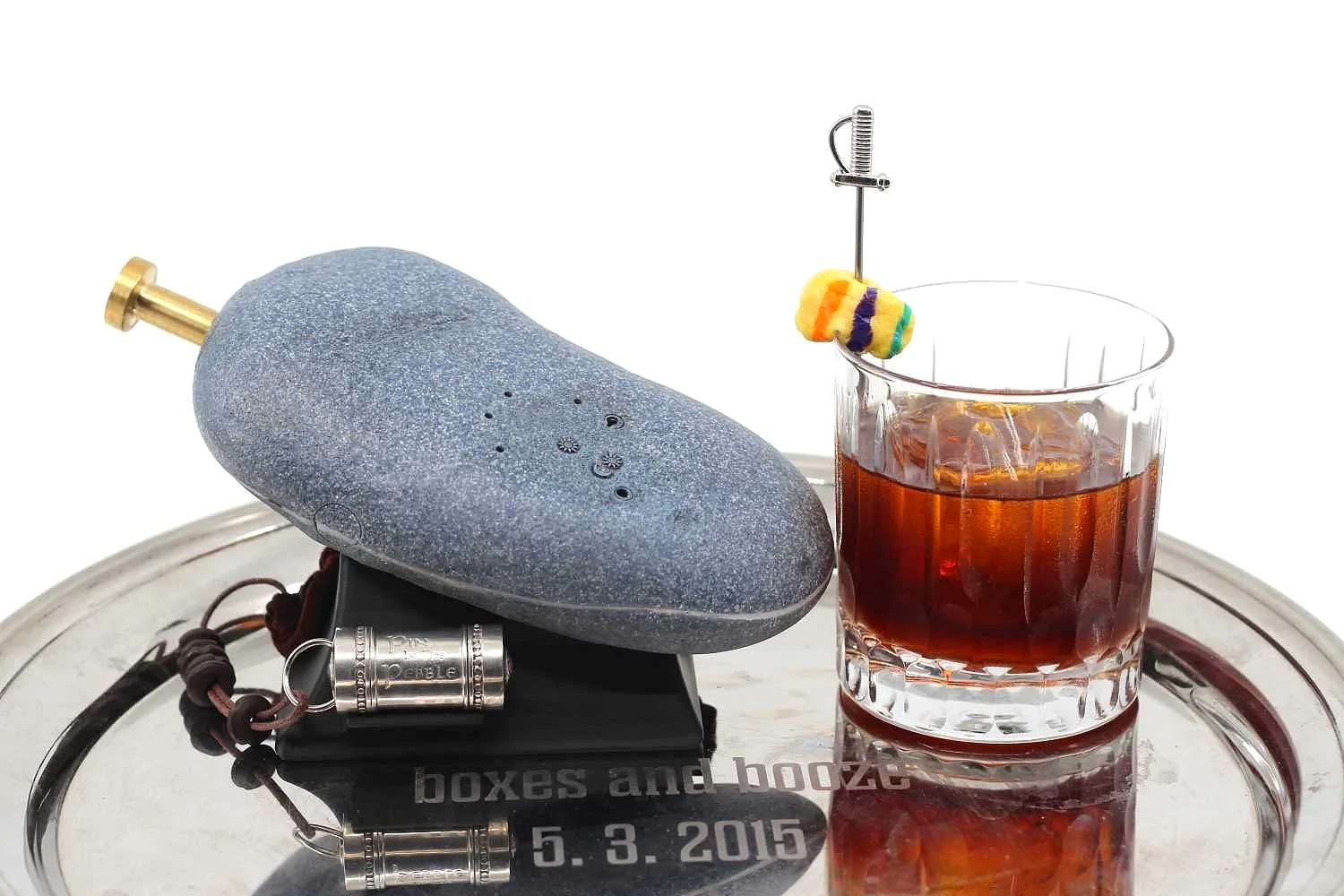
a pair with ex-cellent calibur
Knight Cap of the Side Table
1 oz Cynar
1 oz sweet vermouth
1 oz dry sherry
¼ oz ginger liqueur
¼ oz orange liqueur
1 barspoon allspice dram
Stir ingredients together with ice and strain into a holy grail. Garnish with a cutlass in the candy.
explore more: