
Gravity Box

Gravity Box by Alex Owens
I think you are going to fall for this puzzle box. At, perhaps, 9.8 m/s2 …. Fans of Alex Owens’ fantastically complicated interlocking puzzles, such as the Heart Box and the award winning Piano, know he is a master at engineering intricate puzzling experiences. His puzzles purposefully start off by easing you in, with a few reasonable moves to get things started, then steadily build, becoming harder and harder as they go. All of the many, many parts that make up one of his creations fit together without glue, screws or fasteners of any kind. Despite this, figuring out what to move, push, pull or prod can leave you completely befuddled! Gravity Box may well be his masterpiece to date, and it was a long time coming.
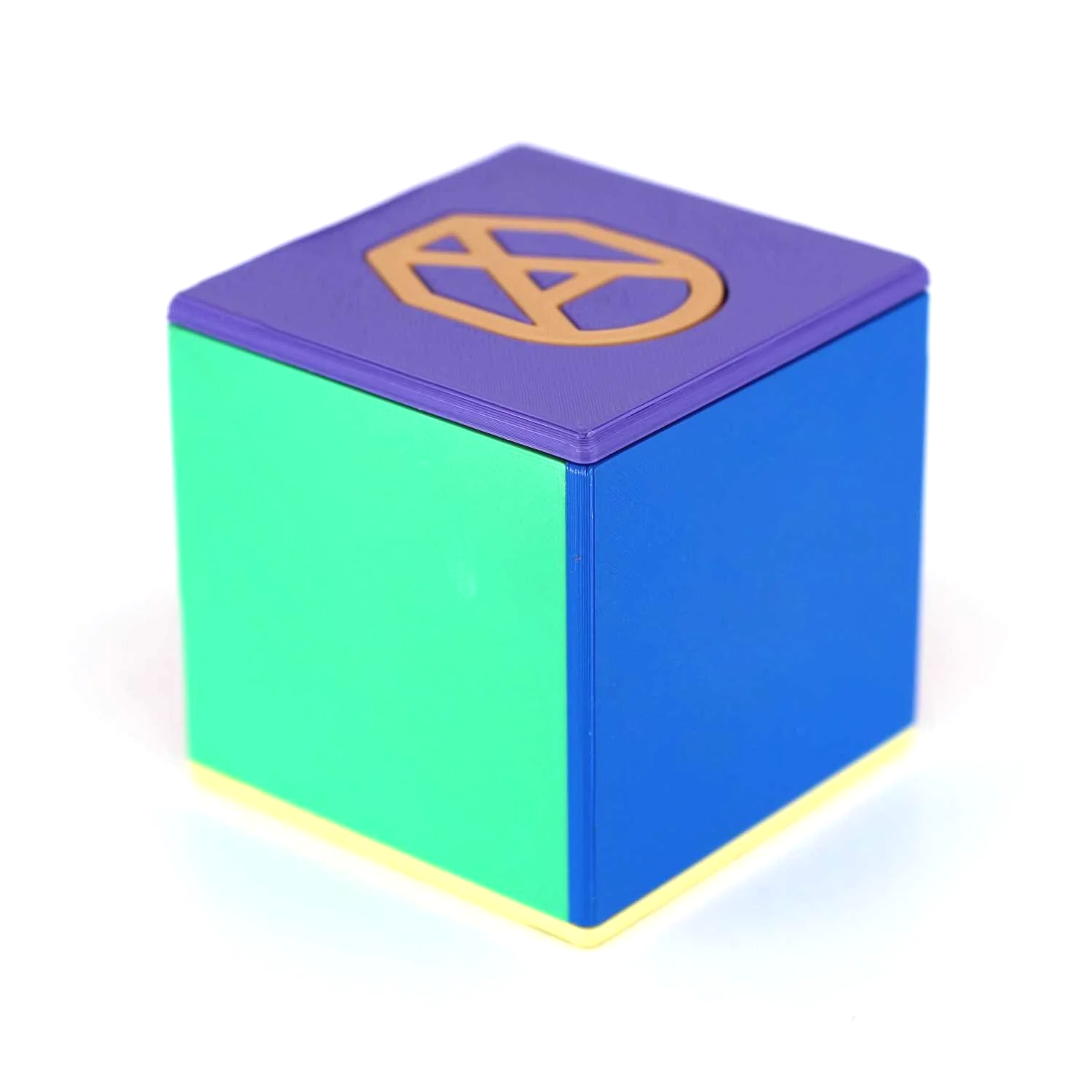
cheerful colors belie the gravity of this situation
I first saw a copy of this puzzle a few years ago, when it was being produced as a colorful “Katamari Cube” by Kimera Kreations. All the crazy, unexpected moves, twists and turns, objects and interactions were a bit reminiscent of the Namco video game where a ball, rather than a cube, is rolled over everything, collecting whatever lies in its path. A similar, non-colorful version from Alex can be seen in a joyful video by Mr. Puzzle (Christian Ihlo), whose sheer delight at how surprisingly complicated the puzzle turns out to be is palpable. Even then the Gravity Box, which is what Alex has always called it, was nearing perfection. But there were still a few little details that needed to be improved, which now brings us to the current iteration. Alex recently told me about the evolution of his force of nature.
“This puzzle is unique among all of my designs, because I never really knew what it was going to be. It began as my first puzzle ever, when I was just trying to get a feel for designing and printing something like this. But over the years I would keep coming back to it and adding more ideas and mechanisms. These days, it almost feels like a diary of my design process over the years.” Like many of us who love mechanical puzzles, it all started for Alex in a very familiar way. “The very first puzzle box I ever owned was one of those classic Japanese sliding boxes, something very similar to this:
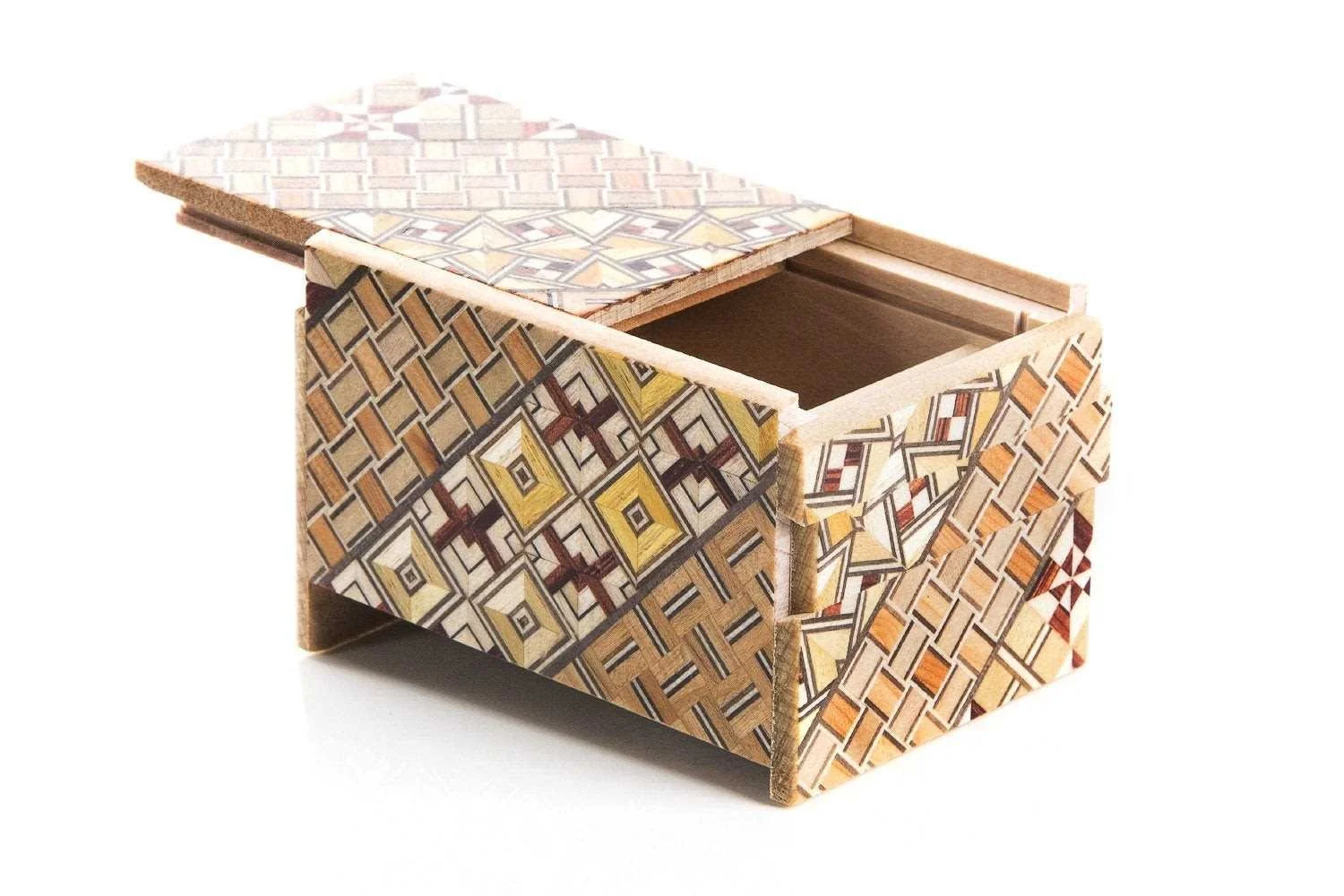
courtesy of Alex Owens
I figured this was a perfect way to get my feet wet, and started work on this very simple sliding box:
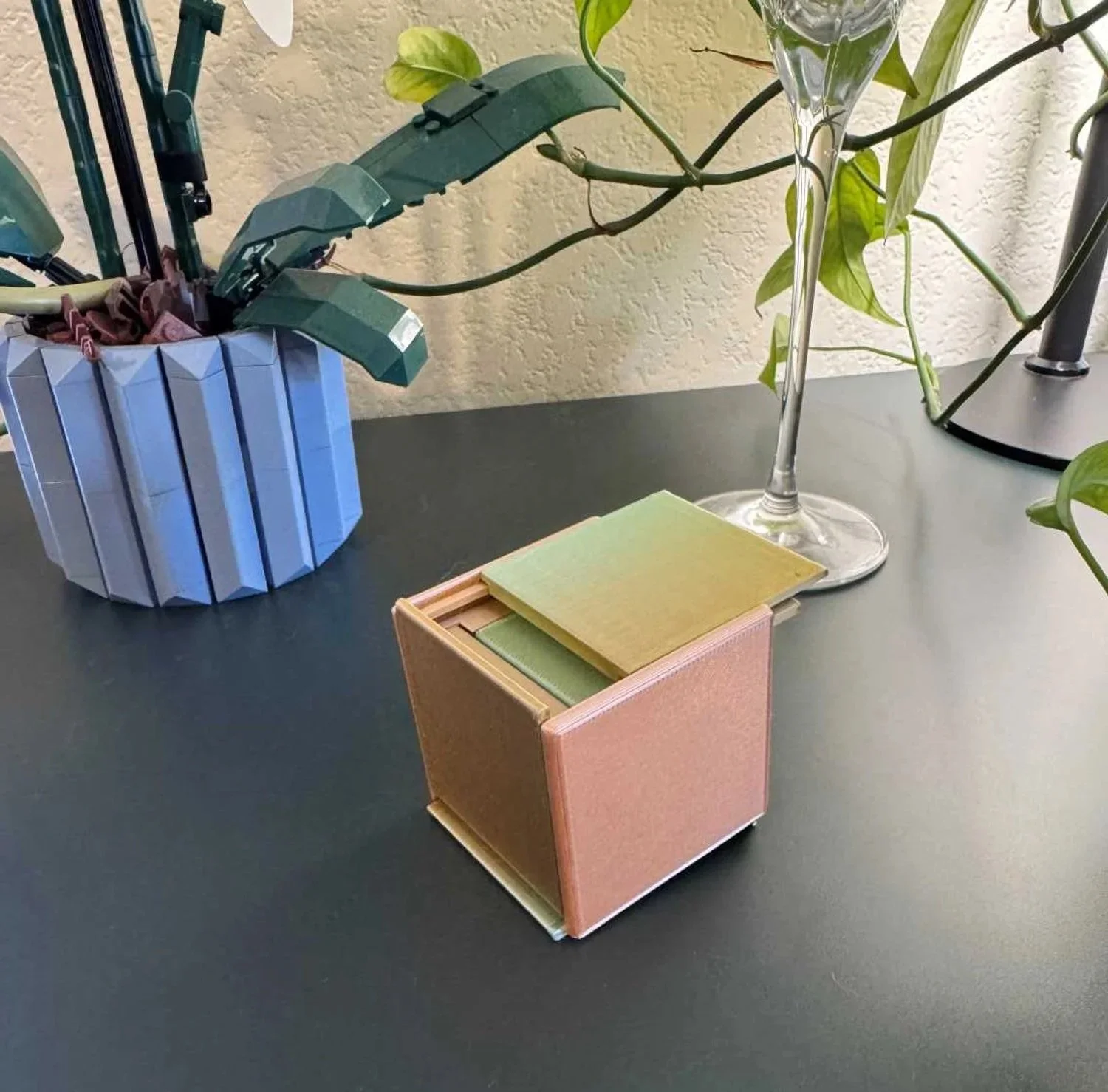
courtesy of Alex Owens
In the next iteration of the design, I started adding complexity to see what was possible. One of the new pieces I added was a gravity-based sliding pin which would block certain moves depending on the orientation. Granted, it didn't work very well, but the idea was planted and I began adding gravity mechanisms wherever I thought it might be interesting.” I would say that understanding why the box is named “Gravity Box” is no huge reveal, although there could be a number of possible explanations. You certainly don’t need to drop the box out of an apple tree to solve it. But understanding the name will at least give you a frame of reference. Just beware when Alex says things like “I started adding complexity”!
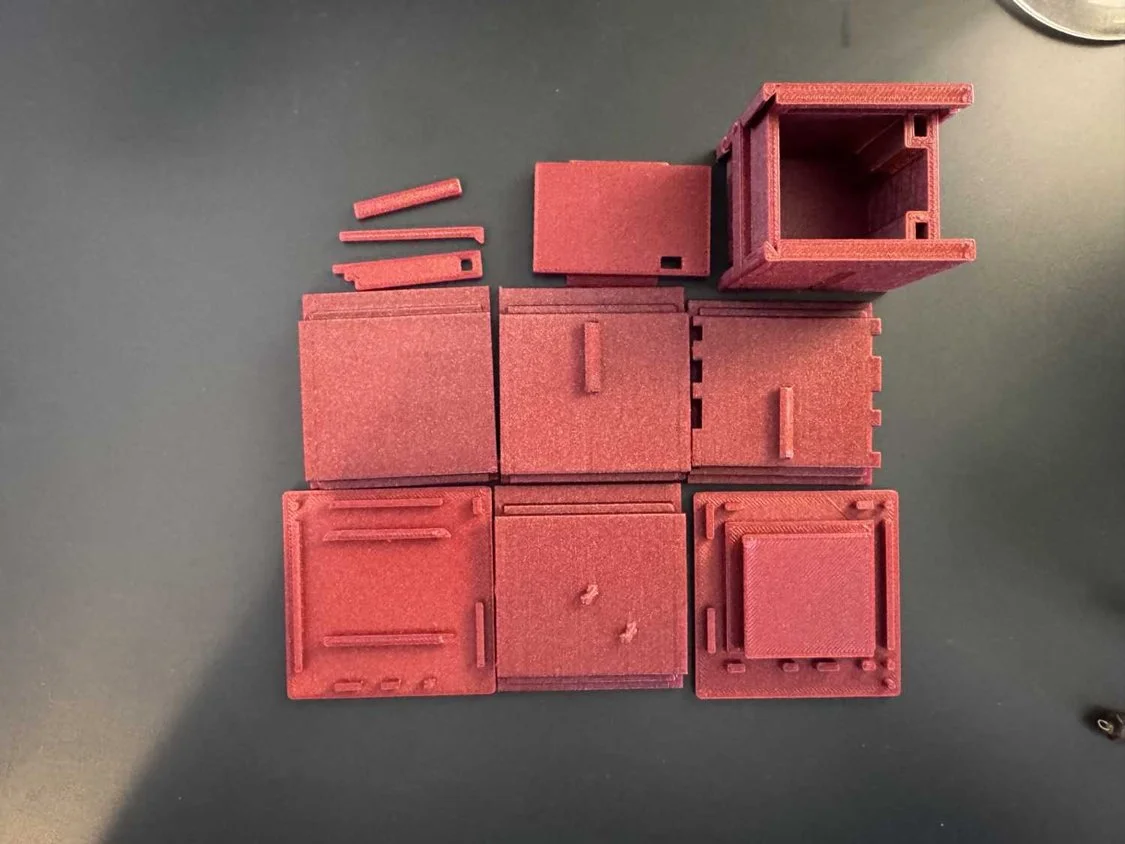
an early prototype - courtesy of Alex Owens
Having an earlier version of the puzzle is also an interesting way to see how the box has changed in subtle and not so subtle ways. Alex is really interested in making sure things work well and as intended, and many of his updates solve these minor issues over time. “With gravity based mechanisms, it's even more important to ensure consistency. If you can't see what's going wrong, it's impossible to stumble your way through. So a huge portion of my trouble shooting time went to testing, comparing, reworking, and combining different ideas until I found something that worked every time. Another big change occurred after I'd finished work on my Dice box. I'd messed around with the idea of a gear set in that box for the first time, and I was really excited to see what else I could come up with. I quickly added one gear, then another, and loved the new world it unlocked. I'm very much a night owl when it comes to this stuff. Whenever I can afford it, I find I do my best work late at night when it's just me, my thoughts and my music while the rest of the world sleeps around me.”
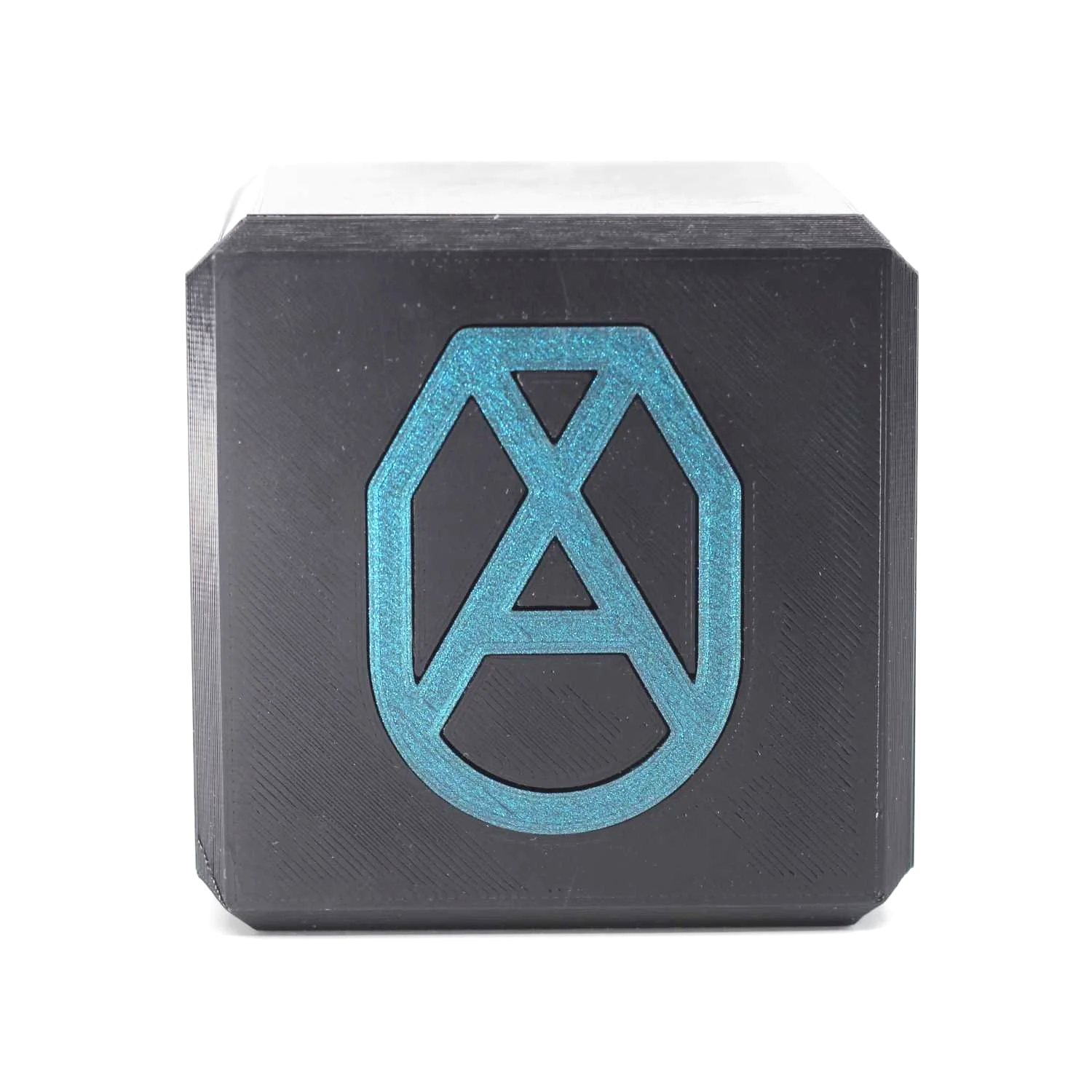
Michael Alex Owens reveal in teal …
Purchasing one of Alex’s puzzles directly from him is a great way to ensure high quality and consistency. His puzzle prints are hefty, smooth and fluid. But they are also completely built from 3D printed pieces and parts, so it is entirely possible to use his print files to make these at home. He has played around with the idea of having certain parts or tools machined from metal, but the idea is on the backburner as it would dramatically increase costs. Alex has just released his final update to the Gravity Box, which will keep everyone busy for quite some time. What’s on the horizon for fans of Mowens puzzles? “I was originally planning to get right to work on my Castle box that I prototyped earlier this year, but I'm now thinking of pushing that back a bit as it will be another pretty huge endeavor. Instead I think I might take a quick detour and give my Dice box a little redesign!”
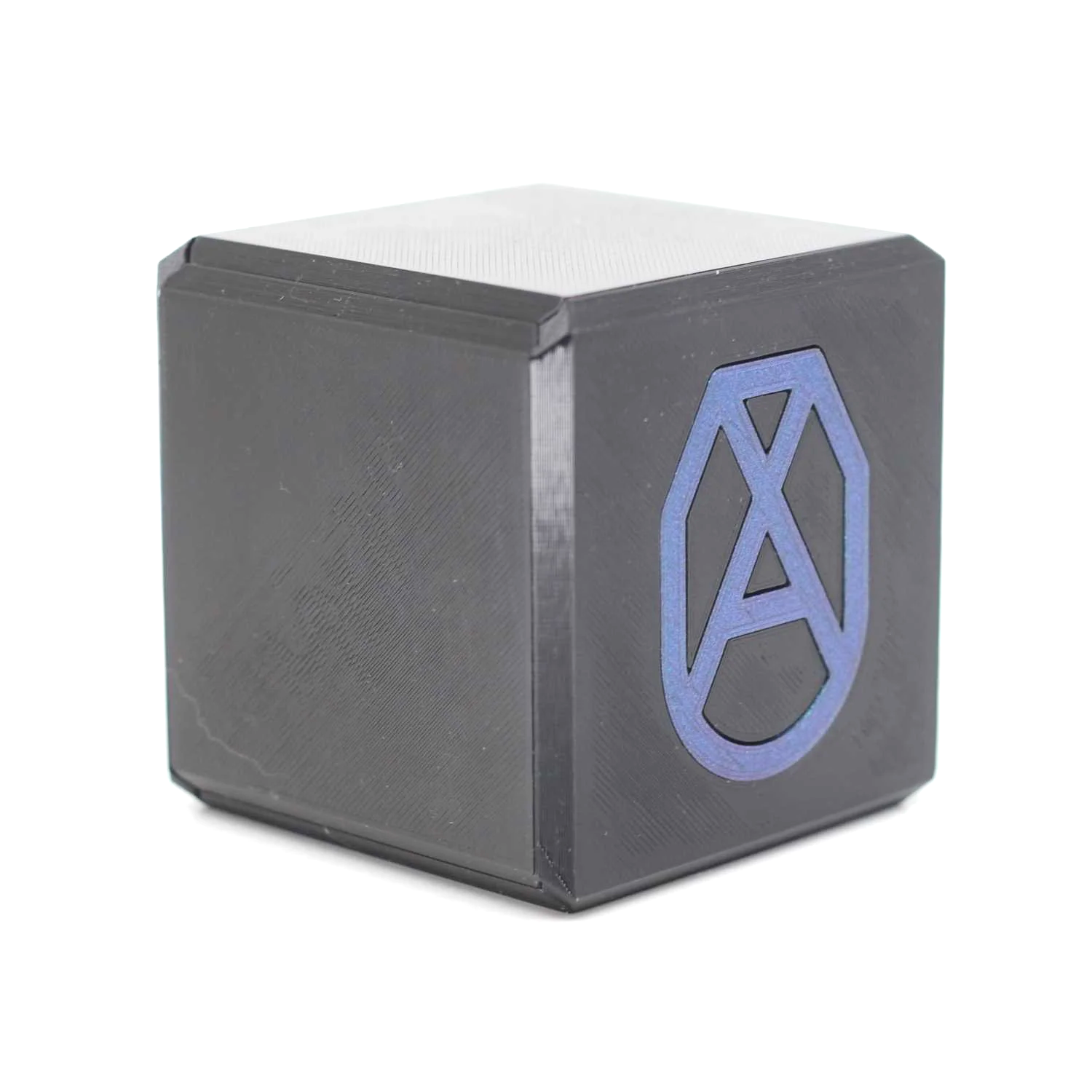
or turn to show the indigo …
The new Gravity Box is yet again better than the prior version, improving upon little oddities or potential flaws in the design. Having solved it once before was little help as I made my way closer and closer to the center, thanks to significant changes Alex has added. At one point I became completely stuck, unable to deduce what came next. Days later I discovered a somewhat mind-blowing sequence that was simply fantastic. The feeling of euphoria didn’t last as I hit the very next wall. The puzzle is incredible! Hidden deep inside the final compartment is the ultimate prize, a metaphorical and thematic “core” that “powers” the cube. Perhaps, there is even another secret surprise hiding somewhere, that Alex says is “just to have a little fun at the end of the journey”. Or is it the end? The optional final challenge of disassembling the inner core entirely has thus far resisted my efforts. Of course, Alex says that is his favorite part of the entire redesign! I also love the new color changing color scheme, which recalls the dark mysteries of outer space, and shimmers as you go deeper, revealing a few unexpected flourishes hidden inside.
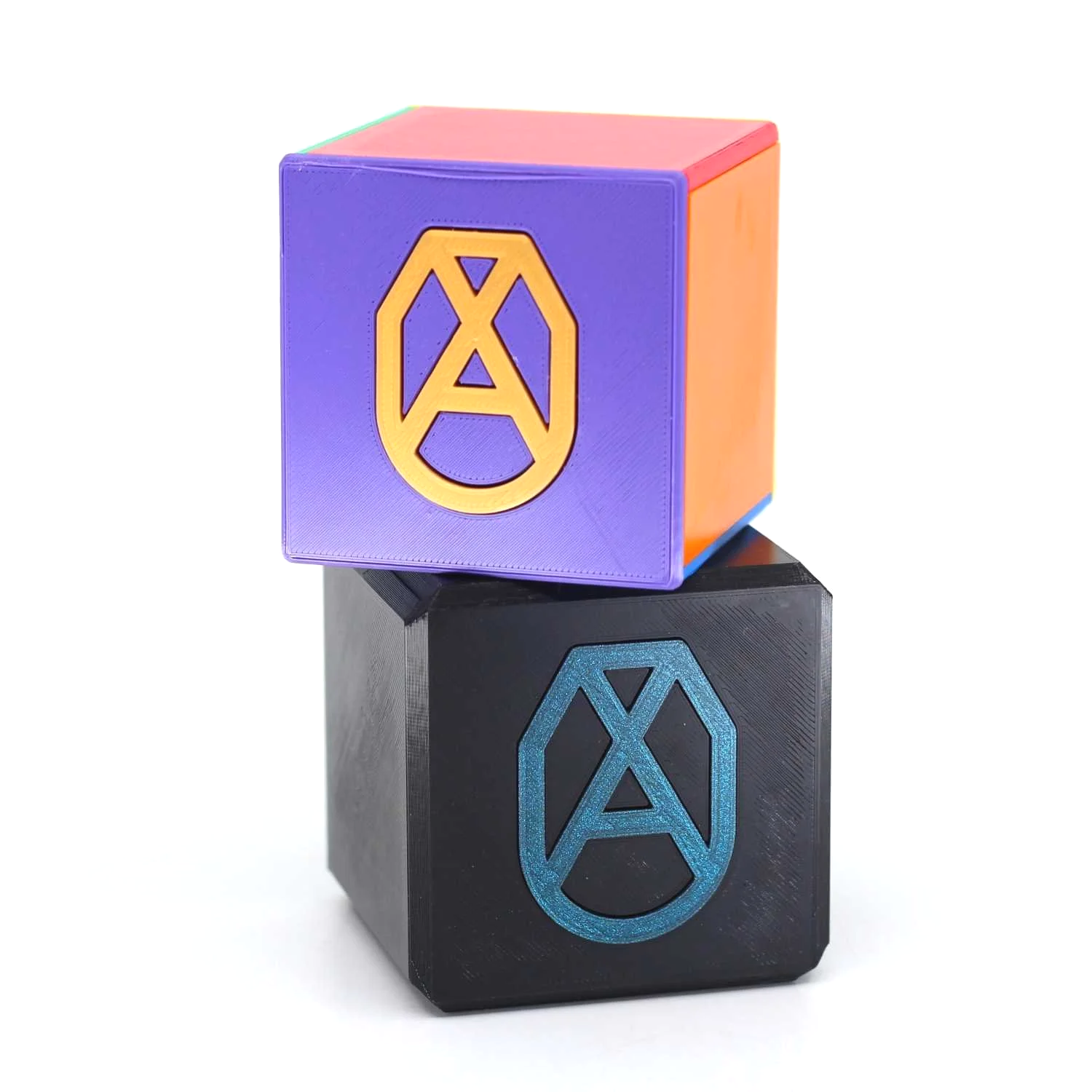
these revisions demonstrate a constant rate of acceleration
“One thing I've always wanted out of my puzzles, is a singular disassembly path. You can't take out piece i, until you take out i-1. The trouble is, that means the very final piece has to open the compartment, which doesn't always lend itself to a nice efficient solve. In this final redesign, I came up a new formulation I'm really happy with. Now, when you open the compartment, you can either stop there, or take the extra challenge of removing every piece. Personally, I think it's now my favorite part of the solve. This is the hardest and most obtuse of all my puzzles, but also the most satisfying to learn! I know it's a long journey, but I think the payoff is worth it.”

Revision by Joy Richards
It is with some gravity that I must tell you, I could not source a cocktail I was satisfied with related to the fundamental force of attraction between all mass. I have previously dabbled in physics, visiting with Sir Isaac Newton now and again, whose genius is all relative compared with Einstein. But those drinks have been drunk. If we make them again, we’ll need to revise them. That seems to be the theme here anyhow.

if you need to revise your cocktail
The cocktail I chose for this toast is reminiscent of the classic Bamboo, which is sherry and vermouth, but with a heavy dose of orange and citrus flavor thanks to the triple sec and grapefruit bitters. It was created by Joy Richards, bar manager at Citizen’s Public House in Boston. I discovered it on Boston legend Fred Yarm’s website, a great place to find almost any classic stirred cocktail. Many inspiring drinks on these pages appeared there first. As the name might suggest, the drink came about over time and many revisions. The final version is a lovely low abv aperitif or late nightcap. Here’s to revisions, may there ever approach perfection. Cheers!
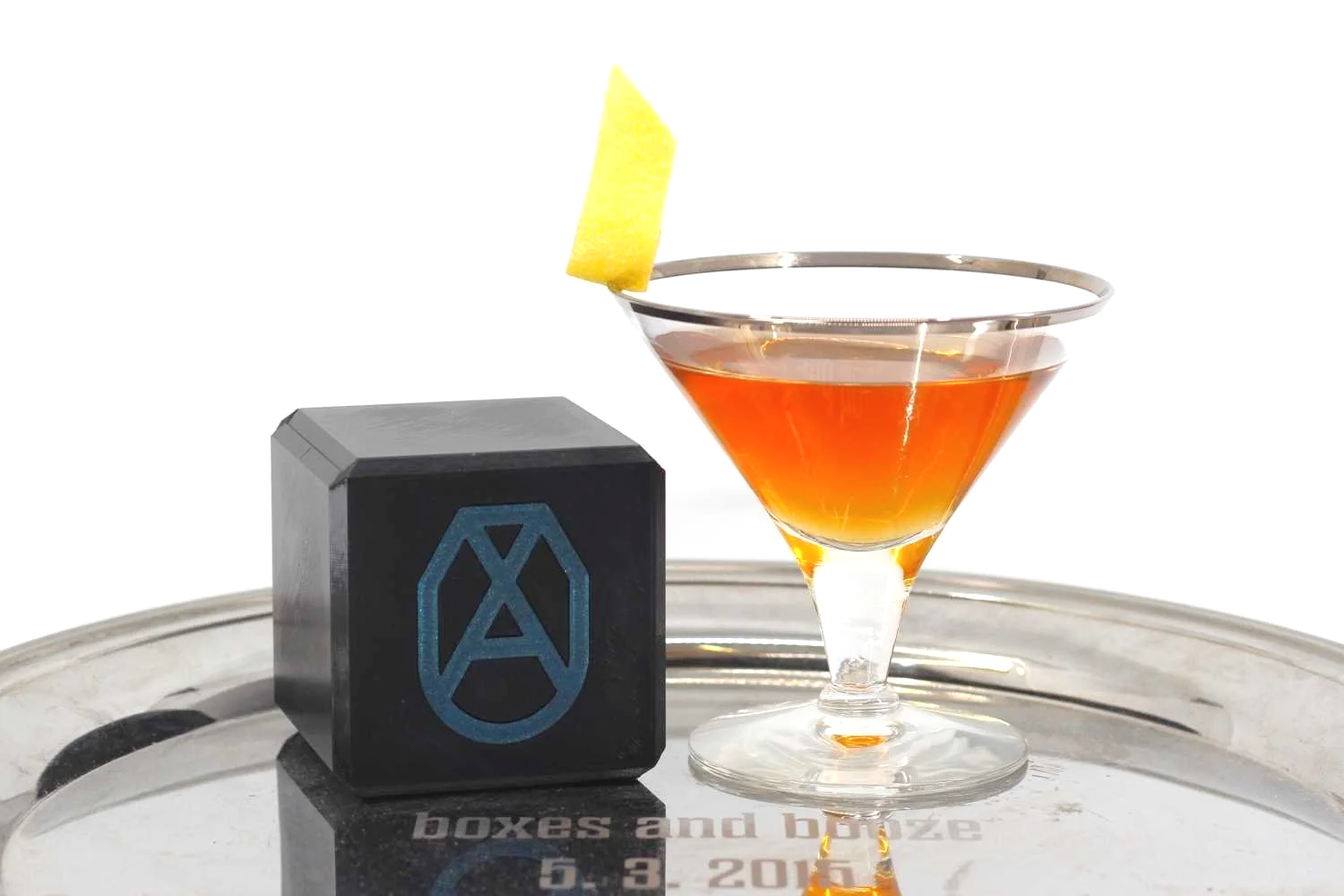
revisionist history
Revision cocktail by Joy Richard
1 ½ oz Lustau Amontillado sherry
1 oz Dolin dry vermouth
½ oz Combier triple sec
2 dashes grapefruit bitters
Stir with ice and strain into a favorite glass. Lemon twist.
explore more: